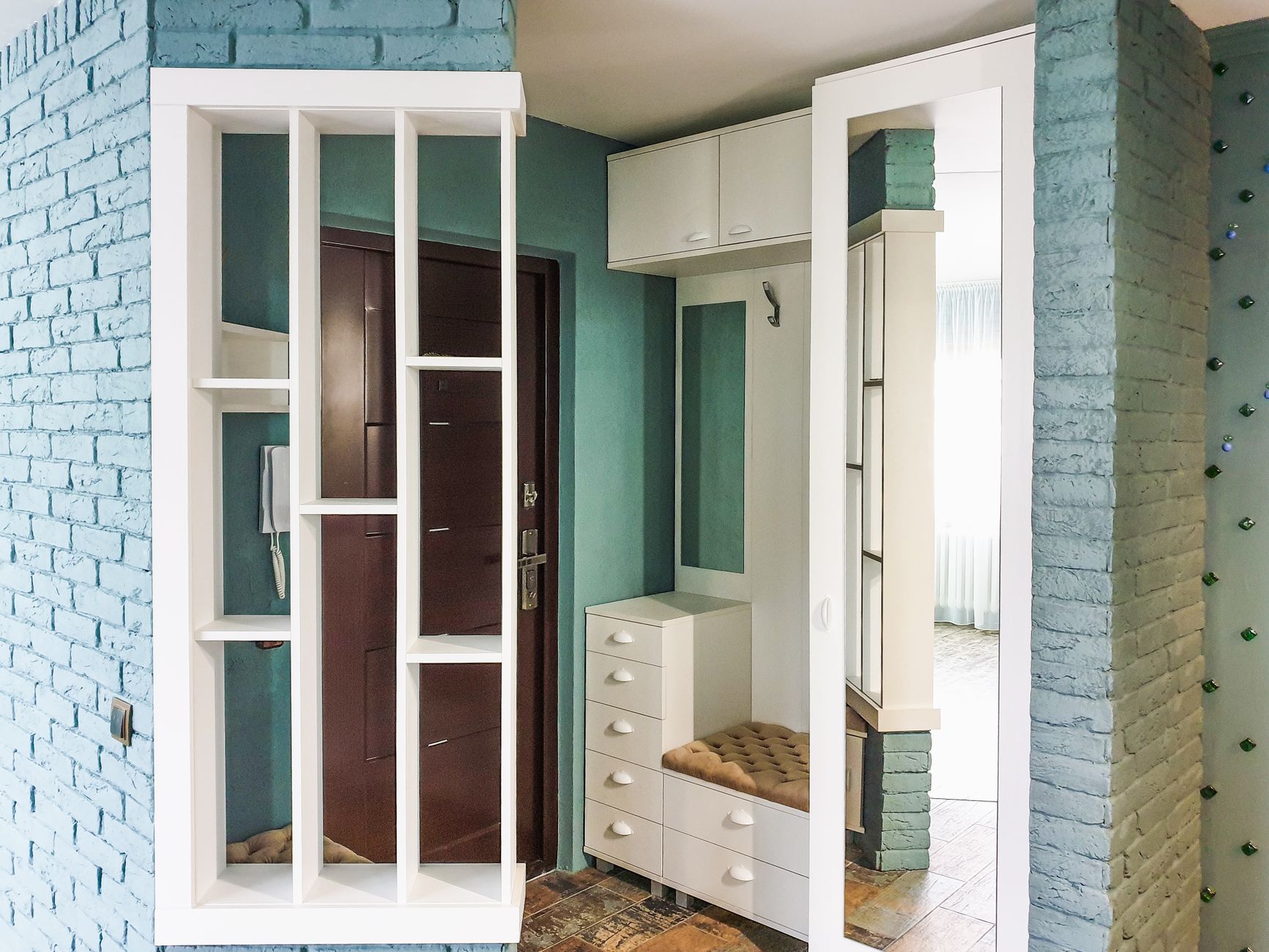
The entryway sets the tone for your entire home, yet it’s often the smallest and most overlooked room in the house. A cramped hallway or narrow foyer doesn’t have to feel like an afterthought. With the right mix of furniture, storage, and lighting, even a few square feet can greet guests in style while keeping everyday clutter in check. Here are nine practical ideas to make your small entryway work harder and look better.
Choose a Slim Console Table That Doesn’t Crowd the Space
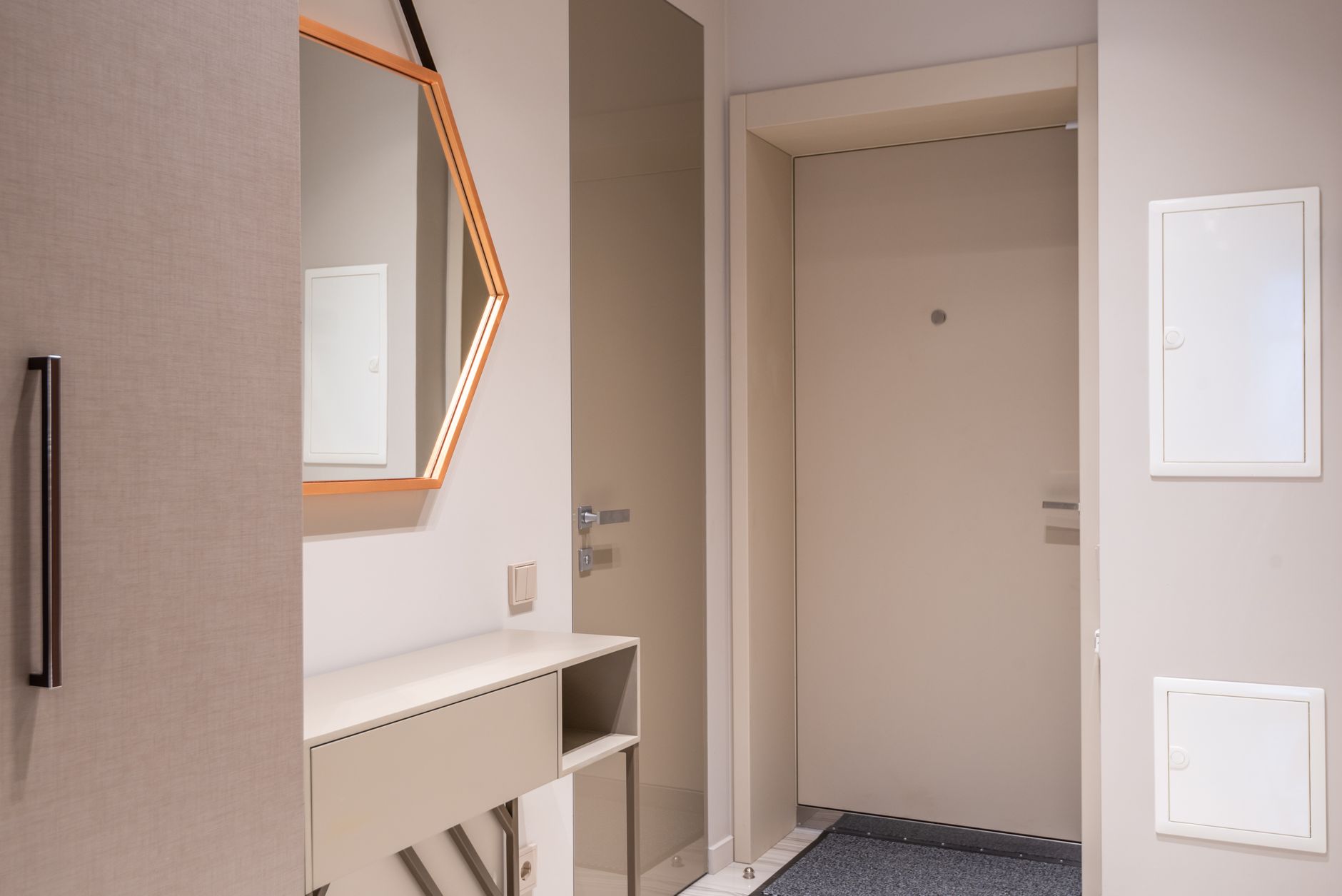
A narrow console table, ideally 12 to 16 inches deep, gives you a surface for keys, mail, and a lamp without eating into your walking path. Look for one with an open base or a single drawer so it reads as light rather than bulky. Pairing it with a similar approach to the furniture choices in these small space design tricks keeps the whole entry feeling proportionate. If floor space is truly tight, a wall-mounted shelf can do the same job with zero footprint.
Add Vertical Storage With Wall-Mounted Hooks and Shelves
When you can’t go wide, go up. A row of hooks at coat height and a second row lower down for kids or bags makes use of wall space that would otherwise sit empty. Floating shelves above the hooks can hold baskets for gloves, sunglasses, or dog leashes. This is the same logic behind these open shelving ideas for small spaces, which prove that storage doesn’t need a closet to be effective.
Layer Lighting to Banish Dark Corners
Entryways rarely get much natural light, so layering a few sources makes a real difference. Combine an overhead flush-mount fixture with a small table lamp on the console for a warmer glow at eye level. If wiring is a concern, plug-in wall sconces or battery-powered puck lights under a shelf work just as well. These lighting tricks for small spaces apply directly to hallways and foyers that never see direct sun.
Use a Statement Mirror to Add Depth and Light
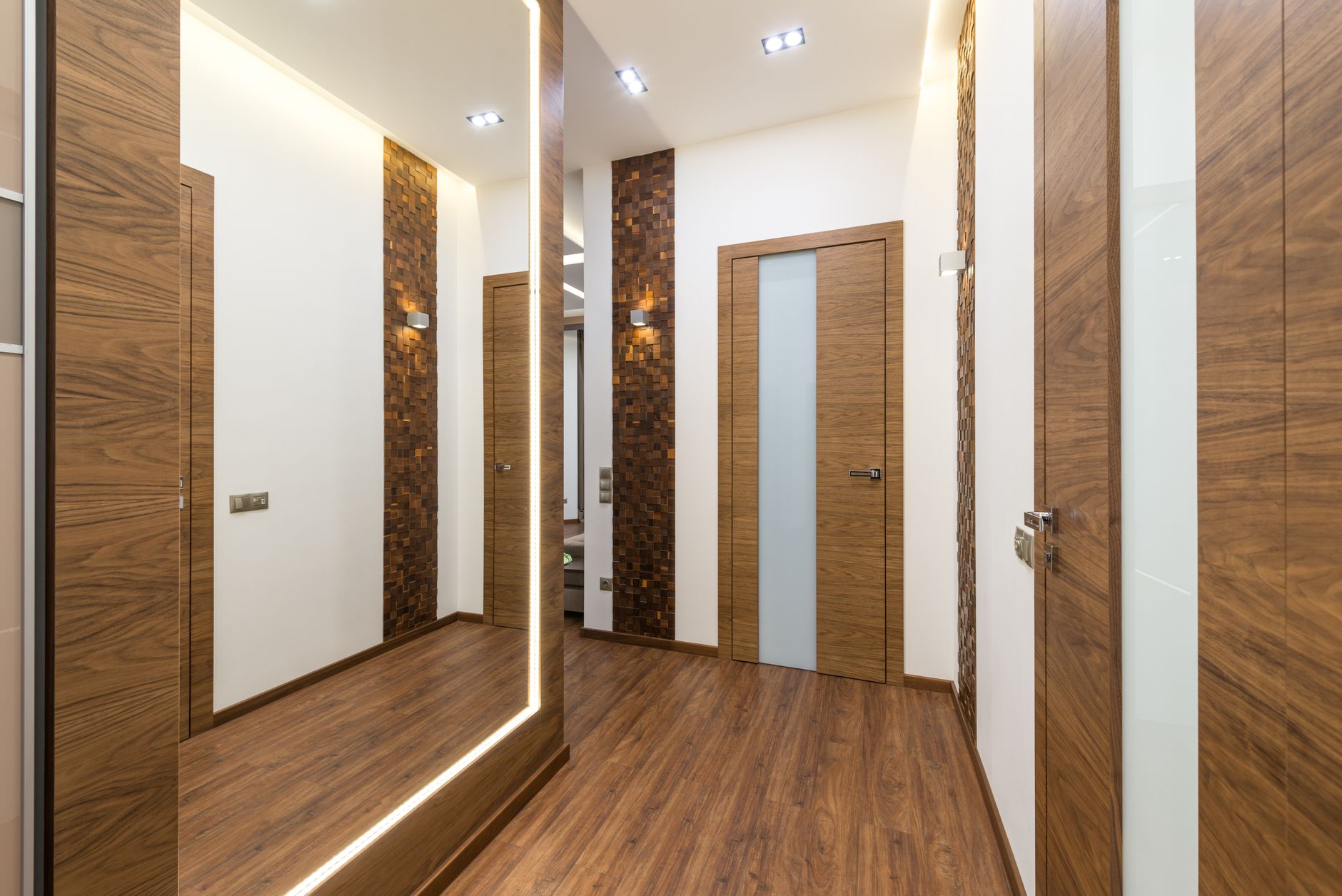
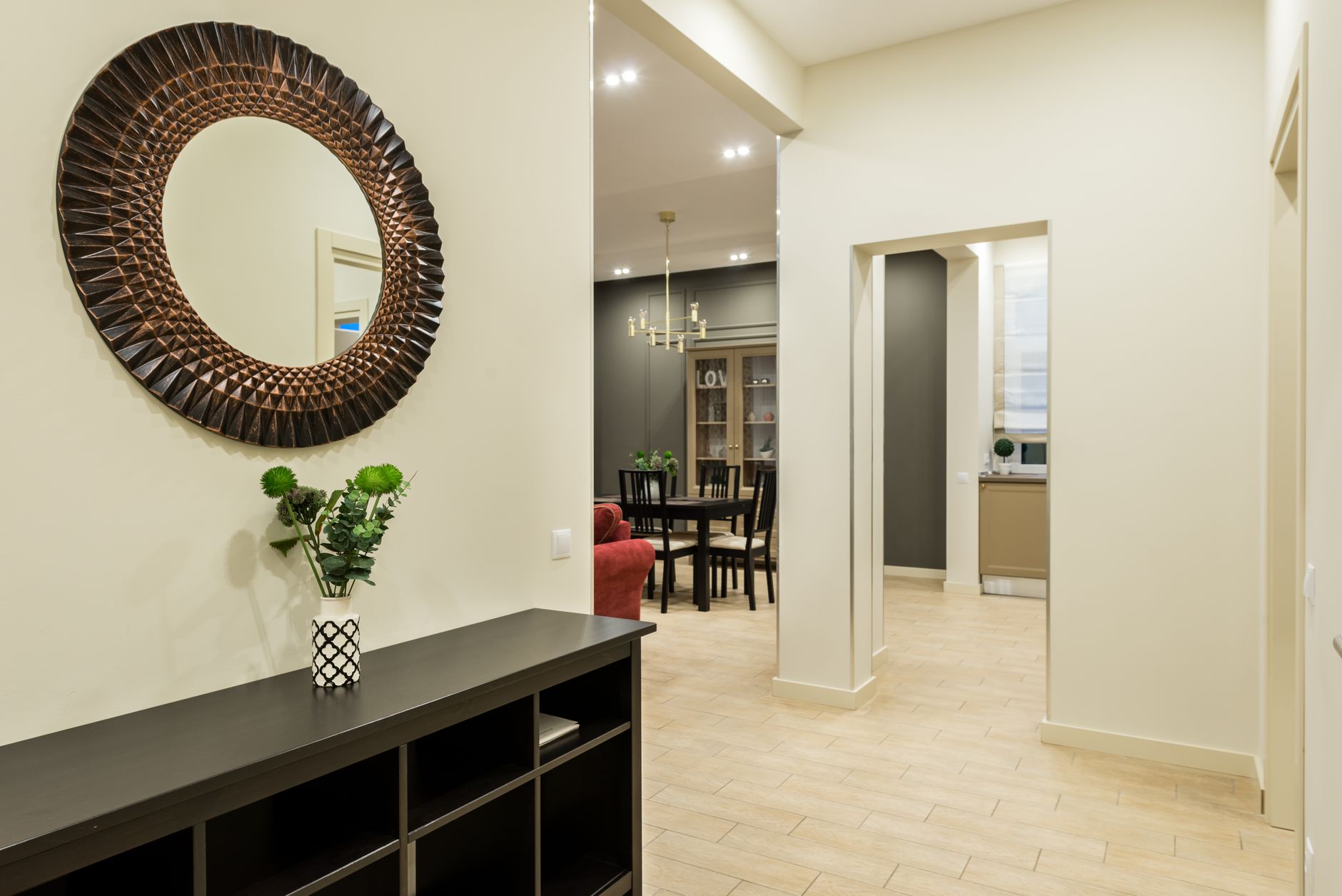
A well-placed mirror is one of the fastest ways to make a tight entry feel larger. Hang it across from a doorway or window so it bounces available light back into the room, and size it generously rather than choosing something too small to have an impact. Beyond function, a mirror with an interesting frame becomes the first piece of style guests notice, applying the same interior design principles that work in larger rooms.
Define the Zone With a Textured, Durable Rug
A runner or small area rug visually separates the entry from adjoining rooms, which matters when there’s no wall to do that job. Choose a low-pile, stain-resistant material since this spot takes the most foot traffic and weather in the house. A patterned rug also hides dirt between cleanings better than a solid color. Grounding the space this way borrows from the same interior design techniques used to anchor open-plan living areas.
Keep a Landing Strip for Everyday Essentials
A small tray or bowl by the door for keys, a wall-mounted mail sorter, and a single hook for the most-used bag prevent the daily pileup that makes small entries feel chaotic. The goal is a designated spot for the handful of items that come and go every day, not a catch-all for everything. This mirrors the thinking behind these small space storage hacks, where every item earns its place.
Choose Light Colors and Reflective Finishes
Pale walls, a glossy front door, or a lacquered console all help bounce what little light an entry gets. If a full repaint isn’t in the budget, even swapping in brighter hardware or a metallic light fixture adds a sense of openness. The same logic that keeps a small kitchen feeling bigger through light finishes translates directly to a narrow hallway.
Final Thoughts
A small entryway doesn’t need extra square footage to function well or make a strong first impression, it needs intention. Focus on a few well-chosen pieces, layered light, and a clear spot for daily essentials, and the space will feel considered rather than cramped. Start with one or two changes, like adding hooks or swapping in a better light source, and build from there as you settle on what your household actually needs.