Lina Bo Bardi's Architecture Honoured In New Photography Series By Leonardo Finotti

Ahead of what would have been the 100th birthday of Brazilian Modernist Lina Bo Bardi, photographer Leonardo Finotti has documented eight of the architect’s most important buildings .
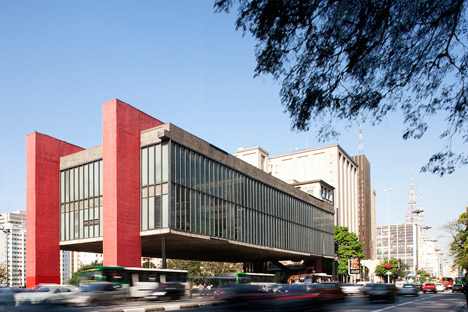
MASP, São Paulo by Lina Bo Bardi The São Paulo Museum of Art, São Paulo

Born in Rome in 1914, Bo Bardi moved to Brazil in 1946 and established a career that encompassed architecture, furniture and set design, exhibition curation and writing.


Related story: Door handles from Lina Bo Bardi’s 1951 house go into production
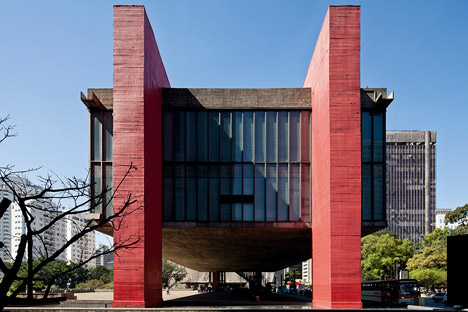

MASP, São Paulo by Lina Bo Bardi The São Paulo Museum of Art, São Paulo

Her work has become increasingly popular among architects in recent years, partly thanks to a growing interest in projects with a social and cultural conscience, which typified many of her best-known buildings.
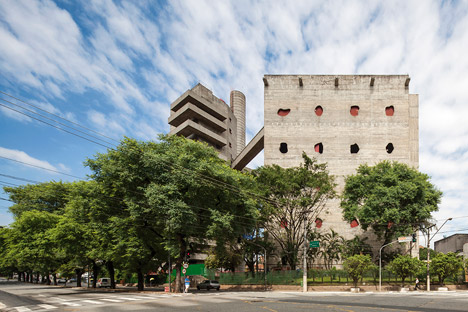
SESC Pompéia, São Paulo by Lina Bo Bardi SESC Pompéia, São Paulo

Her use of simple concrete and glass forms has prompted her work to be categorised as Modernist, and occasionally even Brutalist. But unlike contemporaries Oscar Niemeyer and Lúcio Costa, she also embraced the Brazilian vernacular, using local materials such as mud and straw.
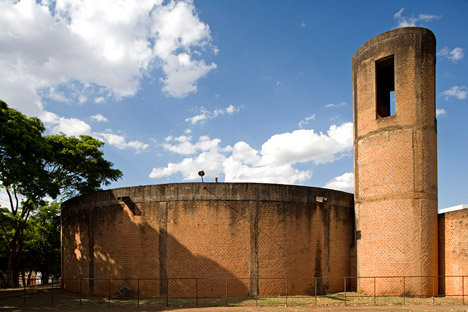
Espírito Santo do Cerrado Church, Uberlândia by Lina Bo Bardi Espírito Santo do Cerrado Church, Uberlândia

“Lina Bo Bardi was born and studied in Italy, but she might be the architect who better understood the relationship between Modernism and folk in Brazil,” said Finotti, who was grew up in Uberlândia, southern Brazil.
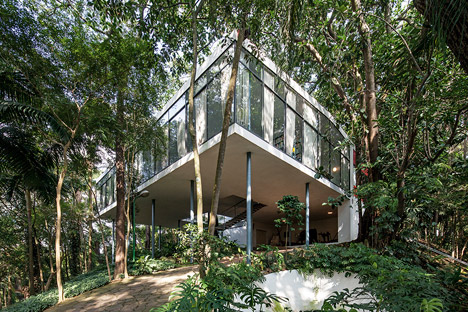
Glass House, São Paulo by Lina Bo Bardi Glass House, São Paulo

“If you look at her works you could see two types of buildings: on the one hand, those that contribute to generate a civic values and basic public notions, on the other hand, those that came from the Brazilian folklore. She managed to work in both different – and often opposed – fields, and always with great inventiveness,” he said.
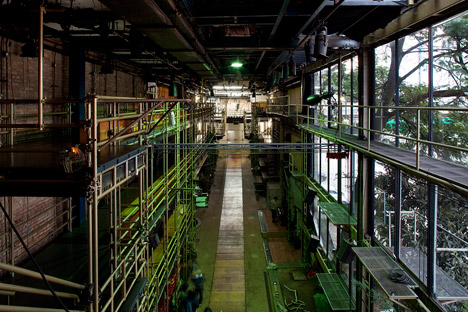
Teatro Oficina, São Paulo by Lina Bo Bardi Teatro Oficina, São Paulo

Bo Bardi’s most important projects include the São Paulo Museum of Art, which is raised above the ground on huge red armatures to create a public plaza underneath.
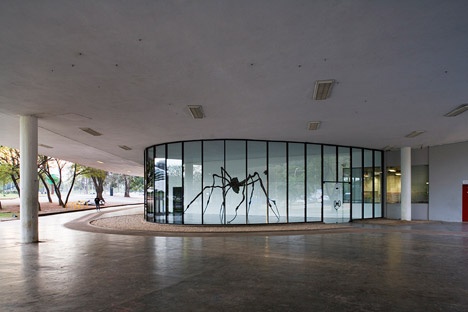
MAM at Ibirapuera Park, São Paulo by Lina Bo Bardi MAM at Ibirapuera Park, São Paulo

There is also the SESC Pompéia, a leisure centre that the architect created within an existing old city factory – despite an initial brief that involved demolishing the building. She aimed to combine new functions like swimming and theatre with existing activities, from chess-playing to puppet shows, creating a space without a hierarchy.
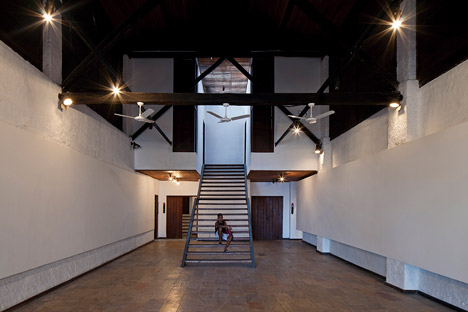
Solar da Unhão, Salvador by Lina Bo Bardi Solar da Unhão, Salvador

For herself and her husband, Bo Bardi designed a glazed house raised on stilts over a woodland site on the outskirts of the city, which can be entered by a staircase rising up through its centre.
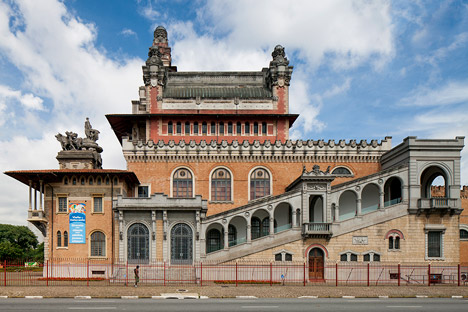
Catavento Museum, São Paulo by Lina Bo Bardi Catavento Museum, São Paulo

Finotti’s images are included in the exhibition A Arquitetura Política de Lina Bo Bardi, taking place at the SESC to celebrate the centenary of Bo Bardi’s birth this December. The photographer also plans to document more of the architect’s projects ahead of the occasion.

Dezeen

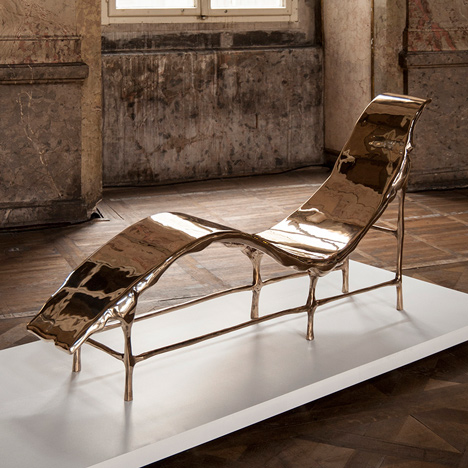
Tjep. Creates Bronze Age Furniture In Opposition To 3D Printing

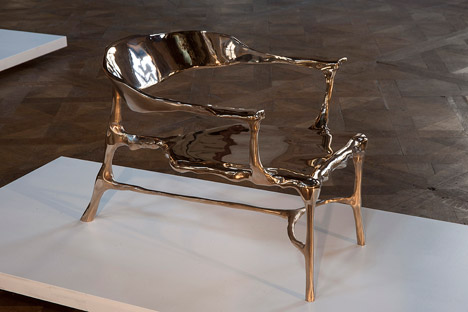
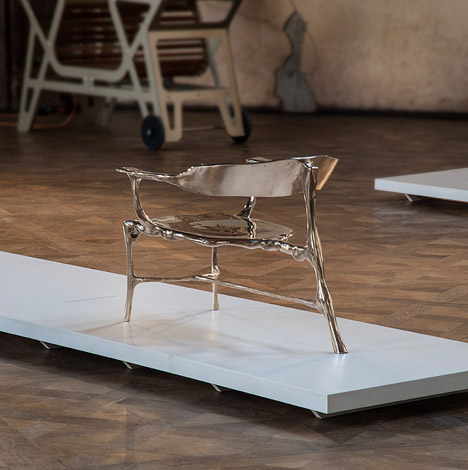
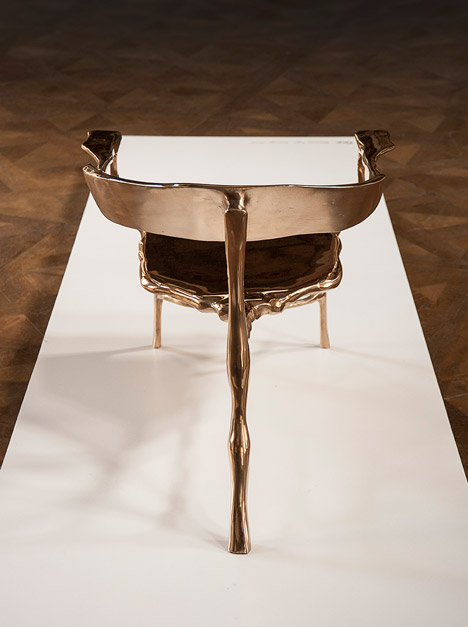
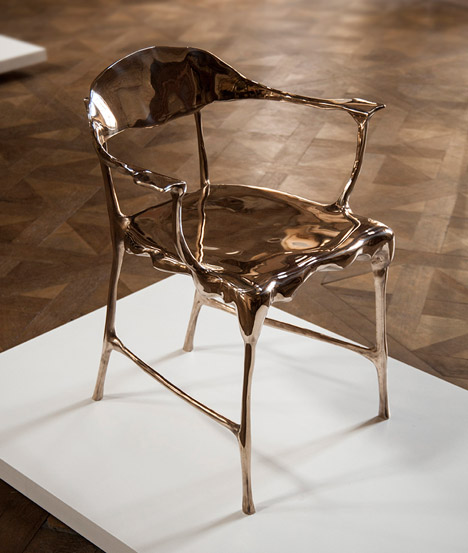
This skeletal furniture by Dutch design studio Tjep. is made from bronze in an effort to create a collection of objects “totally opposite to the technology-driven trends” in design (+ movie).

Tjep. presents Bronze Age at Prague Designblok

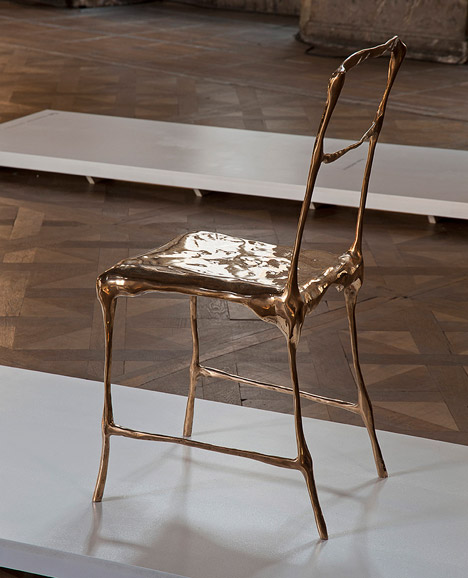
Led by studio founder Frank Tjepkema, Tjep. designed a series of spindly hand-crafted furniture pieces in bronze; “the material that represents the dawn of civilisation”.


Related story: Maritiem Museum exhibition by Tjep.


Tjep. presents Bronze Age at Prague Designblok

“For this project I wanted to create something totally opposite to the technology-driven trends based on the emergence of new digital tools such as 3D printing,” said Tjepkema.

Tjep. presents Bronze Age at Prague Designblok

“I like the idea that bronze is precious and is therefore implicitly sustainable, it is either preserved or remelted but never discarded, who knows maybe these pieces contain a couple of remelted ancient bronze swords!”

Tjep. presents Bronze Age at Prague Designblok

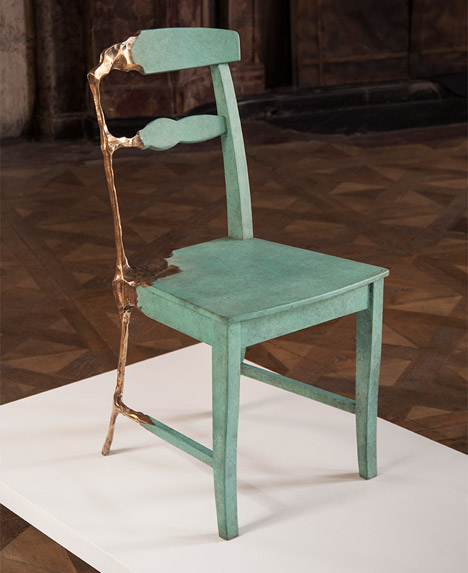
The Bronze Age collection follows on from the studio’s 2011 Recession Chair – a mass-produced Ikea chair reduced in part to a skeletal shape to evoke the receding state of the global economy.

Tjep. presents Bronze Age at Prague Designblok

Tjep. created a new version of this chair in bronze, with the original form in the patinated green condition of the material and the pared back section in its shiny metallic state.

Tjep. presents Bronze Age at Prague Designblok

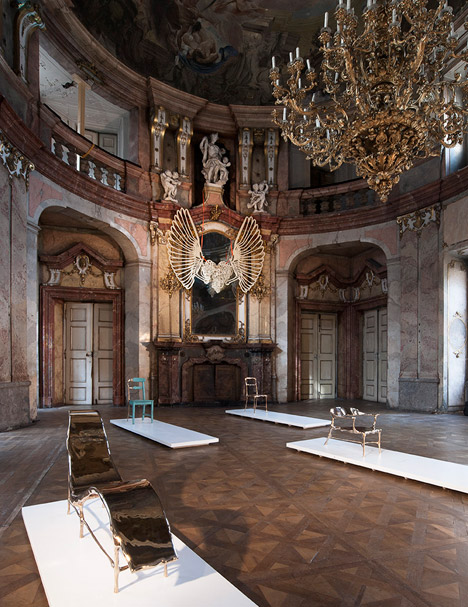
Other seats in the collection are made entirely in the emaciated style. These include an arm chair, a dining chair, a lounge chair and a chaise long.

Tjep. presents Bronze Age at Prague Designblok

Each features thin elements that vary in thickness along their lengths and larger uneven surfaces that distort reflections.

Tjep. presents Bronze Age at Prague Designblok

The collection was exhibited in the ballroom of the Colloredo Mansfeld Palace during Designblok Prague, which took place last week.

Tjep. presents Bronze Age at Prague Designblok Clockwork Snow

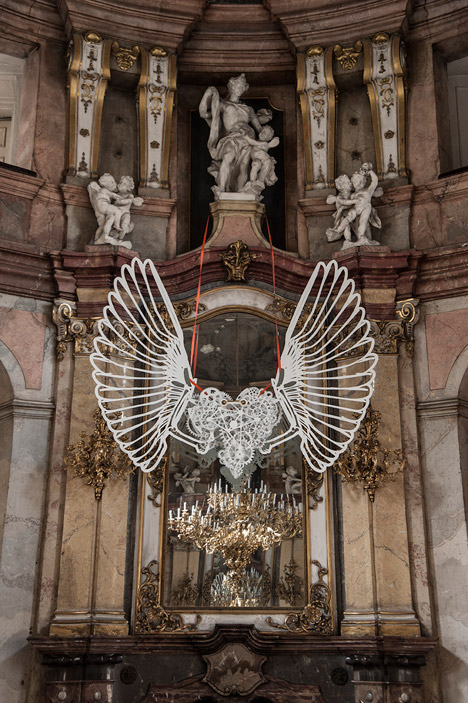
Also on display in the space was Tjep.’s Il Treno dining booth inspired by old train compartments and a winged heart of cogs called Clockwork Snow, originally designed for a Christmas window display at Milan department store La Rinascente.

Dezeen

Genesin Studio Renovates Victorian Shop In Adelaide For Aesop

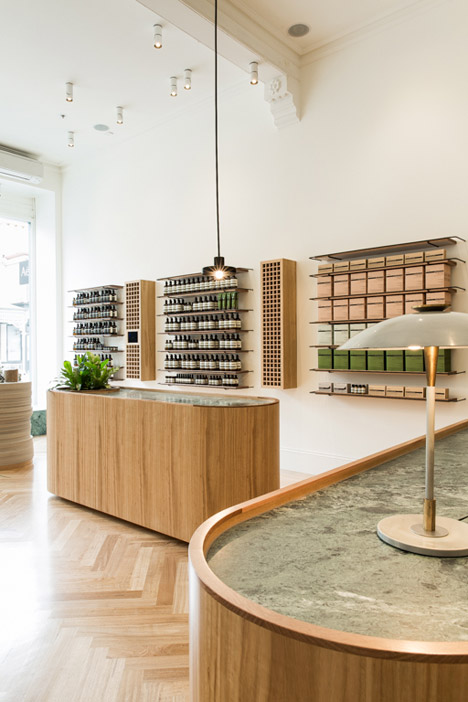
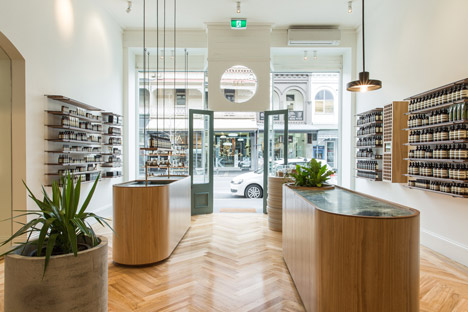
Genesin Studio has designed a pale wood and antique marble interior behind a dusky-green Victorian shopfront for skincare brand Aesop’s new Adelaide store .

Aesop Rundle Street in Adelaide by Genesin Studio

Genesin Studio created the interior for Aesop on Rundle Street – a popular shopping area within the studio’s hometown of Adelaide, South Australia.


Related story: “I was horrified at the thought of a soulless chain” – Aesop founder


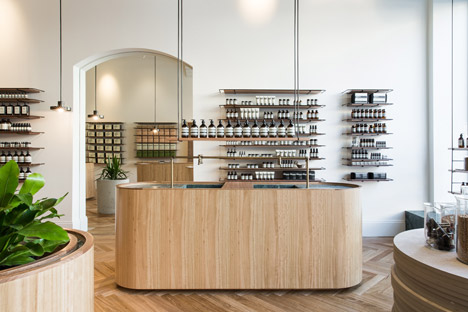
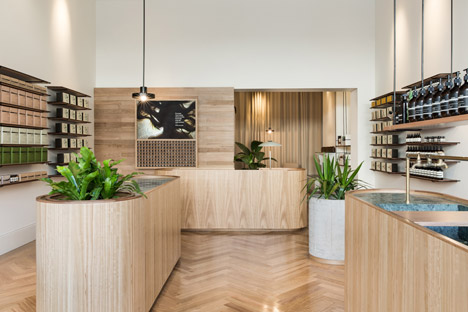
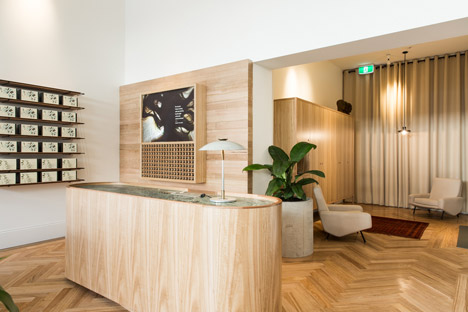
The studio maintained the original moulding and wood paneling of the historic shopfront, while introducing contemporary fittings to the interior, including three light oak display islands.

Aesop Rundle Street in Adelaide by Genesin Studio

“Materials were reinvented into the space to encourage nostalgia of the site’s heritage, but also to create interesting design components to platform the Aesop shopping experience,” said studio founder Ryan Genesin.

Aesop Rundle Street in Adelaide by Genesin Studio

The studio used Tasmanian oak as the predominant material for the interior, cladding floors, sections of wall and three display islands in the wood. Sections of the timber are arranged with the grain running in opposing directions to differentiate various components.

Aesop Rundle Street in Adelaide by Genesin Studio

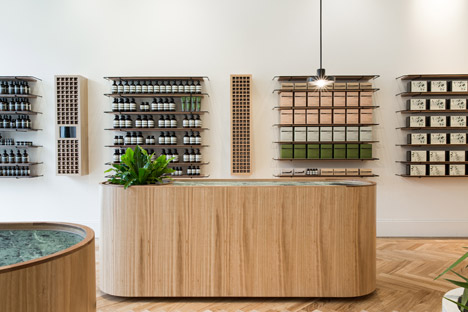
Three oblong islands with rounded ends are clad in vertical strips of oak, sat on parquet flooring made from the same species. Ten oil burners concealed beneath grates in the floor pump fragrance around the interior to “aromatically brand the store.”

“The hard-wearing Tasmanian oak was used to display Australian timbers to international shoppers and to give longevity to the design of space with its honey tones; these tones also give the Aesop brown bottles an honest, earthy contrast,” said the architect.

Aesop Rundle Street in Adelaide by Genesin Studio

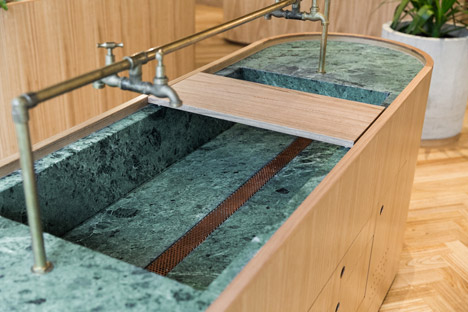
The three islands have green antique-marble countertops with recesses shaped for their specific uses. The first – a cash desk positioned at the rear of the shop – has a rectangular section of marble removed from its surface to hold a laptop.

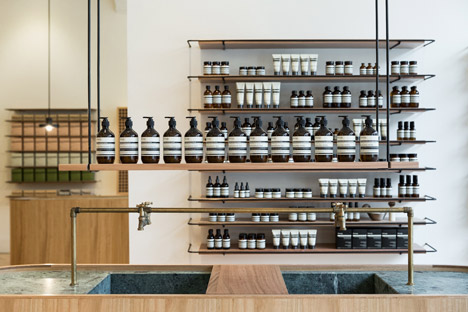
A second flat counter top for displaying products in the centre of the store has integrated planting, while a third forms a marble wash basin – with a strip of metal mesh inserted into the base to allow water to drain away and a wooden display slat across its middle.

“Antique green marble was used to modestly celebrate the Victorian period of the building and to give foundation to the interiors, but detailed and applied in a contemporary way,” the architect said.

Aesop Rundle Street in Adelaide by Genesin Studio

The brand’s products are displayed around the walls on rows of wooden shelves with curved metal surrounds, and on suspended shelves over the wash basin and in the shop window.

“Blackened steel rod shelving was used for its simplicity and rawness that also pays homage to the old building,” said Genesin.

Aesop Rundle Street in Adelaide by Genesin Studio

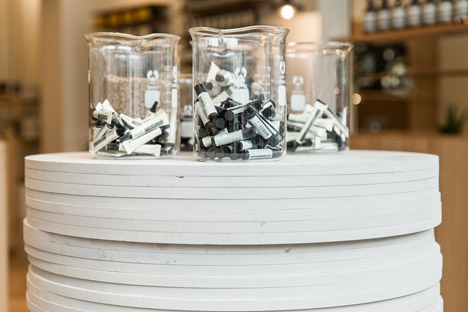
Smaller items are presented in large glass beakers on a podium made of stacked circular disks. Pendant lights hung on steel rods are positioned over the counter tops and moulded concrete plant pots.

Behind the cash desk, a section of wall is clad in chunky planks of oak. To the right, a lounge area with armchairs and beige linen curtains creates a space where customers can enjoy a coffee and browse the store’s library.

Aesop Rundle Street in Adelaide by Genesin Studio

The woodwork is offset by the white on the walls and ceiling, which is dotted with spotlights.

“The white space also gives emphasis to the merchandise and helps to exhibit and display without distraction, like a gallery,” said the architect.

Aesop Rundle Street in Adelaide by Genesin Studio

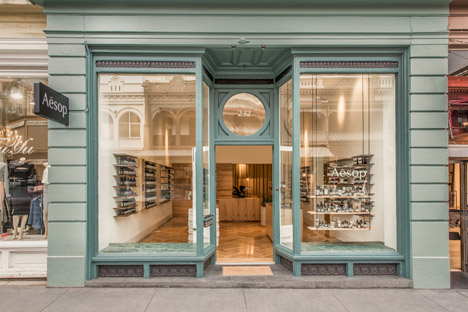
The moulded and panelled shop front has been painted a dusky-green to contrast with the light interior space. A three-tiered shelf is suspended on metal framework in one window, above marble-lined sills.

“The signature Aesop dusty green painted facade sits perfectly with the old building facade and understatedly gives Aesop street presence,” said the architect.

Aesop Rundle Street in Adelaide by Genesin Studio

A monochrome Aesop sign is hung perpendicular to the green shop front.

Photography by Jonathan VDK.

Dezeen

Richard Meier Reveals 163-metre Skyscraper Underway In Taiwan

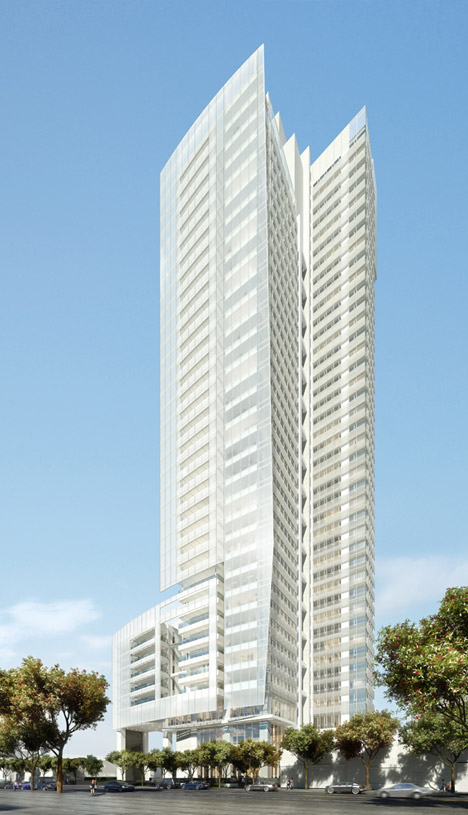
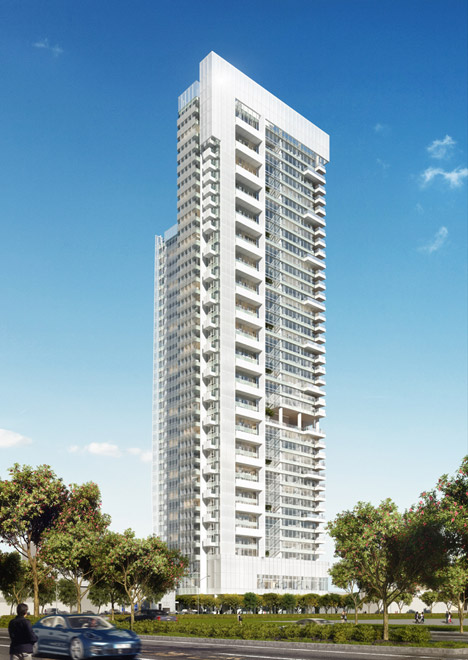
News: American architect Richard Meier has unveiled his design for a 163-metre-high skyscraper that is already under construction in the Taiwanese city of Taichung.

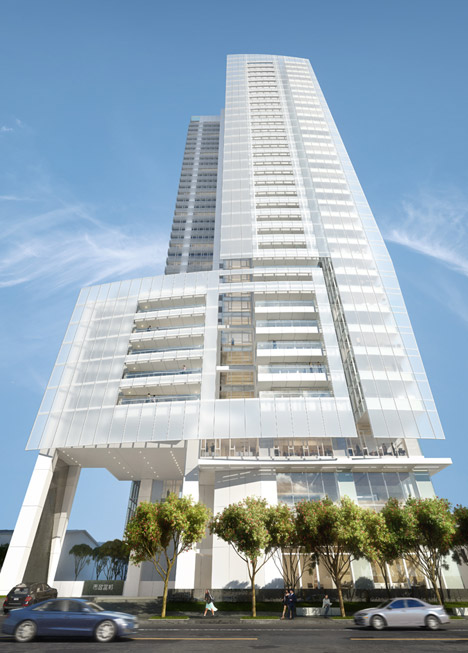
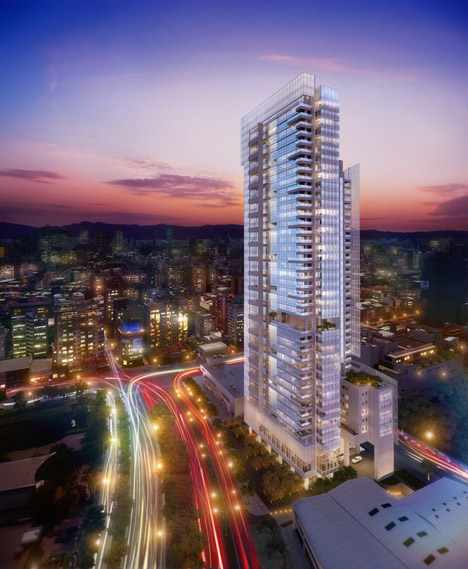
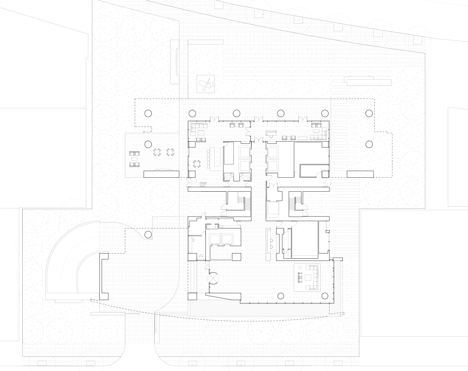
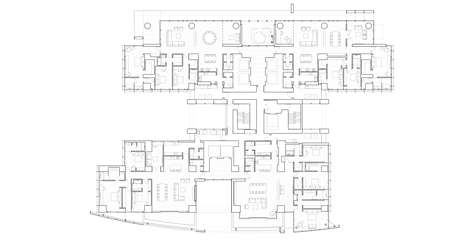
The Taichung Condominium Tower is designed by Richard Meier & Partners to create 110 luxury apartments in the centre of the city, with a private swimming pool, fitness centre and sky garden.

Taichung Condominium Tower by Richard Meier

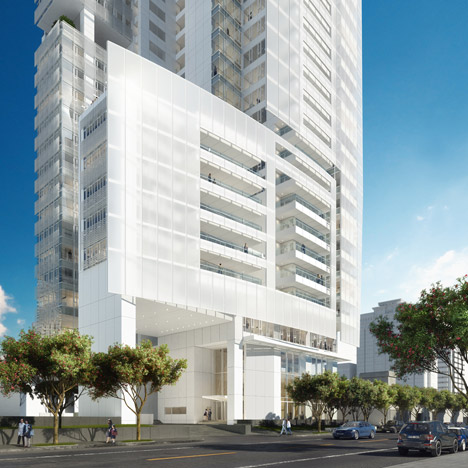
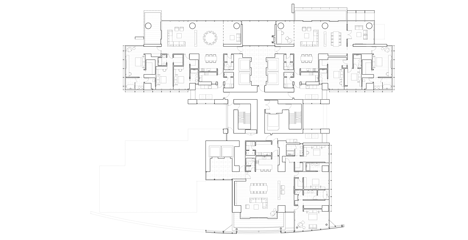
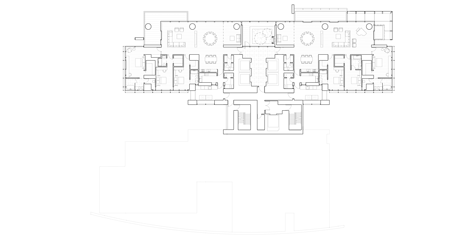
The buildings will be made up of two connected structures connected by a single staircase core – a high-rise north tower facing out towards the city skyline and a low-rise south building that accommodates the main entrance.


Related story: OCT Shenzhen Clubhouse by Richard Meier & Partners


Richard Meier – best known for designing the Getty Center in Los Angeles – said the project will contribute to the “dynamic architectural vibrancy” of Taichung, where SANAA, Zaha Hadid and MAD all have projects underway.

Taichung Condominium Tower by Richard Meier

“The new tower responds to the scale of city’s existing fabric while sustaining the modern architectural dialogue which we continue to refine and explore throughout our work,” he said.

“We truly believe that the building will become a prominent new addition in Taichung’s city centre and will embody our commitment to quality and timeless architecture.”

Taichung Condominium Tower by Richard Meier

The building’s main facade will be a glazed curtain wall, interspersed with areas of white aluminium cladding. The south tower will also feature a translucent glass screen to offer additional privacy for residents.

The design also integrates a series of balconies, terraces and voids, intended to create a variety of lighting conditions.

Taichung Condominium Tower by Richard Meier

“The design of the tower embodies our core principles of lightness and transparency,” said Dukho Yeon, one of two associate partners that worked alongside Meier on the design.

“We approached the design of this residential tower as a unique opportunity to deliver a beacon to the city centre, with a tailor-made solution incorporating the firm’s meticulous consideration to details, finishes, and materials while following our ideals of site, order and the use of natural light,” added associate partner Vivian Lee.

Taichung Condominium Tower by Richard Meier

The three lower levels of the building will be dedicated to residents’ amenities, which will also include massage rooms, a lounge, and both Western and Chinese banquet rooms.

Richard Meier & Partners is working with local firm HOY Architects to deliver the project. It is expected to complete in early 2018.

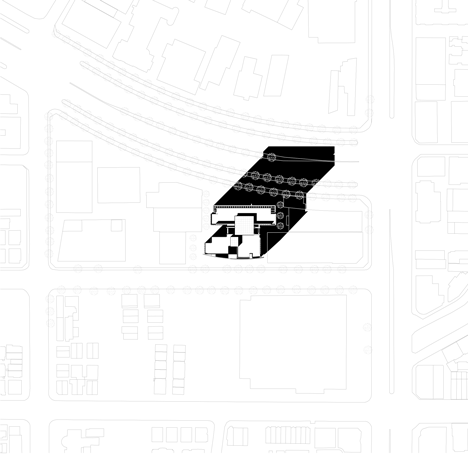
Taichung Condominium Tower by Richard MeierSite plan – Taichung Condominium Tower by Richard MeierFirst floor plan Taichung Condominium Tower by Richard MeierFourth floor plan Taichung Condominium Tower by Richard MeierTypical floor plan – Taichung Condominium Tower by Richard MeierPenthouse floor plan
Dezeen

Competition: Five Lost Destination Prints By Dorothy To Be Won

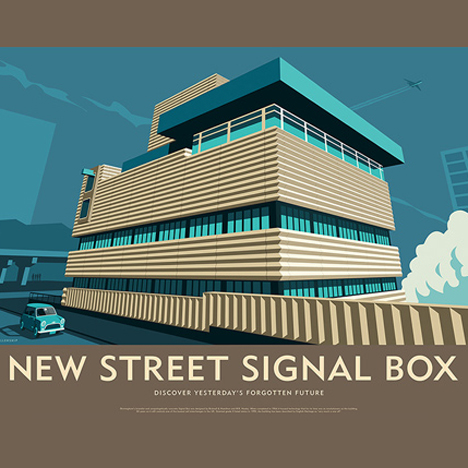
Birmingham New Street Signal Box

Competition: Dezeen has partnered with UK designers Dorothy to give readers the chance to win one of five prints of forgotten architectural monuments.

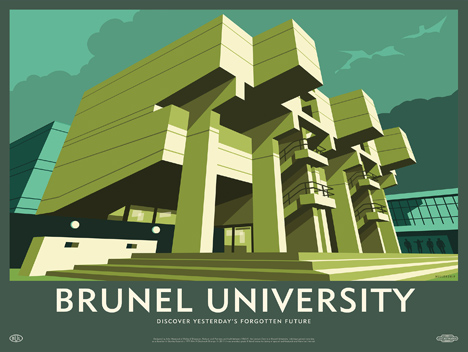
The Manchester-based studio has collaborated with the London Transport Museum on two new print designs that form part of the Lost Destination series, which celebrates often-overlooked buildings and iconic structures that no longer exist.

Based on 20th century travel posters, the two new prints feature British railway landmarks from the last 100 years and celebrate the grand visions of architects and engineers from two very different centuries.

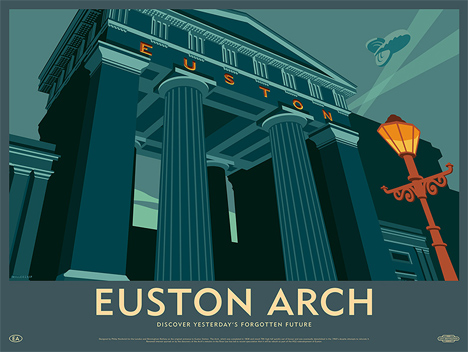
This image: Euston Arch was demolished in the 1960s – Top image: Birmingham New Street Signal Box This image: Euston Arch was demolished in the 1960s – Top image: Birmingham New Street Signal Box
The first print features Birmingham New Street Signal Box by Bicknell & Hamilton and W R Healey, which was constructed in 1964 to accommodate staff and railway equipment connected to the city’s central train station.
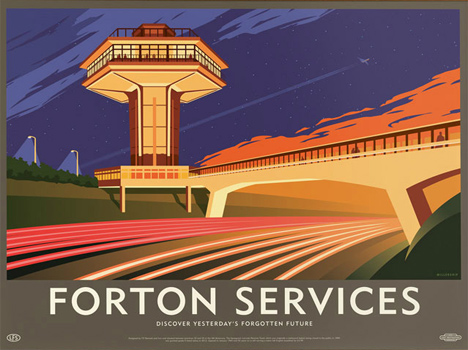
Forton Services, Lancaster, UK

Featuring pre-cast concrete cladding, the building was awarded Grade II listed status in 1995 and still controls one of the UK’s busiest rail interchanges to this today.

The second print is of London’s Euston Arch, built by Philip Hardwick in 1838 as the original entrance to Euston train station. Inspired by Roman architecture, the arch stood 21 metres tall until it was demolished in the 1960s.

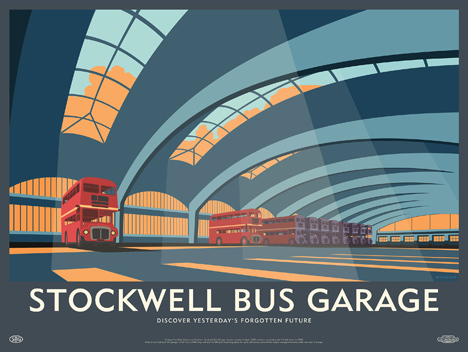
Winners will receive a print of their choice from the Lost Destination series, which includes: Preston Bus Station, Spaghetti Junction in Birmingham, Tricorn Centre in Portsmouth, Fylingdales in North Yorkshire and Forton Services in Lancashire.

The prints measure 80 by 60 centimetres and are available to purchase on Dorothy’s website.

Competition closes on 10 November 2014. Five winners will be selected at random and notified by email. The winners’ names will be published in a future edition of our Dezeen Mail newsletter and at the top of this page. Dezeen competitions are international and entries are accepted from readers in any country.

www.wearedorothy.com

Dezeen

Latest Ideas!