One of the most difficult challenges that architects and designers can face is the task of keeping the historic look and fixtures in older buildings while also paying heed to modern design elements. The architects at Australia’s Techné Architecture and Interior Design have taken on that challenge with this house in the Fitzroy suburb of Melbourne. Take a look inside to see how the team has managed to breathe a contemporary and vibrant style into this old home, making it the perfect space for a young and growing family.
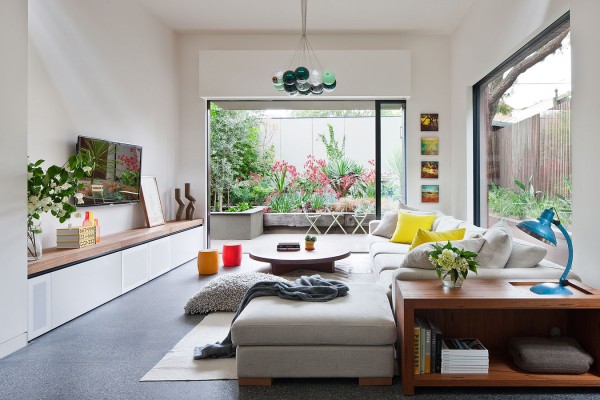
The photos in this post focus on the rear addition to the house, which includes three levels, beginning with this open and sunny living area.
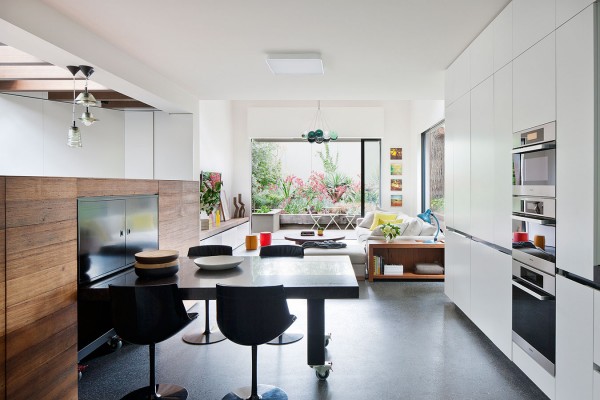
A modern kitchen, complete with a hightop breakfast table and dark, natural wood accents is sleek and simple.
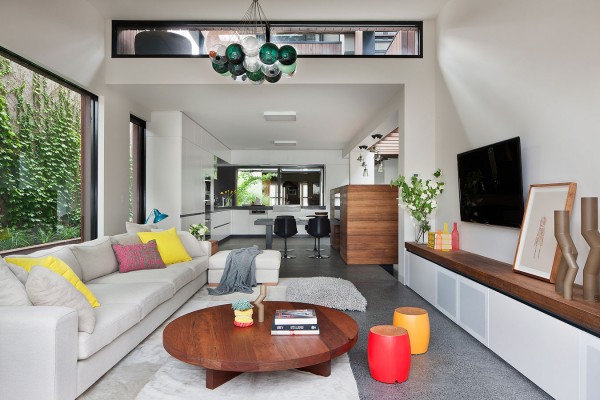
The colors are largely neutral but carefully chosen splashes of colors in the throw pillows, footstools, and crazy cool hanging light fixture keep the room feeling youthful and livable.
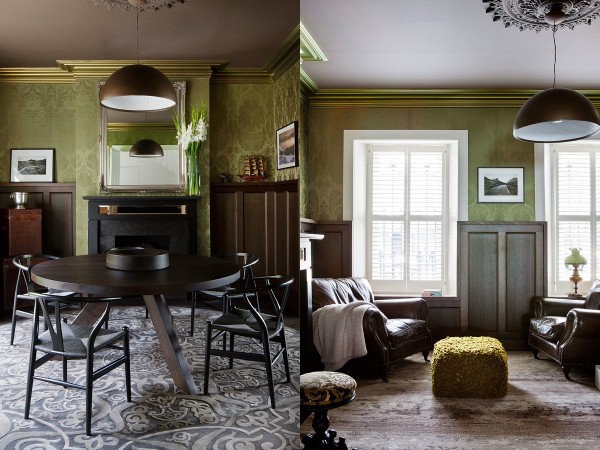
Here we get a glimpse into the front part of the house, where the interior stays true to the historic facade. Embossed wallpaper and intricate carpets use a palette of days gone by while modern furnishings make for an interesting mix n’ match.
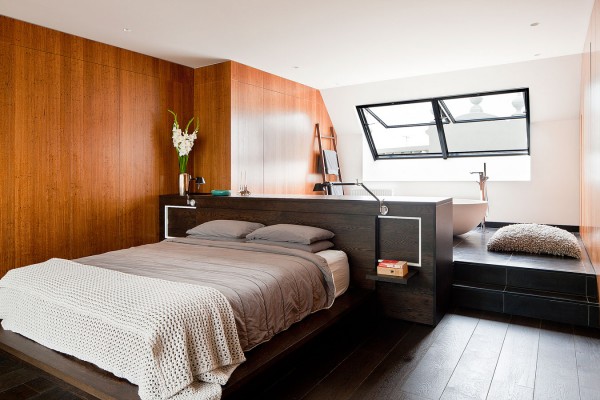
An upstairs bedroom utilizes a gorgeous deep red wood as its accent wall and leaves space for a private, sunny bath.
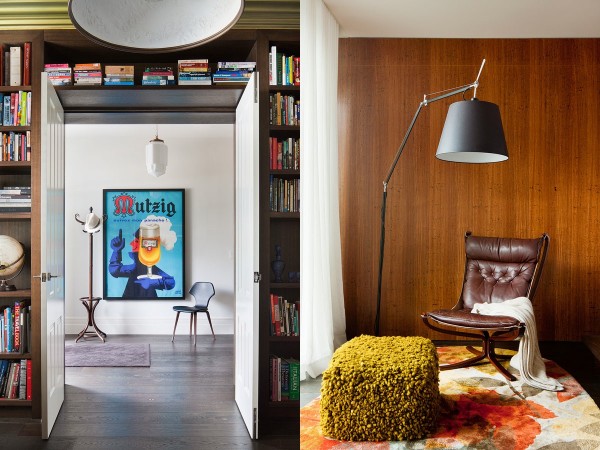
The older part of the home opens up to the addition almost as if you’re stepping through a portal into the future. The bookshelves surrounding the double doors are a lovely touch.
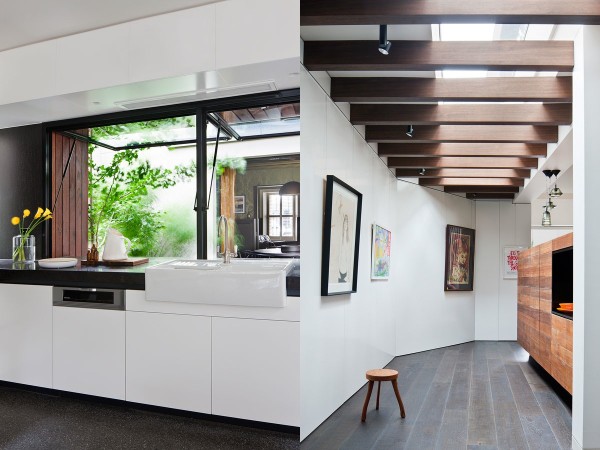
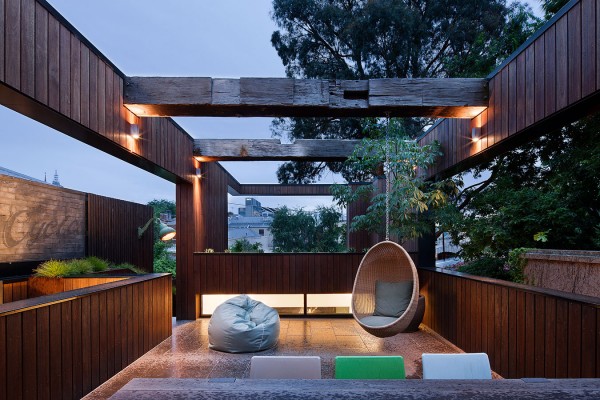
Exposed ceiling beams and creative windows add to the modern flair of the back addition.
The kitchen is glorious with its black and white motif and contemporary fixtures. Cooking in an historic kitchen might sound quaint, but could get old quickly. Not so in here.
The outdoor spaces don’t skimp on luxury, either. The dangling egg chair and outdoor dining area are perfect for an autumn night.
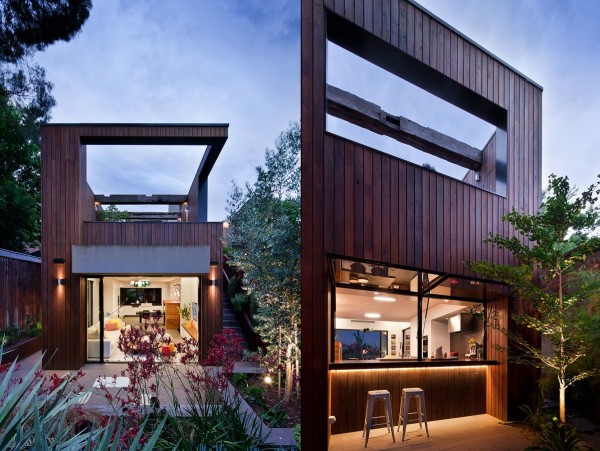
The view from the back of the house barely betrays the older facade and takes on a life of its own.
For more regular updates from Home Designing, join us on Facebook.
If you are reading this through e-mail, please consider forwarding this mail to a few of your friends who are into interior design. Come on, you know who they are!
Related Posts:
Multi Level Mountain House in Mexico
A Home Blended With Nature
Lakeside Summer Home
Incredibly Beautiful Kensington House by SHH Architects
News: Spanish architect Alejandro Zaera-Polo has abruptly stepped down from his post as dean of Princeton’s School of Architecture to “devote greater attention to his research”, just two years after taking the post.
Alejandro Zaera-Polo, co-founder of London-based architecture firm AZPML, has resigned from his post at America’s Princeton University one month into the new academic year.
Related story:Former Foreign Office Architects principal Alejandro Zaera-Polo launches studio
According to a statement issued by the school yesterday, Zaera-Polo will continue to teach at Princeton, but wanted to “devote greater attention to his research and other professional activities”.
The school’s former dean, professor Stanley T Allen, will serve as acting dean until a permanent successor is appointed and will also oversee the search for the new head.
“I hope that all members of the school community will assist us in making this transition to new leadership as smooth as possible,” said Princeton’s president Christopher L Eisgruber.
The school did not offer any further comment on the resignation. With a campus in New Jersey, the University is widely considered to be one of the leading academic institutions for architecture in the USA. Past teachers and visiting architects at the school have included Frank Lloyd Wright, Le Corbusier, R. Buckminster Fuller, Louis Kahn, Michael Graves, Peter Eisenman, Rem Koolhaas, Robert A. M. Stern, and Robert Venturi.
Zaera-Polo launched his current practice with former Foreign Office Architects colleague Maider Llaguno in 2011, after Llaguno split with FOA co-founder Farshid Moussavi. He was named dean at Princeton in 2012, having already been a visiting lecturer to the school for more than four years.
He had recently finished work on a research project examining the evolution of architectural facades – the results of which were featured in a room of Rem Koolhaas’ Elements exhibition at the Venice Architecture Biennale this summer. During press tours of the biennale, Koolhaas declined to talk about this particular portion of the exhibition.
Prior to taking the deanship at Princeton, Zaera-Polo had been dean of the Berlage Institute in Rotterdam and the inaugural Norman R Foster visiting professor at Yale School of Architecture.
Earlier this year Zaera-Polo quit one of his biggest jobs – the atrium for the £600 million revamp of Birmingham New Street Station in the UK – following a dispute over cladding materials with client Network Rail. His firm is still involved in the steel cladding for the external envelope of the structure.
“We hope to be able to stay till the end of the project, despite our complete disagreement with the management in respect to the atrium cladding,” he told the Birmingham Mail.
Photograph by John Jameson. Image courtesy of Princeton University Office of Communications.
Hello my friends! It’s a lovely rainy fall day here, and what I think will be the last warm day we have in quite some time. I’m actually excited about that. 🙂 I’m tired of sweating – bring on the crisp air, yoga pants and boots!
I finally did something in another part of the house other than the family room…can you believe it?
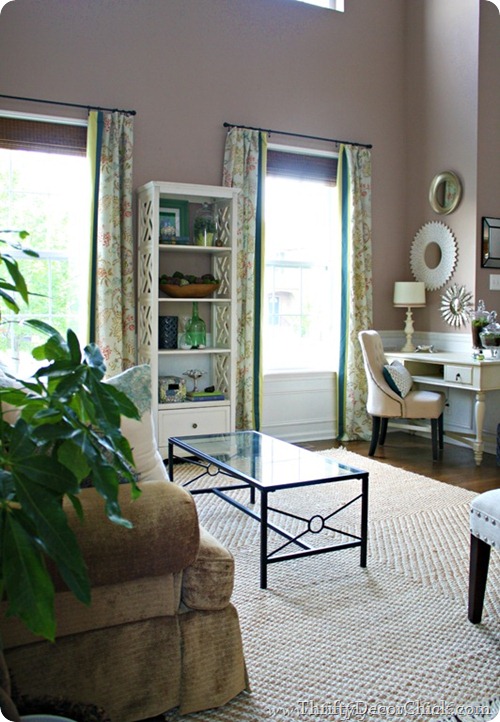
A while back I took the drapes down that used to hang in the living room:
This was in the pink wall era, so glad that color is gone! (They weren’t really pink but sure photographed that way.)
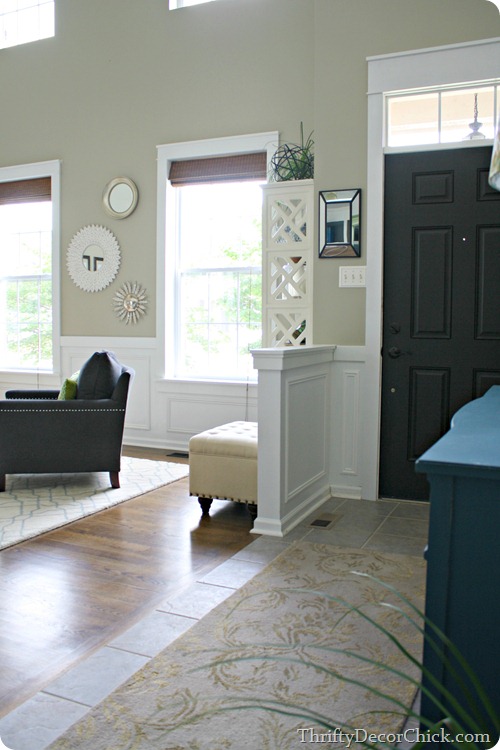
Anyway, I took those drapes down after I added new trim to the windows up front:
I like them simple like that – so much so that I don’t have any plans to put new drapes up, at least for now.
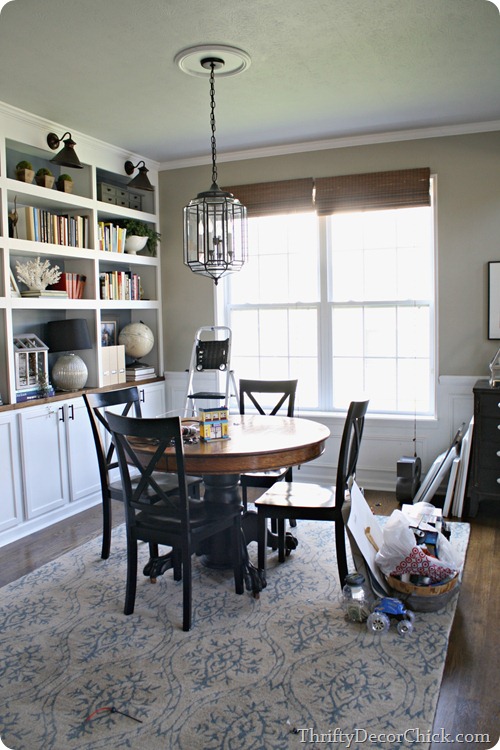
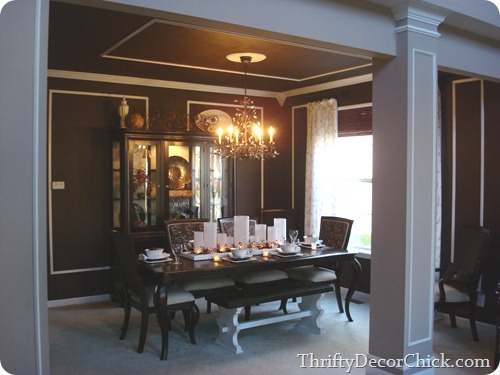
I got to thinking that our dining room windows could really use something though. I do plan to trim them out the same way but in the meantime they were looking pretty bland:
This was my before picture as I started working – excuse the mess. 🙂
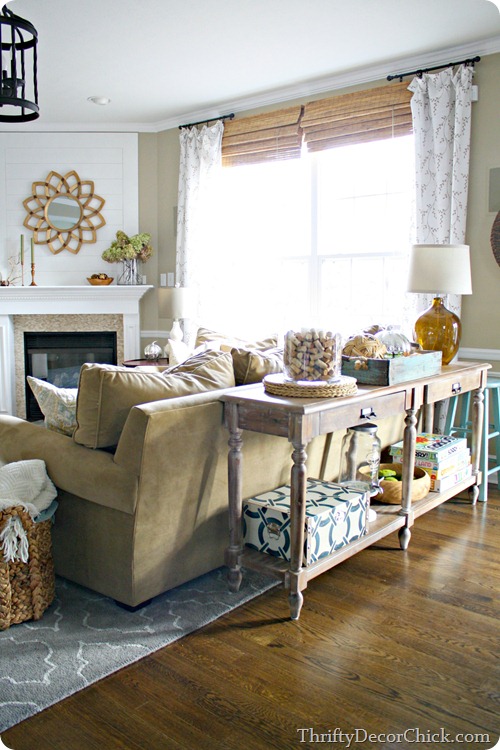
I took down the drapes that were the dining room years ago moved them to the family room:
When the wall came down those drapes did as well.
Anyway…I’ve had naked windows in the dining room for quite some time – I’ve been wanting to replace them but it hasn’t been a priority. Then I realized a couple weeks back I could use the drapes from the living room that I took down months ago. Are you with me?? 😉 We’re coming full circle here. Kinda.
Of course it can never be as simple as just hanging drapes for me. There’s always all kinds of little things that pop up along the way. The first thing I did was move the roman shades back down to inside the window frame. Years ago I mounted them outside just for a little extra light. It’s felt messy looking to me lately though and it only gives a couple extra inches of extra light so back they went.
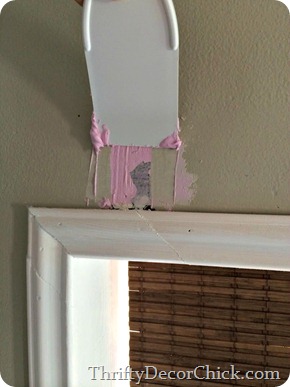
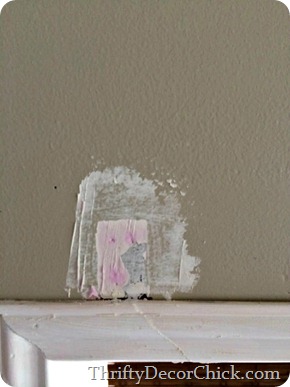
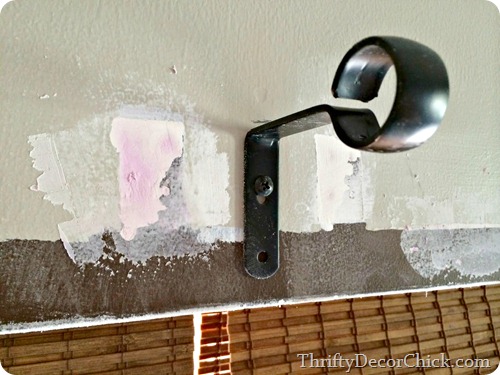
I had to patch where the shades were hanging:
When I took the brackets down they took chunks of drywall with them. Not sure why that happened – usually you’ll have problems with that if you put them up right after painting but I didn’t do that.
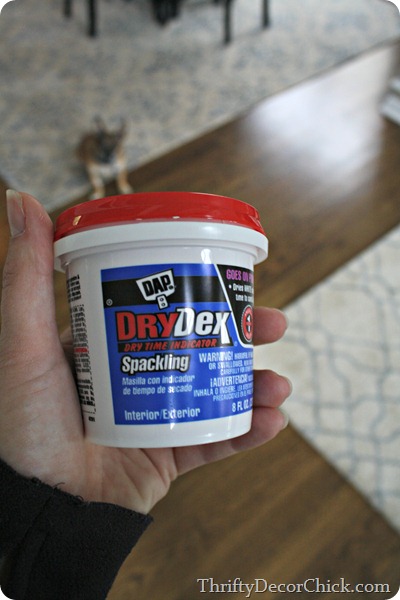
Anyway, I patched those up with spackling – this kind goes on pink and is white when it’s ready to paint/sand:
Love that!!
Hanging drapery hardware isn’t hard, it’s just a matter of hanging the brackets the exact same distance on either side of the window. I like to go out at least five inches from the window and usually at least a few above as well – I couldn’t go too high with these because I didn’t make them long enough.
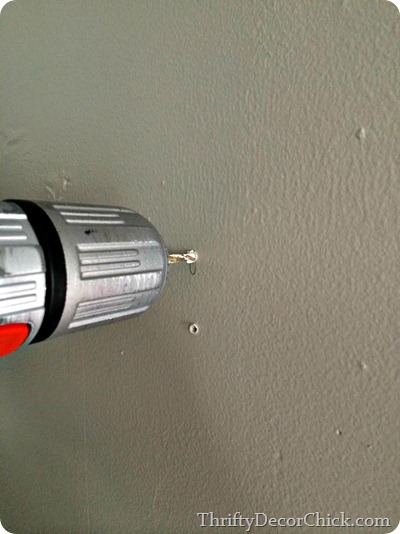
I just trace where the holes go in the bracket and then drill a pilot hole:
I always drill a hole first before trying to get a screw in the wall – if I hit a stud then I’ll need to predrill anyway. If I don’t hit a stud I know I’ll need to use anchors, so it’s a time saver to just do that first.
I got the hardware up on both sides and then realized the middle piece was going to hit the small molding I had around the window. Sooooo that had to come down…more patching and then painting to cover up the original chocolate brown color underneath:
Remember those days??:
I don’t miss it. 🙂
So THEN I get the drapes hung up and realize I didn’t like the stripes I added as a leading edge years back. I was using two panels on each side of the windows so the stripes were on either side of each one and it looked circus-esque. Not what I was going for.
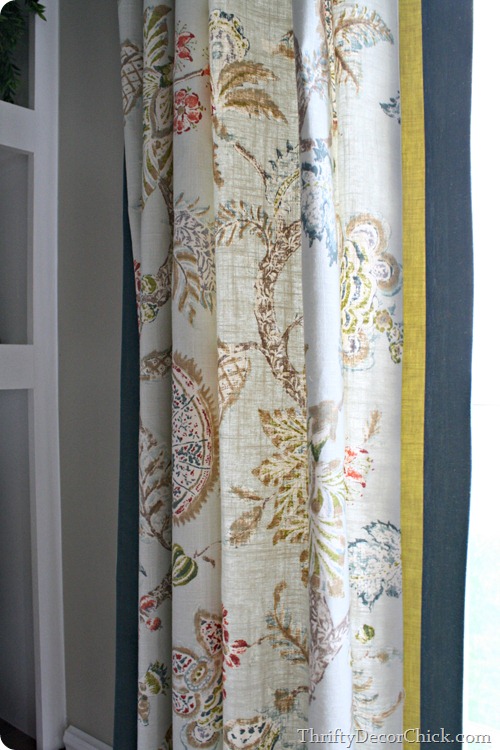
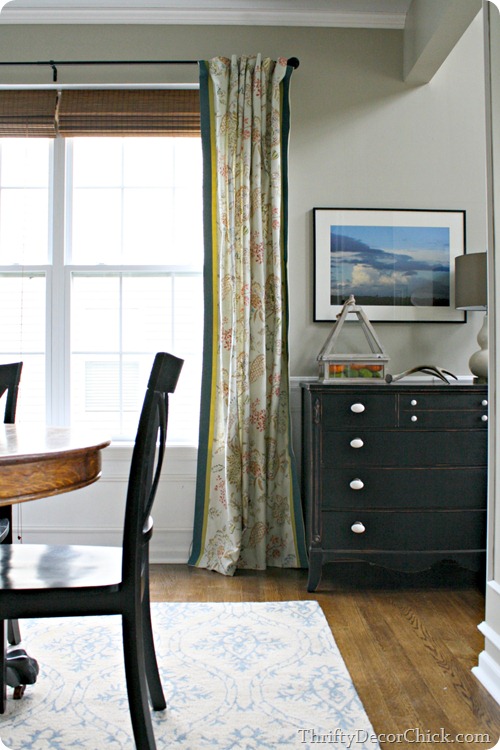
So I took them down, cut down the sides quite a bit and hemmed. I just left a bit of the stripes and I quite love the dark on the edges now:
I get asked about his fabric a lot – it’s a P. Kaufman fabric called retreat blue citrine. I’d like something a little simpler in this room eventually but until then these will do nicely. 🙂
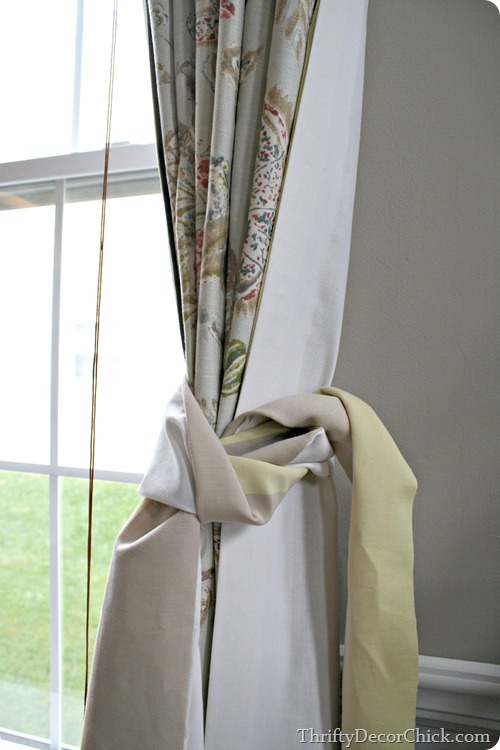
I “trained” the drapes like I showed you here years ago:
Combined with my fake pleat method it makes them hang much prettier!
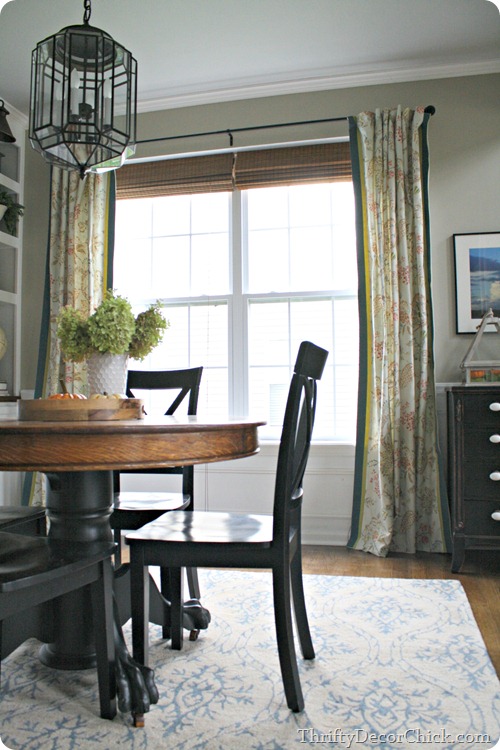
They add some warmth to the room and make it feel much more finished:
I’m so glad I took some of the stripes off – they look SO much better with just the simple color along the side:
These are two skinny panels together on each side – I cut the fabric down the middle for the other windows. I didn’t sew them together and you can’t tell. 🙂
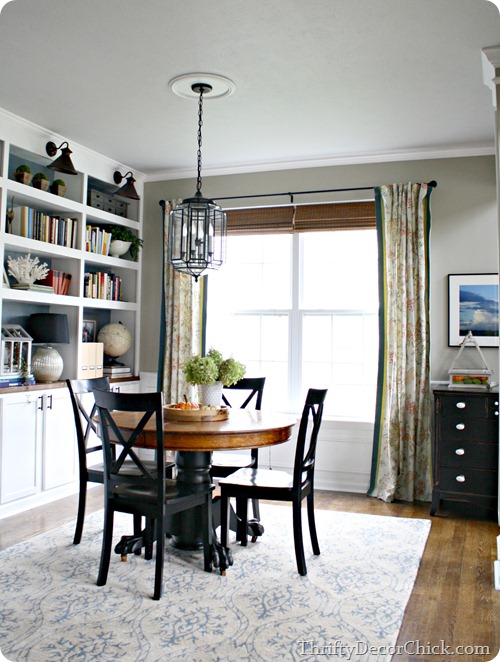
I hung these along a full drapery rod so we can close them if needed:
I hear we’re going to get another nasty winter and I like being able to close drapes for some added insulation. It helps!
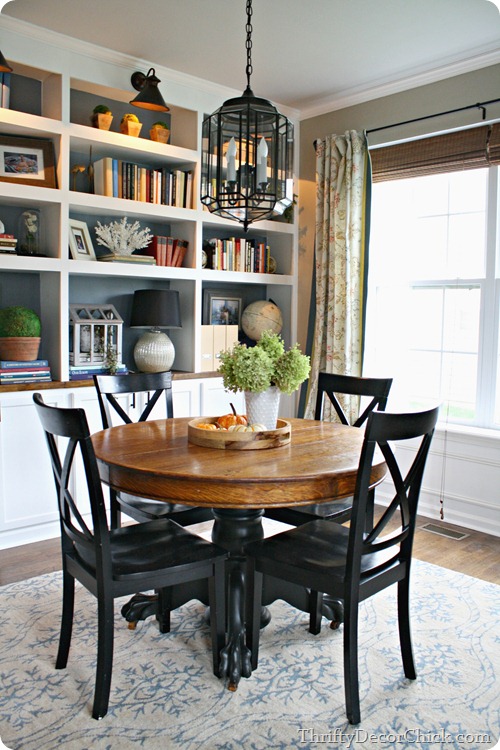
The colors are lovely – the blue edge matches the background on the built ins almost perfectly. Someday I will add the window trim in here but I will still probably keep drapes up even after that. They definitely add some coziness to a room!:
This project ended up taking a lot longer than I thought it would, but it was free so I can’t complain. 🙂 Another fall nesting project done!
Do you prefer drapes or none? Do you use yours if you have them? We use our bedroom drapes every weekend so the bedroom is crazy dark, love it. If you want your drapes to be full and pretty while closed you’ll want to add to your yardage to make them wider. I don’t spend money on that since they are usually only closed at night and it’s just us who sees them.
OH and we were waffling on keeping a table in this room but now that our kitchen table is plenty big I think we’re going to move ahead with our original idea of comfy chairs and a coffee table. Whoot! I think it will look lovely!
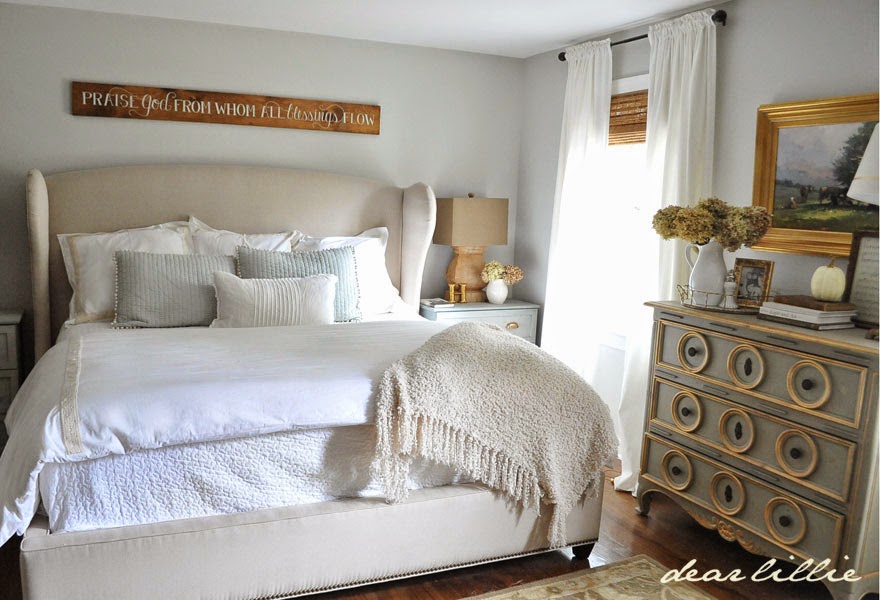
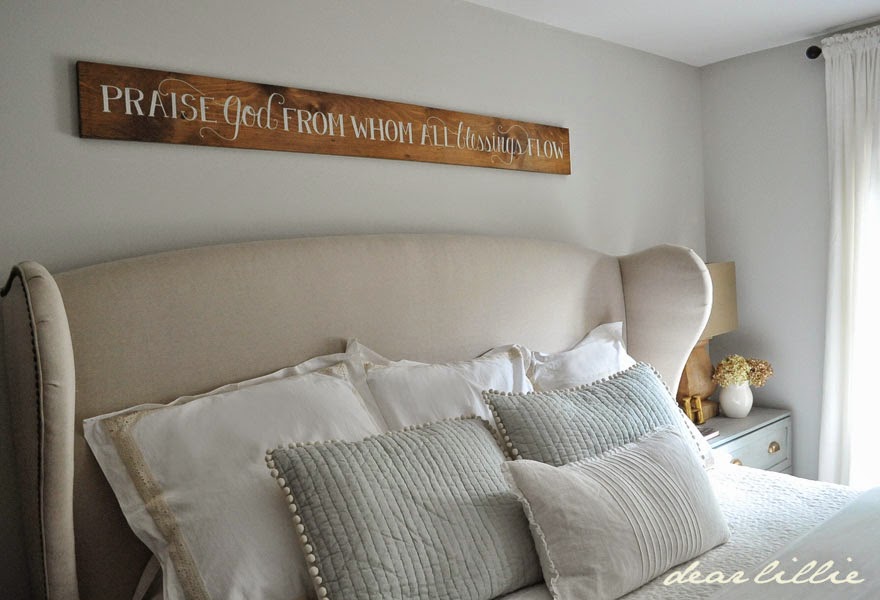
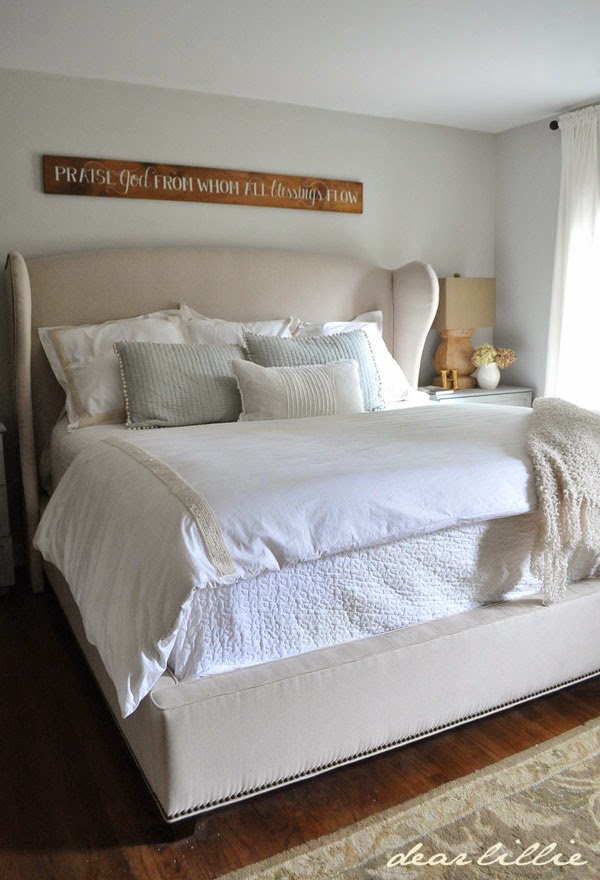
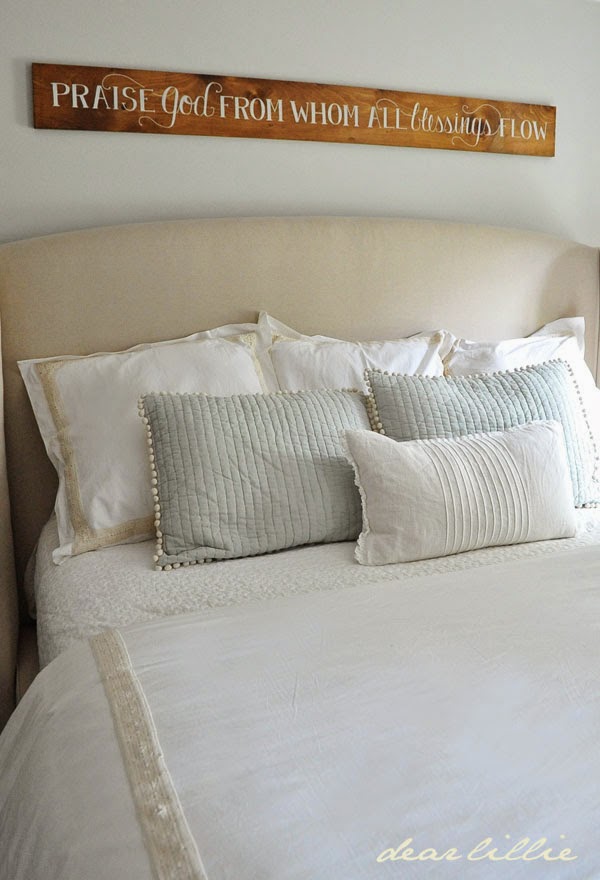
We are excited to be introducing our newest sign, “Praise God from Whom all blessings flow”. We will be listing them in our shop later this morning (10 AM, Thursday October 2nd).
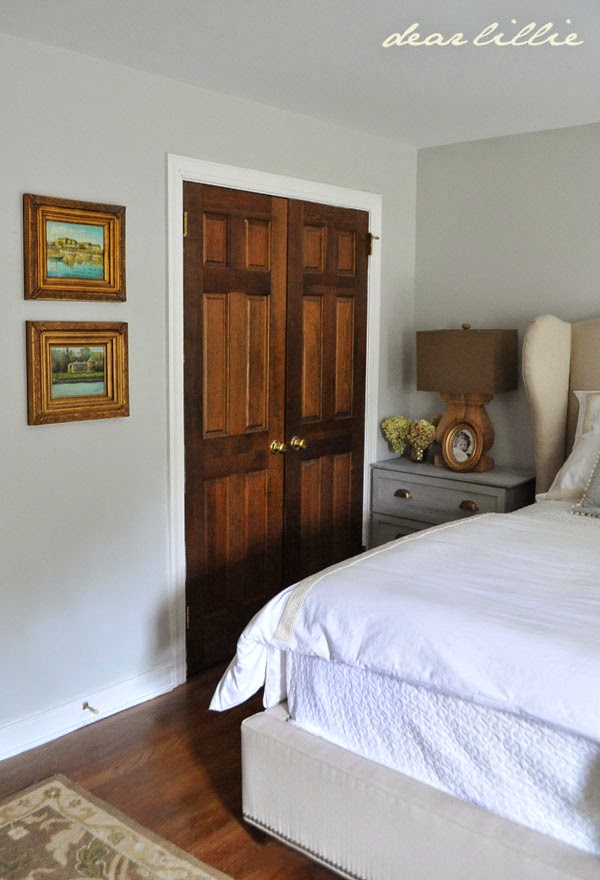
We also hung some artwork on the empty wall between our closets. The closet doors are pretty much the last ones left in the house to paint. Although I have to admit in this room they don’t really bother me that much. I am looking forward though to officially having all of the painting in the house done very soon. You can see some before and after photos and get a full source list for our master bedroom here in this post.
I hope you all have a lovely Thursday! Dear Lillie
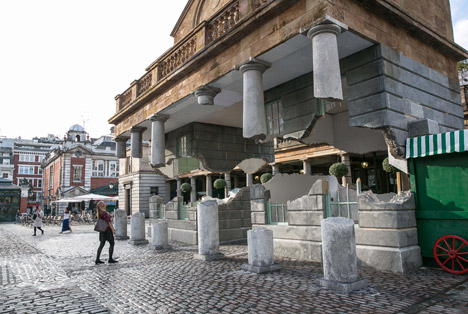
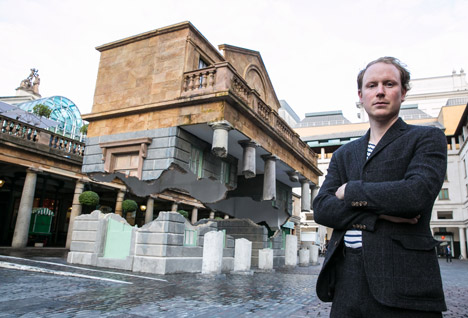
A piece of the historic Covent Garden market appears to have broken free of its stone base, with its top half levitating in the air, in the latest installation by London designer Alex Chinneck.
Take My Lightning but Don’t Steal My Thunder by Alex Chinneck is a precise replica of a section of the 184-year-old market building in London’s Covent Garden that has been made to look as if its upper portion has broken away from its stone base to float in mid air.
Chinneck is best known for creating architectural optical illusions, including a London building that seemed to have been turned upside down, a house in Margate whose facade appeared to be slipping off and a wall that melted in the sun.
Related story: London building turned upside down by Alex Chinneck
He is the latest in a line of designers and artists commissioned to create public works in Covent Garden’s Piazza including Jeff Koons, Damien Hirst and Paul Cocksedge. He wanted to create a piece that referenced the “performance culture” of the area, which is home to the Royal Opera House as well as a number of public buskers.
“My objective was to create an accessible artwork that makes a harmonious but breath-taking contribution to its historic surroundings, leaving a lasting and positive impression upon the cultural landscape of Covent Garden and in the minds of its many visitors,” said Chinneck.
“The hovering building introduces contemporary art to traditional architecture, performing a magic trick of spectacular scale to present the everyday world in an extraordinary way.”
Built from a steel frame and filcor, a type of expanded polystyrene, the 12-metre-long structure took 500 hours to shape using digital carving techniques and was painted to replicate the appearance of the existing building on the site.
A four-tonne counterweight enables the suspension of the top half of the fake building.
Take My Lightning but Don’t Steal My Thunder will be on display in Covent Garden’s East Piazza until 24 October.



 Multi Level Mountain House in Mexico
 Incredibly Beautiful Kensington House by SHH Architects
 House That Looks Like Hobbit’s Home from LOTR
 Multi Level Mountain House in Mexico
 A Home Blended With Nature
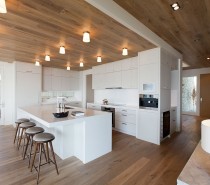 Lakeside Summer Home
 Incredibly Beautiful Kensington House by SHH Architects
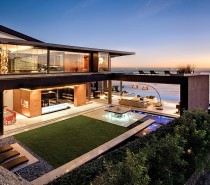 Nettleton 198 House by SAOTA
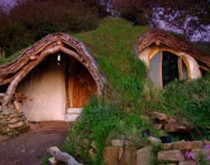 House That Looks Like Hobbit’s Home from LOTR