Restoration Of Alvar Aalto's Viipuri Library Wins 2014 Modernism Prize

News: the World Monuments Fund/Knoll Modernism Prize for preservation of a modern landmark has been given to a Finnish committee responsible for restoring architect Alvar Aalto’s Viipuri Library in Vyborg, Russia .

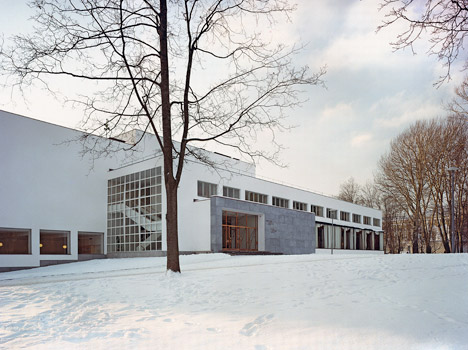
Alvar Aalto's Viipuri Library restoration by the Finnish Committee for the Restoration of Viipuri Library

The Viipuri Library was built between 1927 and 1935 in what was then the Finnish city of Viipuri, and has been restored by a specially formed committee in collaboration with the building’s current management.


Related story: Artek buys factory where Alvar Aalto developed his furniture


Barry Bergdoll, chairman of the Modernism Prize jury and curator of architecture and design at New York’s Museum of Modern Art, said the building was “an icon of 20th century architecture”.
Alvar-Aalto-Viipuri-Library-restoration_dezeen_468_4

“With its distinctive sky-lighted roof, undulating wood-slatted lecture hall ceiling, and glass facade-enclosed staircase — the library at Viipuri is one of Aalto’s most important buildings from the years in which he was adventurously exploring a new Modernist vocabulary; indeed, photographs of the building soon made him known around the world,” said Bergdoll.
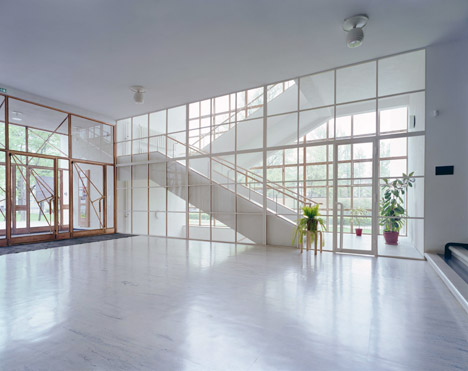
Alvar Aalto's Viipuri Library restoration by the Finnish Committee for the Restoration of Viipuri Library

War and changing borders saw the town the structure was designed for change both countries and names – from Viipuri to Vyborg. It is now known locally as the Central City Alvar Aalto Library.
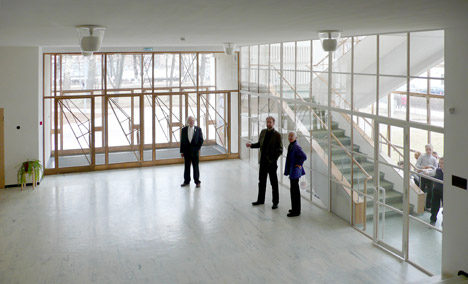
Alvar Aalto's Viipuri Library restoration by the Finnish Committee for the Restoration of Viipuri Library

Under the Soviet regime, few outsiders were able to visit the building and it was threatened by abandonment and “inappropriate renovations”, according to the World Monuments Fund (WMF).
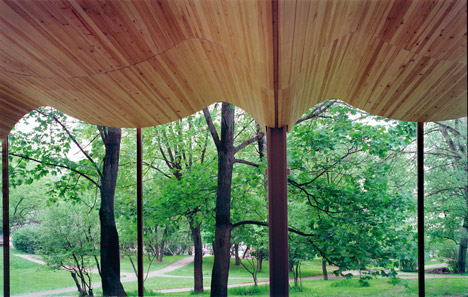
Alvar Aalto's Viipuri Library restoration by the Finnish Committee for the Restoration of Viipuri Library

The Finnish Committee for the Restoration of Viipuri Library, whose members include chairman Eric Adlercreutz, Tapani Mustonen, Maija Kairamo, Leif Englund, Maren Nielsen, Olli Helasvuo, Eero Pekkari, Heikki Pekonen, Ben-Roger Lindberg, Aki Schadewitz, and Mariel Pohlman, was formed in 1992 after the fall of the USSR.
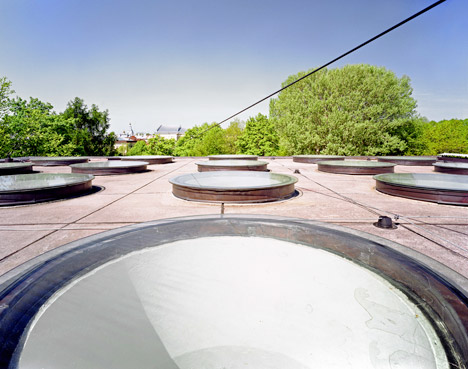
Alvar Aalto's Viipuri Library restoration by the Finnish Committee for the Restoration of Viipuri Library

They were assisted by the new management of the library, including Tatiana Svetelnikova, Helen Rogozina, and Alexander Batalin.

Completed in 2013, the restoration required cooperation between the Finnish and Russian governments, regional authorities and international funding.
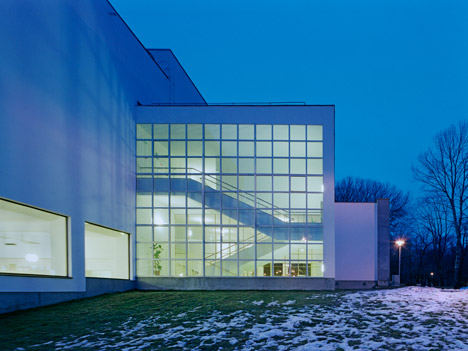
Alvar Aalto's Viipuri Library restoration by the Finnish Committee for the Restoration of Viipuri Library

“The restoration organised and executed an impressive international campaign that has ensured the survival and revival of Aalto’s masterpiece by restoring it to its original function as a vibrant municipal library,” said Bergdoll.
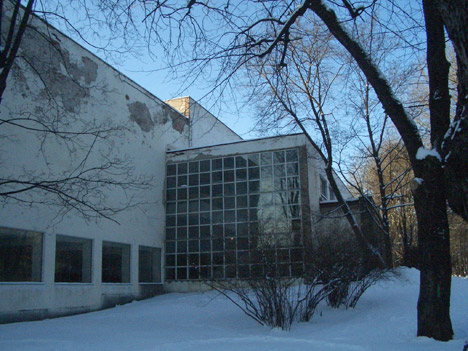
Alvar Aalto's Viipuri Library restoration by the Finnish Committee for the Restoration of Viipuri LibraryMain stair hall, before restoration

The project took two decades and the building was twice listed on the World Monuments Watch list for modern buildings at risk – once in 2000 and once in 2002.
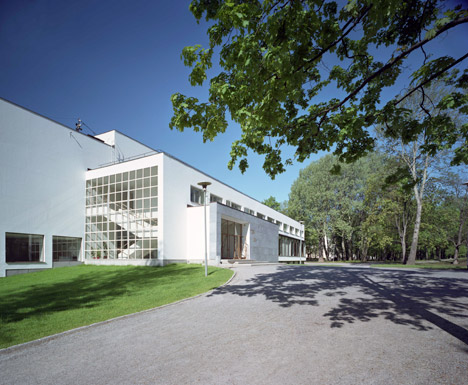
Alvar Aalto's Viipuri Library restoration by the Finnish Committee for the Restoration of Viipuri Library Main stair hall, after restoration

The WMF contributed a grant of \$300,000 (£200,000) to restore 58 signature skylights over the reading room and lending library.
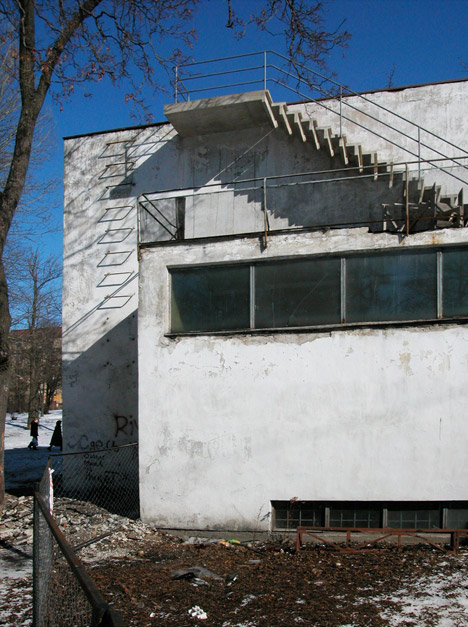
Alvar Aalto's Viipuri Library restoration by the Finnish Committee for the Restoration of Viipuri Library Lending hall terrace, before restoration

“The project reflects the highest standards of scholarship, authenticity, architecture, materials conservation, functionality, social impact, stewardship, and technical imagination,” said a statement from the World Monuments Fund.
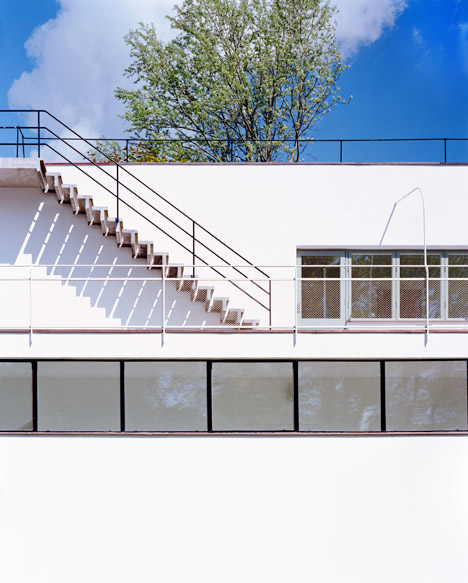
Alvar Aalto's Viipuri Library restoration by the Finnish Committee for the Restoration of Viipuri Library Lending hall terrace, after restoration

Launched in 2008, the Modernism Prize is granted every two years for an architectural or design solution that has preserved or enhanced a Modern landmark or group of landmarks.
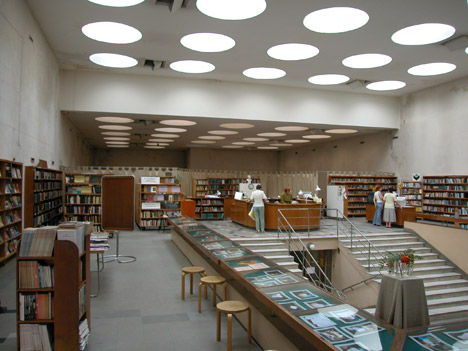
Alvar Aalto's Viipuri Library restoration by the Finnish Committee for the Restoration of Viipuri Library Lending hall, before restoration

It will be presented at New York’s Museum of Modern Art on December 1 by WMF president Bonnie Burnham and Andrew B Cogan, CEO of furniture brand Knoll, which sponsors the prize.
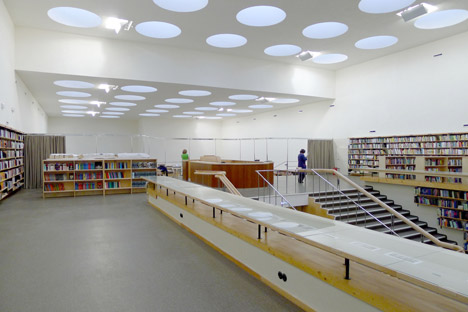
Alvar Aalto's Viipuri Library restoration by the Finnish Committee for the Restoration of Viipuri Library Lending hall, after restoration

The winners will received \$10,000 (£6,200) and a limited edition Mies van der Rohe Barcelona Chair from Knoll.
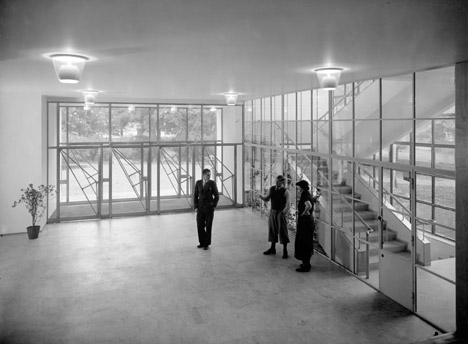
Alvar Aalto's Viipuri Library restoration by the Finnish Committee for the Restoration of Viipuri Library Alvar and Aino Aalto with assistant Aarne Ervi, 1935

Viipuri Library is an iconic modern structure and we are delighted to witness its successful restoration through an international network of funders and professionals,” said Burnham. “It speaks to the fundamental mission of WMF, which was founded on the belief that international cooperation can play a catalytic role in saving important historic sites around the globe.”
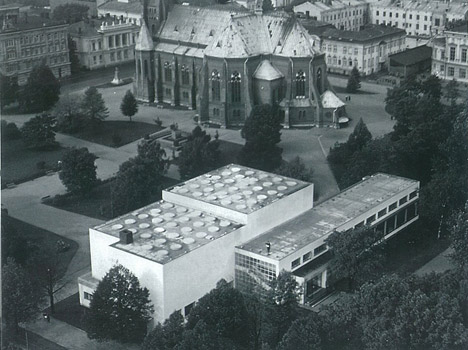
Alvar Aalto's Viipuri Library restoration by the Finnish Committee for the Restoration of Viipuri Librar
y Viipuri Library, c. 1935

Images courtesy of The Finnish Committee for the Restoration of Viipuri Library and Petri Neuvonen.

Dezeen

Poise La Coiffeuse Décomposée Par Ana Tevsic

Poise la coiffeuse décomposée par Ana Tevsic

Ana Tevsic, designer croate basée du côté de Zagreb nous présente Poise vanity table, une coiffeuse décomposée aux 5 miroirs décalés !

Une réflexion imparfaite de votre image, rappel de l’acceptation de nos différences, de nos irrégularités qui font ce que nous sommes.. «Everything that makes us unique carries its own perfection, like the reflections at this table.«

Un jeu ludique et graphique pour une coiffeuse loin de ressembler aux standards..

Poise la coiffeuse décomposée par Ana Tevsic Poise la coiffeuse design décomposée par Ana Tevsic Poise la coiffeuse design décomposée par Ana Tevsic Poise la coiffeuse design décomposée par Ana Tevsic Poise la coiffeuse design décomposée par Ana Tevsic Poise la coiffeuse design décomposée par Ana Tevsic Poise la coiffeuse design décomposée par Ana Tevsic Poise la coiffeuse design décomposée par Ana Tevsic Poise la coiffeuse design décomposée par Ana Tevsic

Plus d’informations sur le designer : Ana Tevsic

via

By Blog Esprit Design

The post Poise la coiffeuse décomposée par Ana Tevsic

Blog Esprit Design

Bent Architecture's Wooden Extension Screens A Melbourne Home From Neighbouring "McMansion"

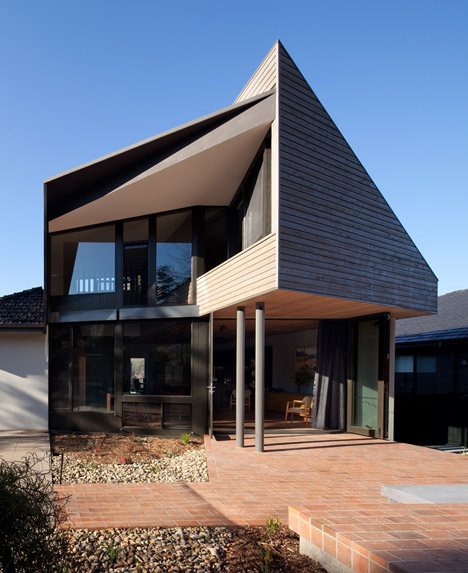
The steeply angled roofs of a wooden pavilion and extension by Bent Architects will screen a family home in Australia from a “monster” development on an adjoining plot of land .

Bent Pavilion by Bent Architecture

Bent Architecture added a two-storey extension and a wooden structure, named Bent Pavilion, in the back garden of a Melbourne house as a preemptive measure for a client concerned about being overlooked by a proposed “McMansion”.


Related story: Giant sash windows cover the back of Panovscott’s Sydney house extension


Bent Pavilion by Bent Architecture

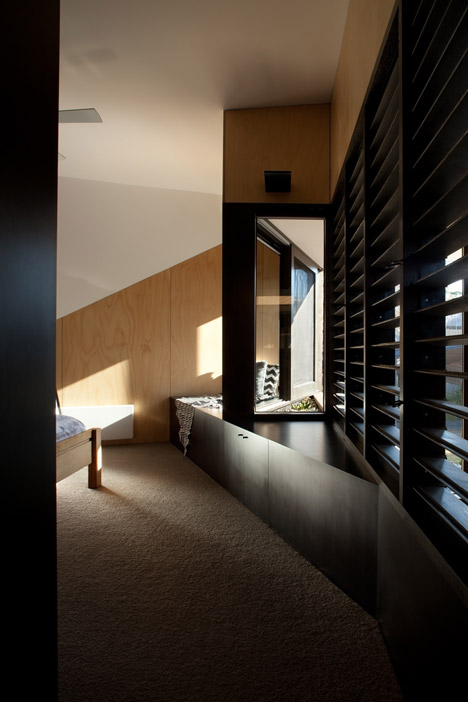
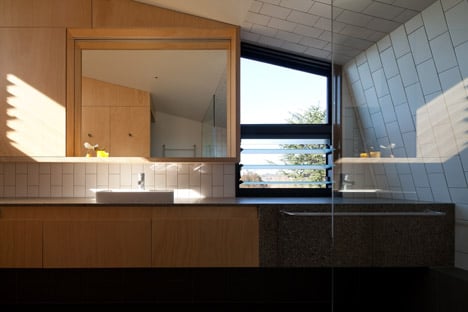
The local studio designed the angular timber-clad extension to house a double-height living room and a master bedroom suite, with windows that slant away from the proposed development site.

Bent Pavilion by Bent Architecture

The two-storey addition is arranged in an L-shape with a solid wooden facade at bedroom level. This wooden-clad volume that juts out over a glazed doorway to form a porch.

Bent Pavilion by Bent Architecture

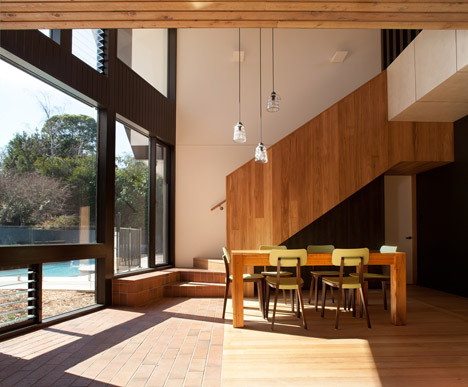
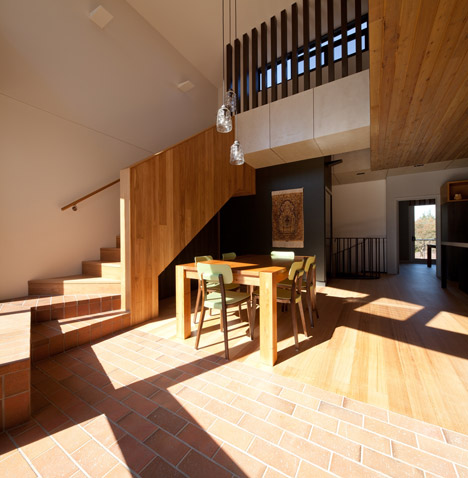
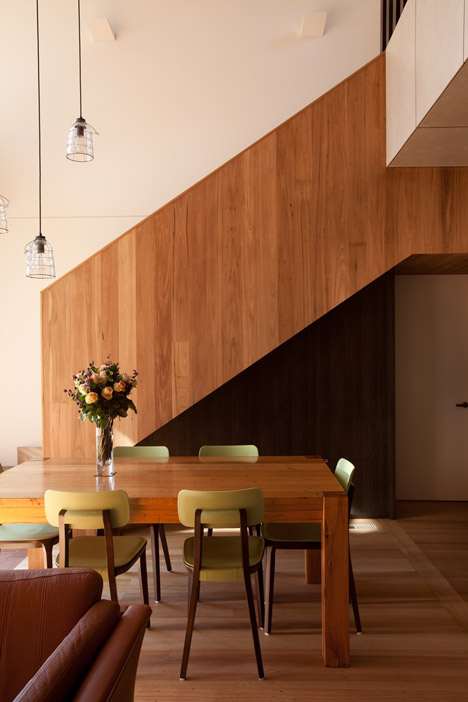
The space is faced in roughly hewn cypress wood on both the interior and exterior, and has a brick and solid timber staircase that rises through the living space to the bedroom suite.

Bent Pavilion by Bent Architecture

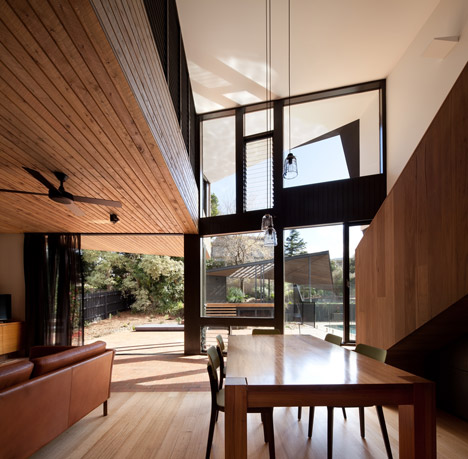
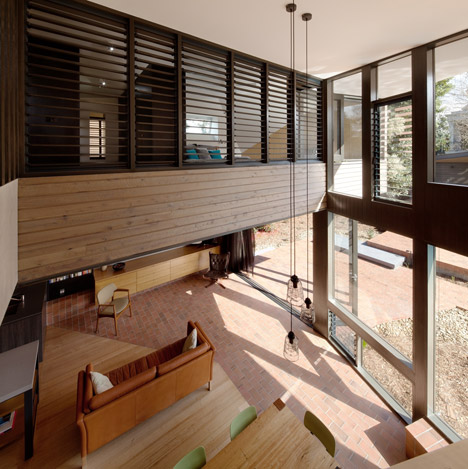
This atrium has a tilted glass facade that maintains privacy while creating a “dramatic connection to the outdoors.”

Bent Pavilion by Bent Architecture

Dark wooden slats that contrast the interior cypress-wood cladding partially enclose a walkway and bedroom on the upper floor while allowing views over the atrium.

Bent Pavilion by Bent Architecture

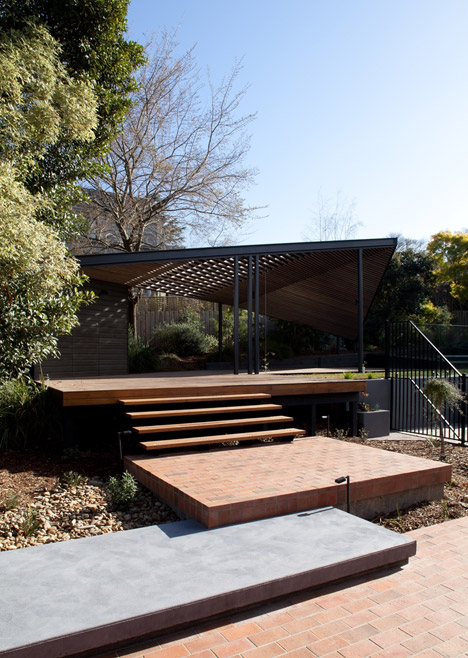
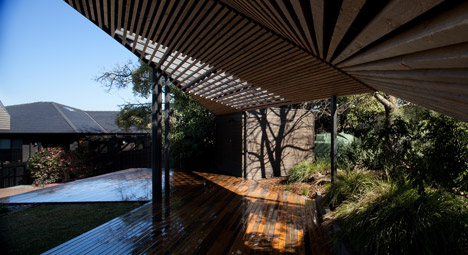
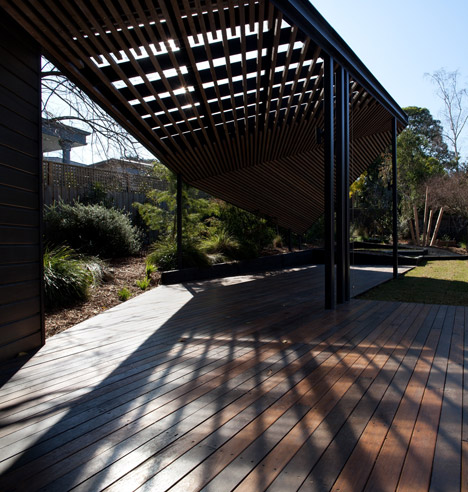
A wooden pavilion with a folded roof positioned on high ground in the back garden acts “as a visual shield” between the two properties.

Bent Pavilion by Bent Architecture

“The Bent Pavilion was initiated to consider a solution for protecting the amenity of a suburban home that would soon be flanked by a McMansion proposed on a neighbouring site,” said studio director Paul Porjazoski.

Bent Pavilion by Bent Architecture

This structure, which has open sides and a slatted roof that allow light to pass through into the garden, sits on an area of decking made up of repurposed timber interspersed with new pieces of native Australian hardwood.

Bent Pavilion by Bent Architecture

The decking “floats over the natural sloping landscape,” said the architect.  It terraces into a series of descending brick platforms, which lead towards the entrance to the extension. The wooden porch over the entrance to the extension overhangs the lowest level of brick terracing.

Bent Pavilion by Bent Architecture

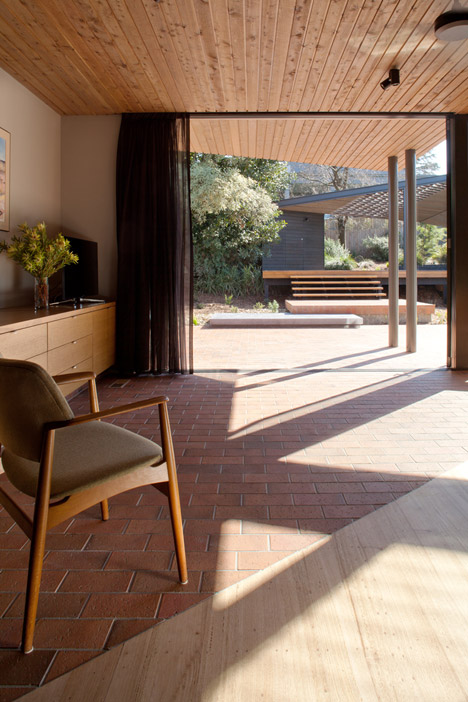
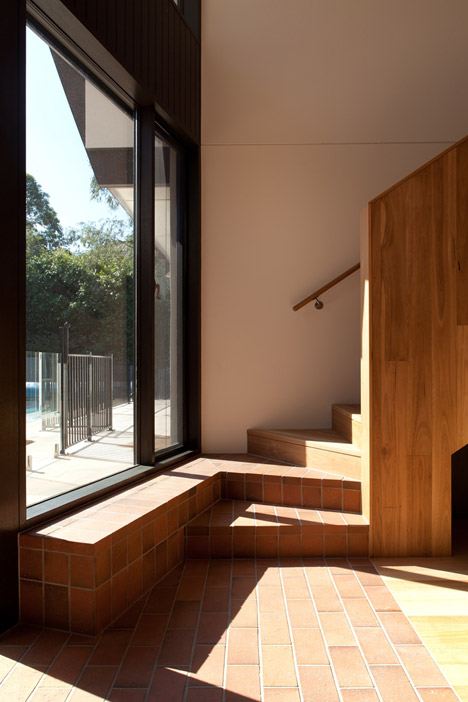
The red brickwork continues through the glazed door onto two lower steps of the otherwise timber staircase and part way across the living room floor, where it transitions to cypress floorboards beyond the foot of the stairs.

Bent Pavilion by Bent Architecture

“Terraces of varying sizes and textures push their way into the dwelling’s interior; the northern wall of the home opens up and brick paving spills in to reinforce the connection,” said the architect.

Bent Pavilion by Bent Architecture

Images are by Folded Bird Photography.

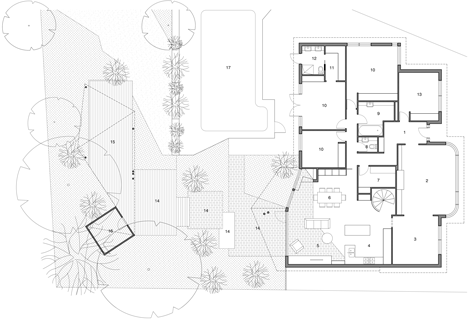
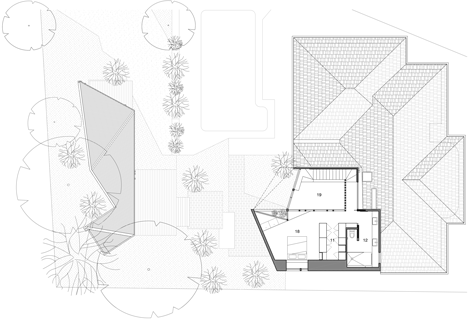
Bent Pavilion by Bent ArchitectureGround floor plan Bent Pavilion by Bent ArchitectureFirst floor plan
Dezeen

Nendo Works With Japanese Artisans To Create Bent-wire Tables

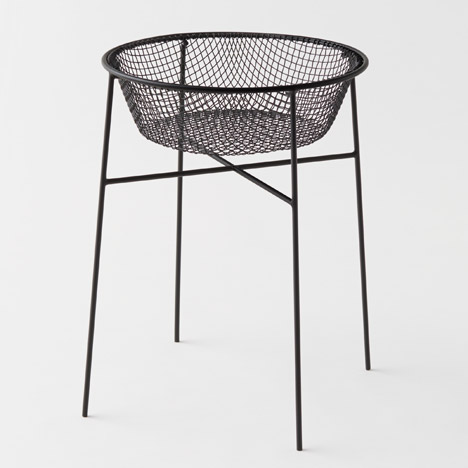
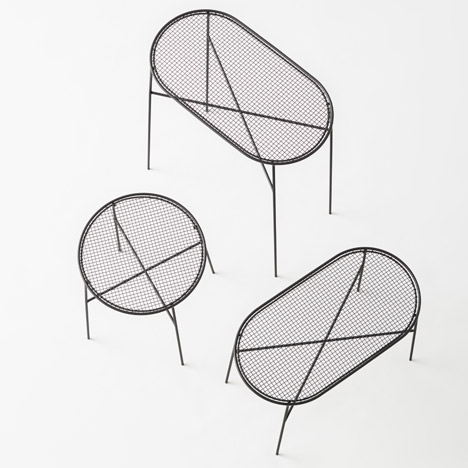
Japanese design studio Nendo has collaborated with Kyoto wire netting firm Kanaami-Tsuji to create a set of minimal basket containers and stands .

Basket container by Nendo with Kanaami Tsuji

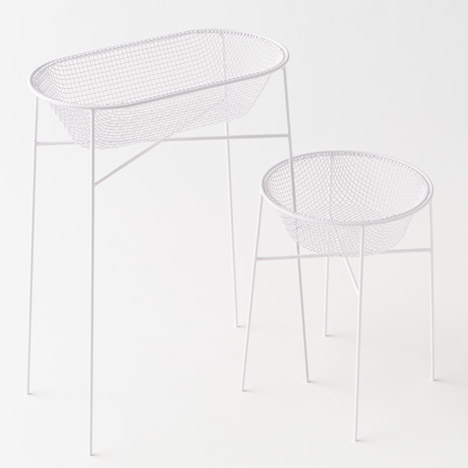
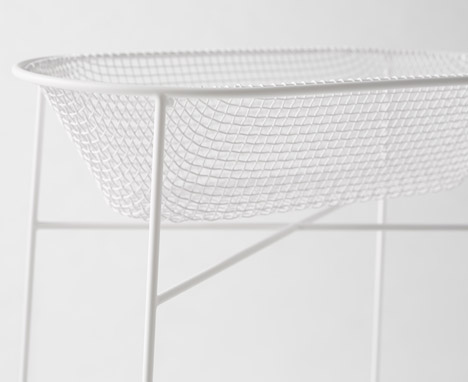
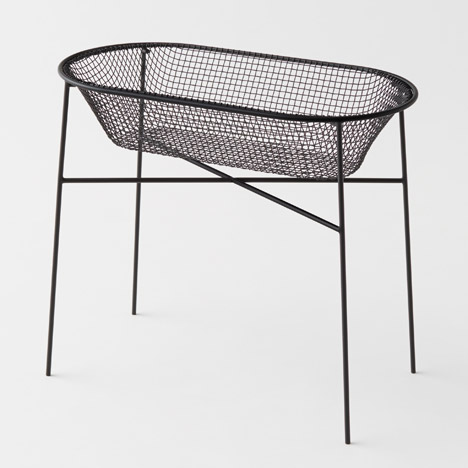
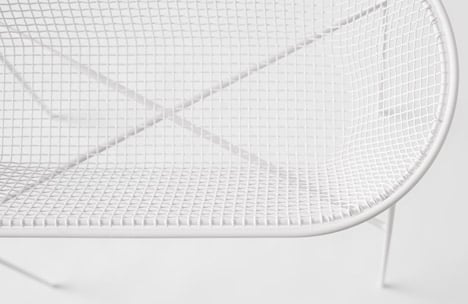
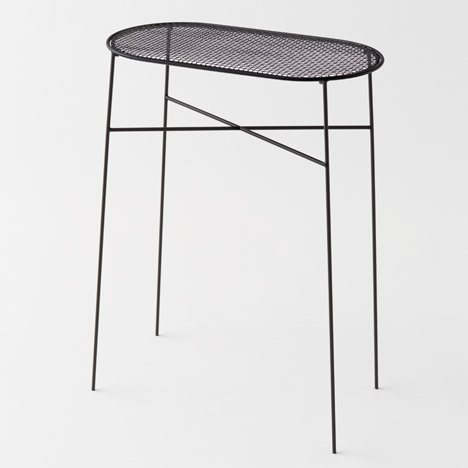
Nendo’s powder-coated Container baskets are composed of individually hand-bent wires and held in frames, turning them into slim tables for tight spaces like hallways, bathrooms or between the sofa and a wall.


Related story: Nendo manipulates metal to form Softer than Steel furniture collection


Basket container by Nendo with Kanaami Tsuji

Japanese kana-ami wire netting cooking utensils, used to dip foods like tofu into boiling water, have been made by artisans in Kyoto for over a thousand years.

Basket container by Nendo with Kanaami Tsuji

“We created this basket in collaboration with Kanaami-Tsuji, a Kyoto-based wire netting firm that preserves the craft’s traditions and develops it for contemporary living and future generations,” said a spokesperson for the studio, which is headed up by Japanese designer Oki Sato.

Basket container by Nendo with Kanaami Tsuji

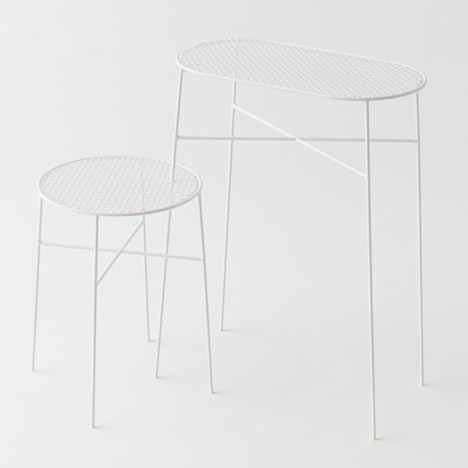
The tables come in three heights and two shapes, rectangular and oval, with the option of the basket form or a flat surface. The legs are slim enough to slot through the gaps in the netting, allowing the tables to be stacked.

Basket container by Nendo with Kanaami Tsuji

The basket and frame are available exclusively through Seibu department stores in Japan, as part of the studio’s by|n range.


Dezeen Book of Interviews: Nendo founder Oki Sato features in our new book, which is on sale now


Basket container by Nendo with Kanaami Tsuji

Nendo has also designed a wire lighting series using the same technique, launched earlier this year for the same collection.

Basket container by Nendo with Kanaami Tsuji

Other recent projects by the studio include 3D-moulded light shades made from washi paper and a collection of contemporary chopsticks made in collaboration with a traditional manufacturer from the town of Obama in Japan’s Fukui Prefecture.

Basket container by Nendo with Kanaami Tsuji

Photography is by Akihiro Yoshida.

Dezeen

CHROFI Completes Concrete And Stone Sheds For Forestry Workers

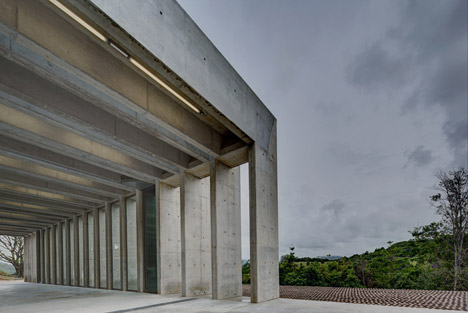
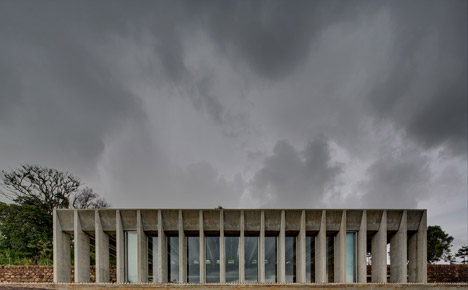
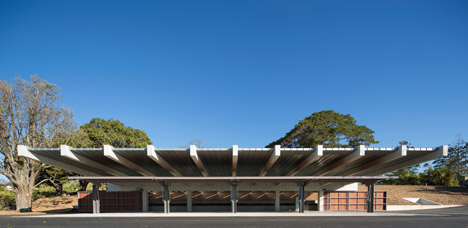
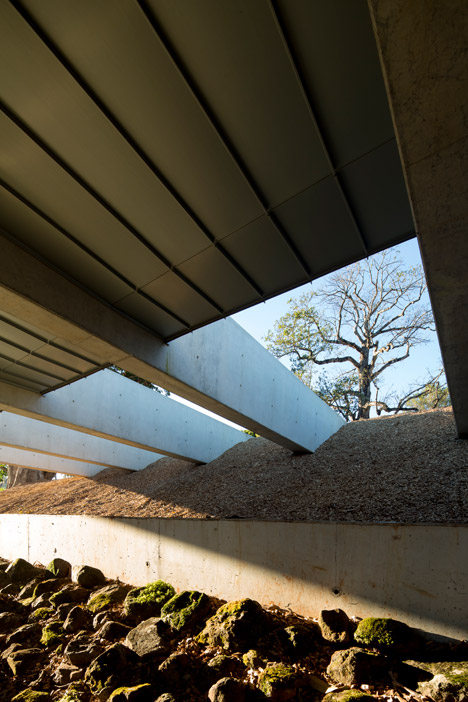
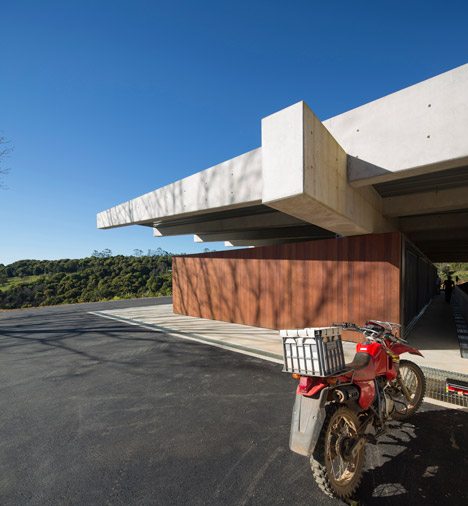
The concrete roofs of two agricultural sheds by Sydney studio CHROFI jut out of stone and gravel banks in a clearing cut into a forest in eastern Australia .

Lune de Sang Sheds by CHROFI

CHROFI designed the two structures, called Lune de Sang Sheds, within a sustainably managed forest in New South Wales. The forest is made up of over 100,000 types of plant life and cabinet-grade hardwood, with some species harvested just once every 300 years.


Related story: Harvest Pavilion by Vector Architects


Lune de Sang Sheds by CHROFI

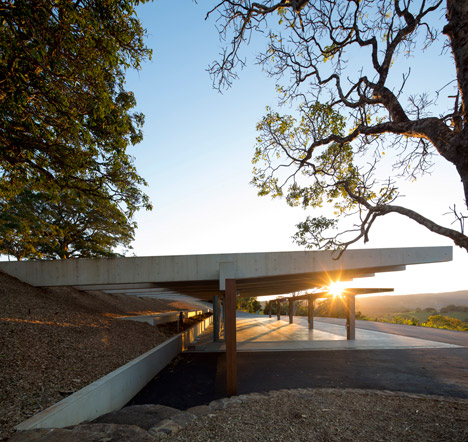
The studio conceived the buildings, used as workspaces and storage for forestry equipment, as a “framing device” for the 92 hectare wooded site.

Lune-de-Sang-Sheds-by-CHROFI_1_dezeen_468_18

“What inspired us was the larger endeavour that these sheds serve,” said studio co-founder John Choi. “These trees take up to 300 years to mature. We were captivated by this long term vision, a vision that goes beyond one’s lifetime.”

Lune-de-Sang-Sheds-by-CHROFI_1_dezeen_468_13

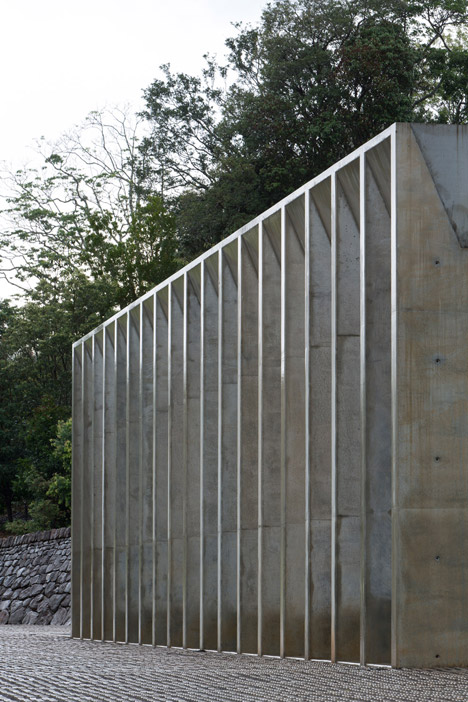
The solid concrete, glass and locally-sourced stone and hardwood construction gives the sheds a “sense of permanence” that resonates with the long harvesting cycle. “We chose materials to embody time,” said Choi.

Lune-de-Sang-Sheds-by-CHROFI_1_dezeen_468_12

“The weathering process will add a patina and tell the passage of time. Crisp glass and stainless steel details on the doors will juxtapose against these, intensifying the materiality of the primary structure.”

Lune-de-Sang-Sheds-by-CHROFI_1_dezeen_468_14

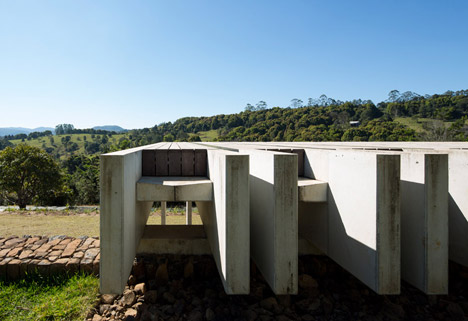
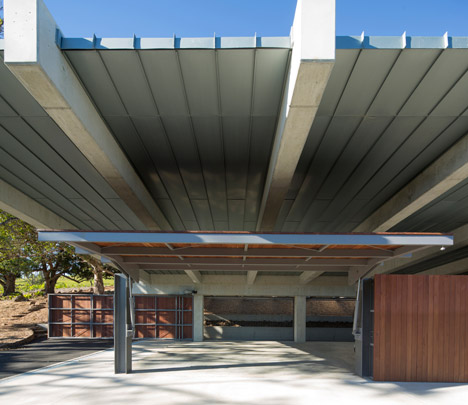
Shed 1 has a rhythmic facade made up of L-shaped sections of concrete and glass. The concrete pieces rest on top of a stone wall made from boulders sourced from the forest site and angle down to meet the ground.

Lune de Sang Sheds by CHROFI

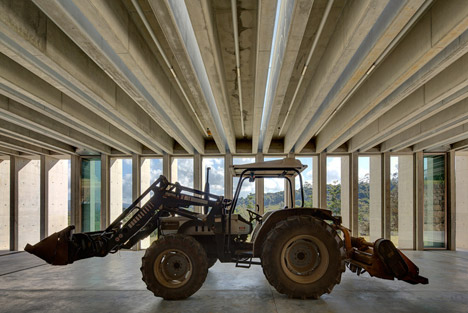
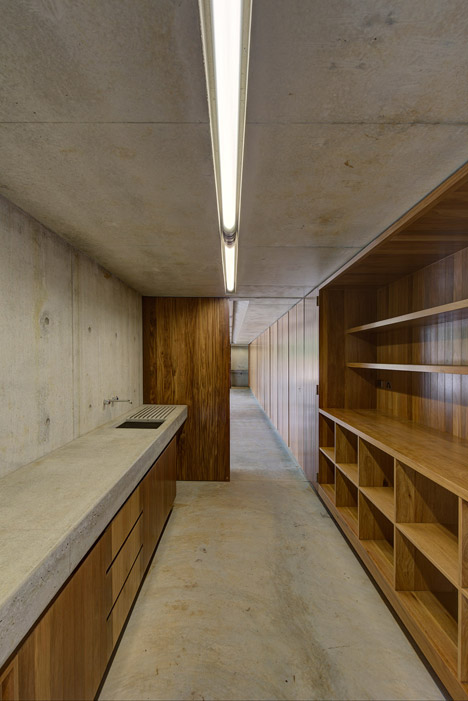
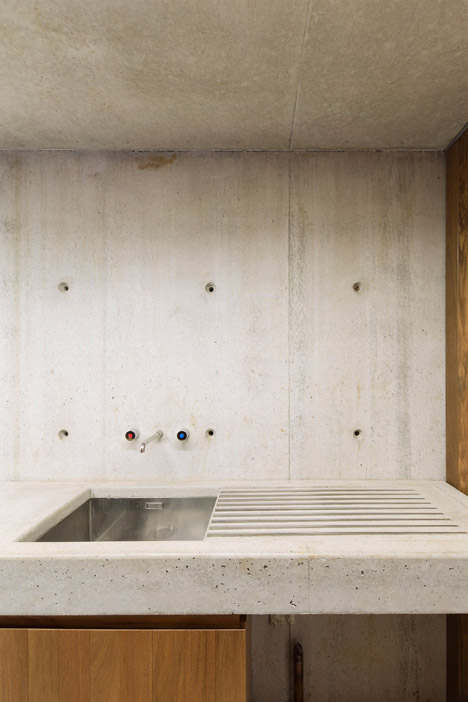
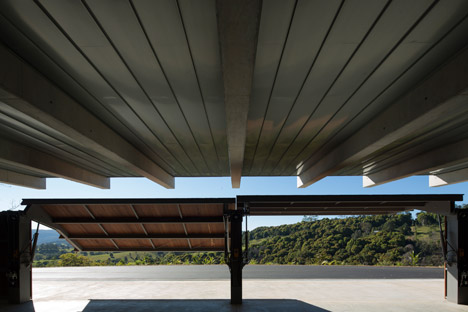
A workshop, kitchen and toilet, and storage areas are built into the hillside to the rear of the stone wall, while the large spanning rooftop covers a space with a poured-concrete floor. This serves as a general workspace during the day, becoming a garage to store tractors and quad bikes at night.

Lune-de-Sang-Sheds-by-CHROFI_1_dezeen_468_11

The concrete structure has a glazed skin, with sections of steel-framed glass on either side that concertina back to allow vehicles and machinery to enter.

Lune-de-Sang-Sheds-by-CHROFI_2_dezeen_468_17

Outside, a tap juts out of the stone wall over a concrete trough to create an area for hand-washing, while a concrete alcove contains a coil of hose to wash equipment.

Lune-de-Sang-Sheds-by-CHROFI_2_dezeen_468_3

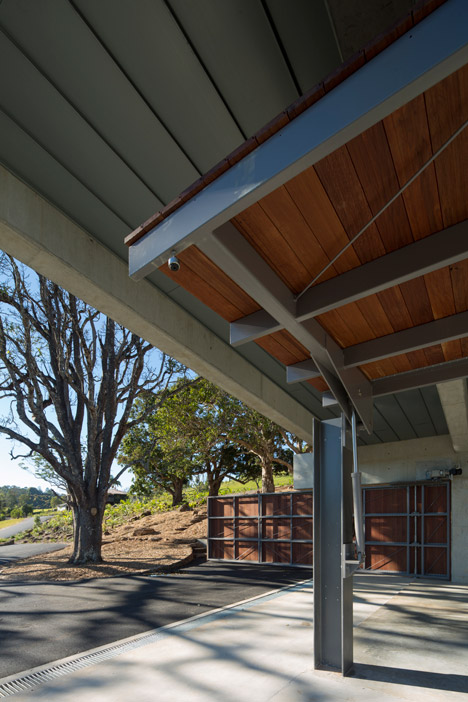
A path leads from the western facade of the structure to Shed 2, a storage shed with a concrete roof and a wooden perimeter fence.

Lune-de-Sang-Sheds-by-CHROFI_2_dezeen_468_16

The wooden screen that wraps around the base of the structure lifts outwards like a garage door to provide easy access to stored materials.

Lune-de-Sang-Sheds-by-CHROFI_2_dezeen_468_24

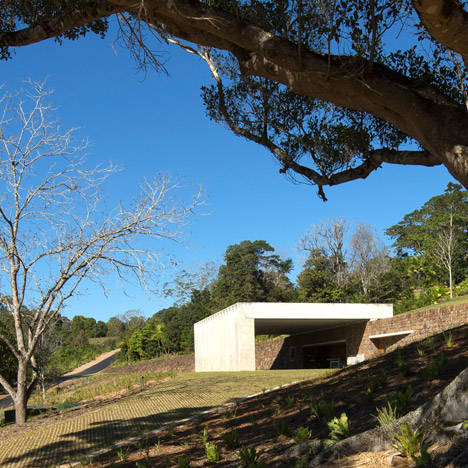
The stone and gravel walls where the buildings meet the slope of the site help maintain a stable interior temperature for workers.

Lune-de-Sang-Sheds-by-CHROFI_2_dezeen_468_18

“They have been conceived as ruins in the landscape; ancient concrete and stone structures that have been unearthed and retrofitted for comfortable habitation with crisp glass and steel details,” said the studio.

Lune-de-Sang-Sheds-by-CHROFI_2_dezeen_468_7

Lune de Sang Sheds was the category winner for the production, energy and recycling award at the World Aarchitecture Festival 2014.

Lune-de-Sang-Sheds-by-CHROFI_2_dezeen_468_9

Photography is by Brett Boardman.

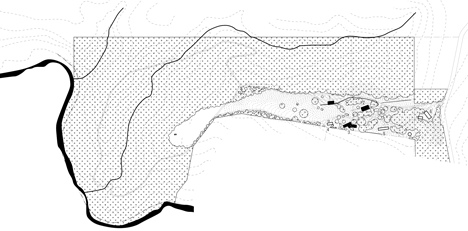
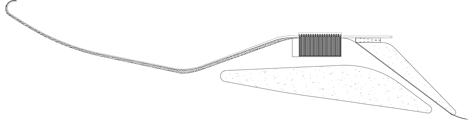
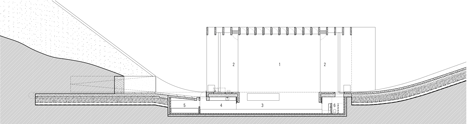
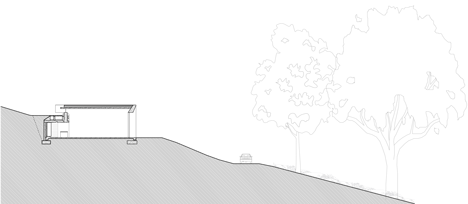
Lune de Sang Sheds by CHROFISite plan Lune de Sang Sheds by CHROFIShed 1 site plan Lune de Sang Sheds by CHROFIShed 1 floor plan Lune de Sang Sheds by CHROFIShed 1 roof plan Lune de Sang Sheds by CHROFIShed 1 long section Lune de Sang Sheds by CHROFIShed 1 cross section
Dezeen

Latest Ideas!