DIY Digitized Painted Pumpkin Tray // With ScotchBlue

3M-Pumpkin-Tray-11

For me (and maybe for most of you guys, too), Halloween just feels like one big happy excuse to party. Now, of course, I don’t mean the type of raucous college-era soirees that lasted well into the first of November, but instead a responsibly raucous party filled with goofy adult antics and the excuse to eat treats all night long. At least until, oh…11:30 p.m. anyway.

To kick the season off in DIY style, I spent an afternoon in my studio putting together an easy painted tray that now effectively pays homage to Halloween with a modern, digitized version of the holiday’s mascot—that telltale orange gourd, of course!

3M-Pumpkin-Tray-01

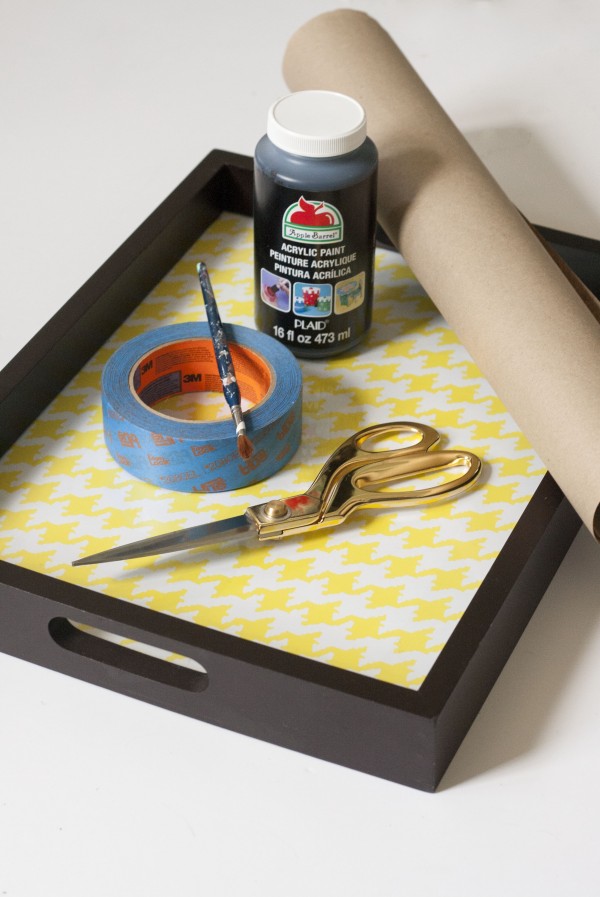
Supplies

  • Scissors
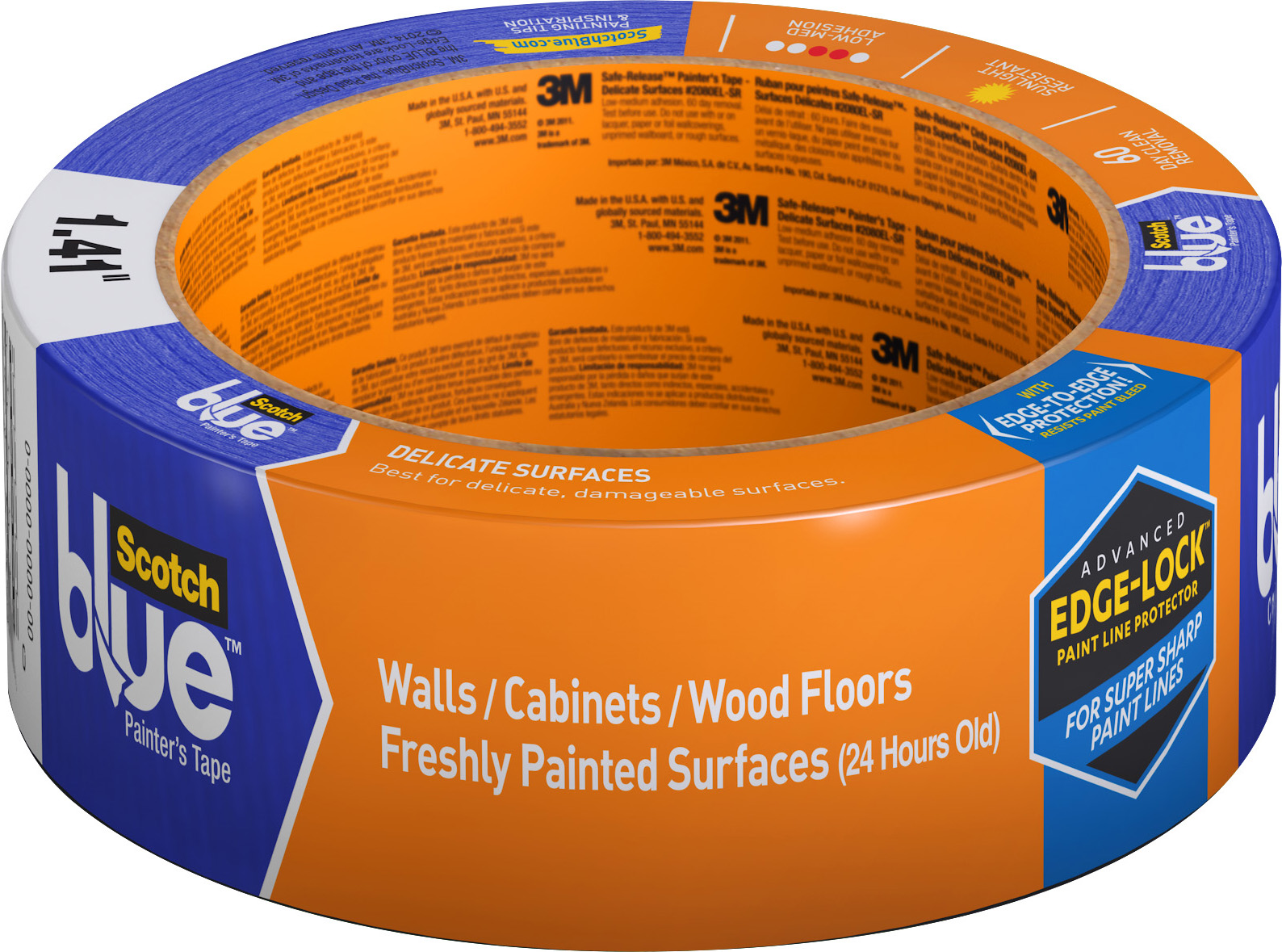
  • ScotchBlue™ Painter’s Tape for Delicate Surface with Advanced Edge-Lock™ Paint Line Protector (2080EL)
  • Acrylic paint
  • Small detail paintbrush
  • Plastic painter’s tray
  • Decorative serving tray
  • Kraft Paper

The serving tray that I used is a bit unique since it has a glass insert protecting the decorative paper or photos put beneath it (think of it like a picture frame with handles), so I also added kraft paper to the mix to act as my canvas. You may not need this extra supply though if you plan on simply painting directly onto the surface of your tray.

NOTE: If you paint directly on your tray using acrylic paint, please do keep in mind that your tray is not suitable for serving food. That said, drinks are a great alternative that will allow you to safely debut your DIY painted tray come party time.
3M-Pumpkin-Tray-03

Step 1:

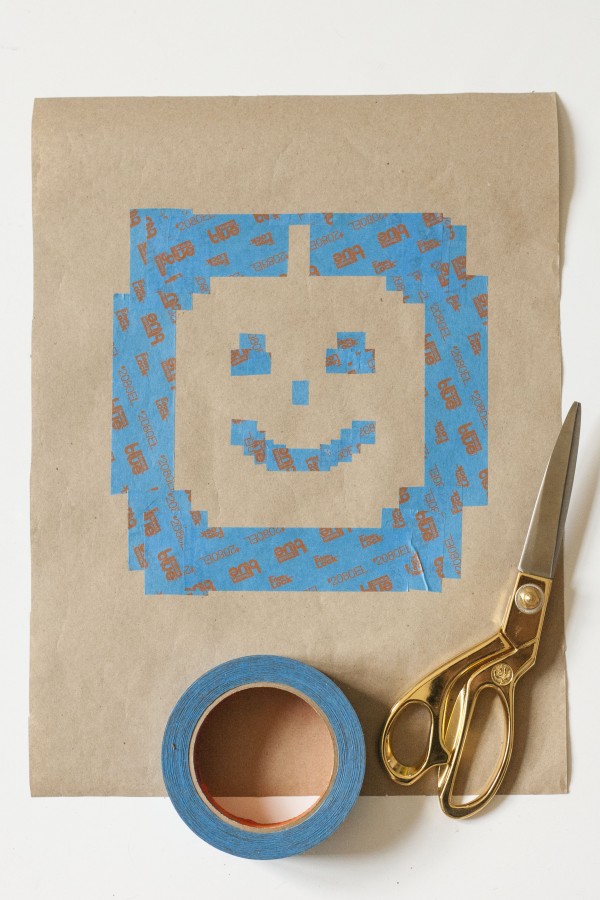
After cutting my kraft paper to fit inside my tray’s glassed in “window,” I then grabbed my ScotchBlue™ Painter’s Tape to start laying out my design. As a quick (and GENUINE) sidenote, since beginning my work with the ScotchBlue™ Painter’s Tape brand, I have become an absolutely loyal user. It delivers a crisp line and it has gotten me out of more than one crafting scrape or two (I tend to skip steps whenever possible, you see). So I had no doubt that my trusted roll would get the job done—and, happily, it did!

Step 2:

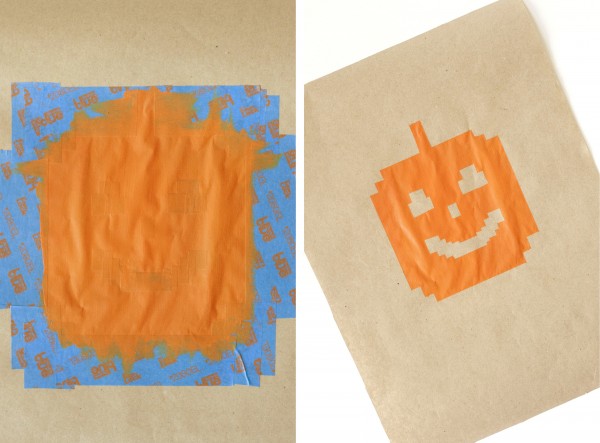
As you can see pictured above, I chose to go a little outside the box with my pumpkin portrait. Rather than the standard round shape, I cut my tape into small squares (just by eye balling them) and then laid each down in a way that suggested a pumpkin shape, but in a fresh way that suits my more modern taste.
3M-Pumpkin-Tray-05

Step 3:

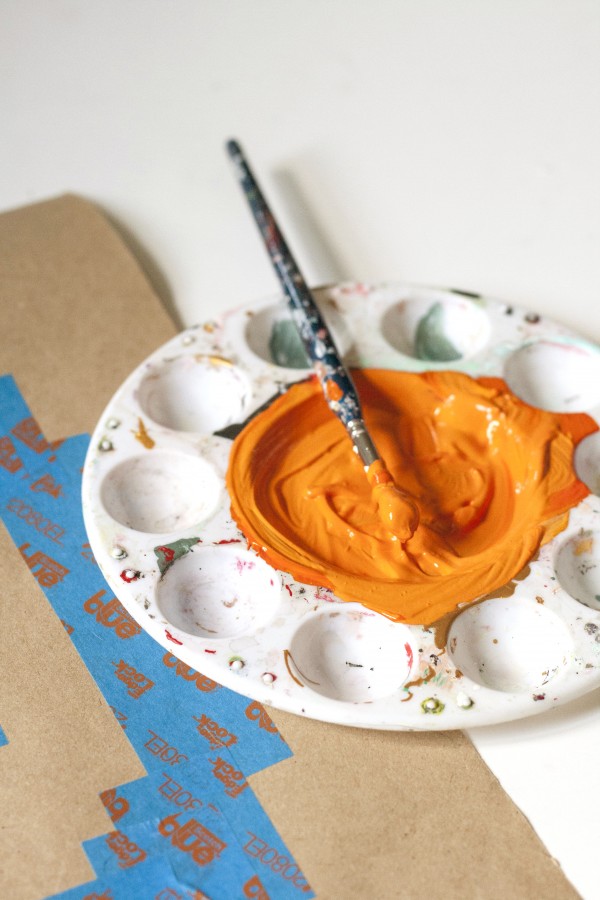
Then came paint. You may have noticed black acrylic paint pictured in the supplies shot towards the beginning of this post, but I ended up making the last-minute (albeit predictable) switch to a bright orange instead. Using my small detail brush, I painted right on top of the face shape, being careful not to paint beyond the outside edges of the tape.
3M-Pumpkin-Tray-12

Step 4:

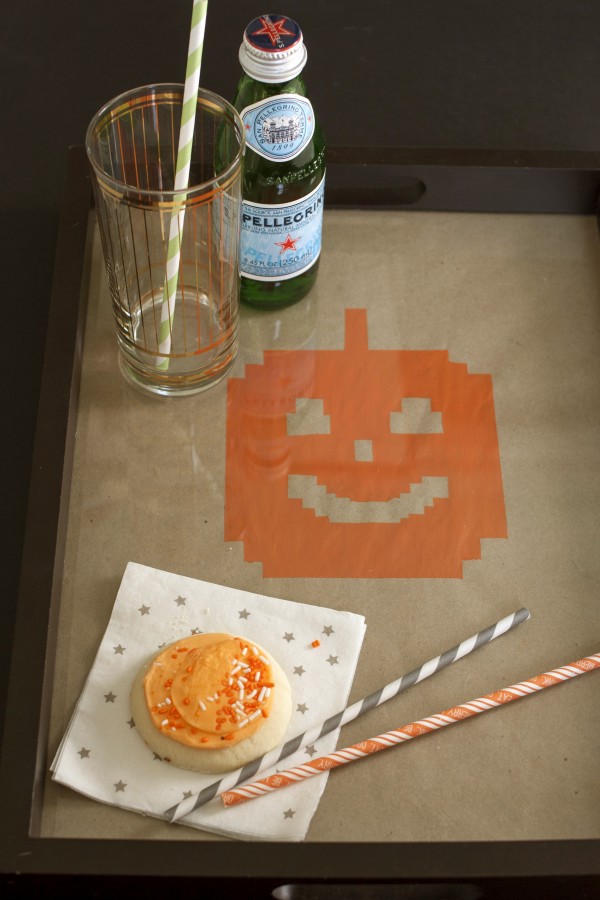
After giving the paint about an hour to dry, I carefully removed the tape to reveal a perfectly digitized, practically glowing gourd face!

Step 5:

To finish this project, I removed the back of my tray, slipped my painted pumpkin portrait inside and sealed it back up. Now, our newly refreshed tray is holiday-ready and it serves as my new favorite go-to for offering drinks and treats to friends—no tricks here!

3M-Pumpkin-Tray-10

And now for the fun part…Enter the Home of ScotchBlue™ Painter’s Tape Contest at www.scotchblue.com/homecontest October 1, 2014 through November 15, 2014 and you could win \$5,000 to put towards a home makeover! The first 500 to submit an eligible entry will receive one (1) roll of the new ScotchBlue™ Painter’s Tape with Advanced Edge-Lock™ Paint Line Protector. Check out this project as a featured project example in the contest!

Contest open to legal residents of the U.S. and D.C. (excluding AZ, MD, NJ, ND, TN and VT), who are 18+ (19+ in AL & NE and 21+ in MS) at the time of entry. Void where prohibited. Enter from October 15, 2014 at 12:00:01 a.m. CT through 11:59:59 p.m. CT on November 15, 2014. All contest communications, entry/judging criteria and details subject to the full Official Rules. To enter and for Official Rules, visit www.scotchblue.com/homecontest. Sponsor: 3M Construction and Home Improvement Markets Division, St. Paul, MN.

Sponsor Disclaimer

Connect With ScotchBlue™

Facebook | Twitter | Pinterest

Dream Green DIY

When Blogging Becomes A Slog – Your Opinion?

So I read this article, When Blogging Becomes a Slog, over on The New York Times today (thanks for sharing, Gregory!) and I wasn’t sure what to think other than bless writer Steven Kurutz for shedding light on the topic to the outside world. Yet for those of us blogging (who number into the thousands), well we have battled with all of what he speaks of and more for years. Yet when you read about it in The Times it suddenly feels like it’s hot-off-the-presses brand new. But again, it’s not. Blogger burn out, sponsored content love/hate, feeling overwhelmed, post performance, stats, reader expectations, maintaining our pace… These have always been major blogger concerns. Attend any blogger conference or listen in on what bloggers talk about when they gather for lunch. It’s always on our minds.

erinl

And yet so many questions are on the table today after reading that article, for many bloggers. Because I think it raised a lot of interesting questions that, though didn’t get raised by Mr. Kurutz, seemed to come to mind after I read his take on blogger burn out. Here are questions that popped into my head:

  • As advertising dollars slip away for those “annoying blinking boxes” so does the income that bloggers relied upon to keep producing 5 star content full-time. Many have moved on to sponsored in-post content. But lots of readers hate it and says it affects “our voice”. So what’s next?
  • Are your readers really the ones pushing you so hard or is it voice inside of your own head along with fame, money, etc.?
  • Should our readers be all that matter because at some point, shouldn’t we as bloggers care about finding pleasure in our work? For instance, Are teachers, vets, cafe owners, doctors heading off to work each day to only please their customers or do they genuinely enjoy what they do? Isn’t that the bigger part of it all?
  • Are some bloggers simply too ambitious and it’s causing them to lose balance?
  • Is the future of blogging in paid content – in other words, if readers don’t like ads, sponsored content or anything that they feel makes us less “authentic” or trustworthy, then should we have some of our blog content be stuff they pay to see? And the less intense-to-produce posts can remain free?
  • And in all fairness, doesn’t everyone in every profession battle with burn out and fear and everything else – why is it that when bloggers do it becomes a NYTimes article?

My blogging mantra has always been to use blogging as a catalyst to live your best life. To let blogging drive you to do great things so that you have interesting content to share. I also think you have to think ahead and always expect that nothing today will be this way tomorrow. Especially online. Blogging (or any profession) cannot suck our souls or make us feel like losers when we miss a few days or when our last DIY post didn’t generate as many shares or comments. When that happens you have to step back and wonder what the hell is happening to us, right?

What are your thoughts on all of this?

(image: design for mankind who was one blogger featured in The Times article and had a few interesting things to say.)


decor8

New Home Collection By The Novogratz

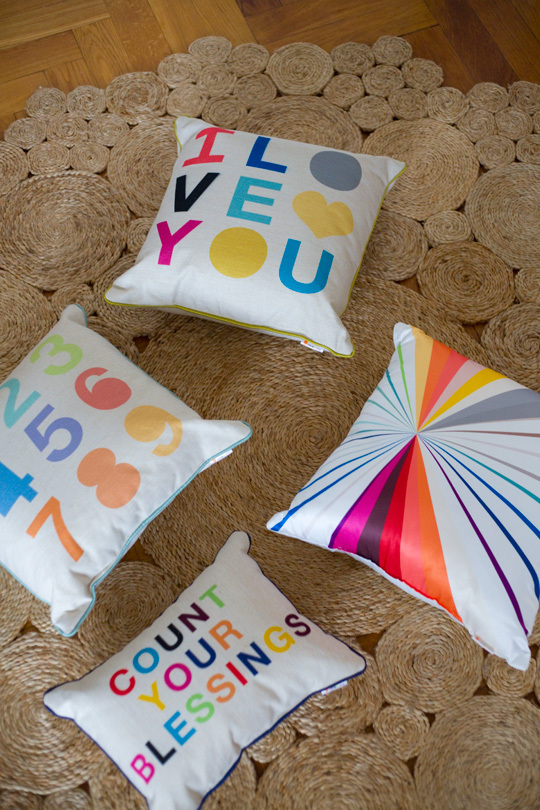
I was recently in touch with the Novogratz family and their publicist about a new line they’ve produced for the home – colorful, budget-friendly and loads of fun… And we all love fun interiors bursting with personality, don’t we? They wanted me to review some of their new things but I was hesitant since I hadn’t seen any of it in person and 1) I don’t feel comfortable reviewing products unless I’ve experienced them and 2) I am so picky when it comes to soft furnishings because stuff close to my skin has to feel GOOD. That’s why I asked for 4 of my favorite pillows from their collection agreeing that if liked them I’d post and if I didn’t, I’d simply return to sender and move on.

novogratz_decor8

Thankfully, they passed my critical eye and I’ll end up keeping at least one for my home (I’ll give the rest to my friends, I don’t have much space left in my house!). But the pillows really are great because they are priced between \$15-20 bucks a piece and they look really good in person — you really can’t go wrong. You can buy them, along with matching bedding and other goodies, like shower curtains, right here. And yeah, okay, if they were more expensive, I would expect zip-cases and goose feather inserts, but for this price range you really have to appreciate the quality that you’re getting for such rock bottom prices. You can easily wipe them clean, they aren’t such an investment that if your kids ruin them you’re going to freak and they work in all sorts of rooms – the office, kid’s room, play area, living room – anywhere.

novogratz_4
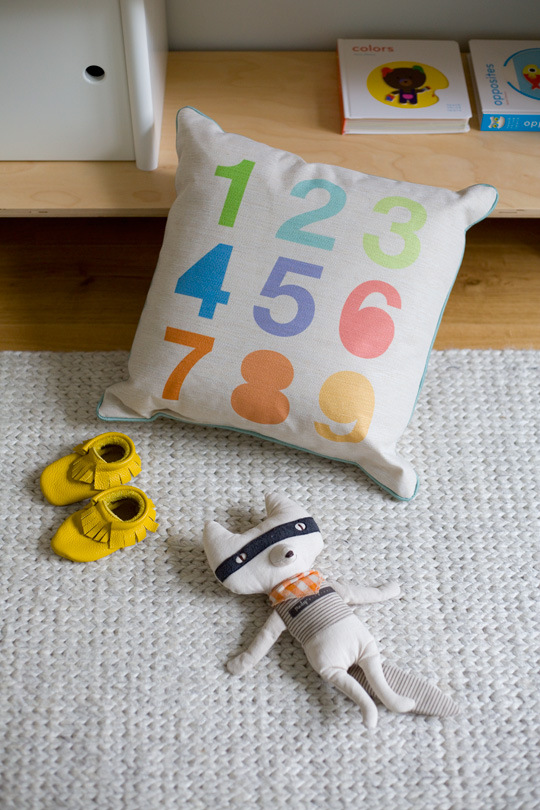
I put the #9 numbers cushion in Aidan’s nursery…

novogratz_decor8_2
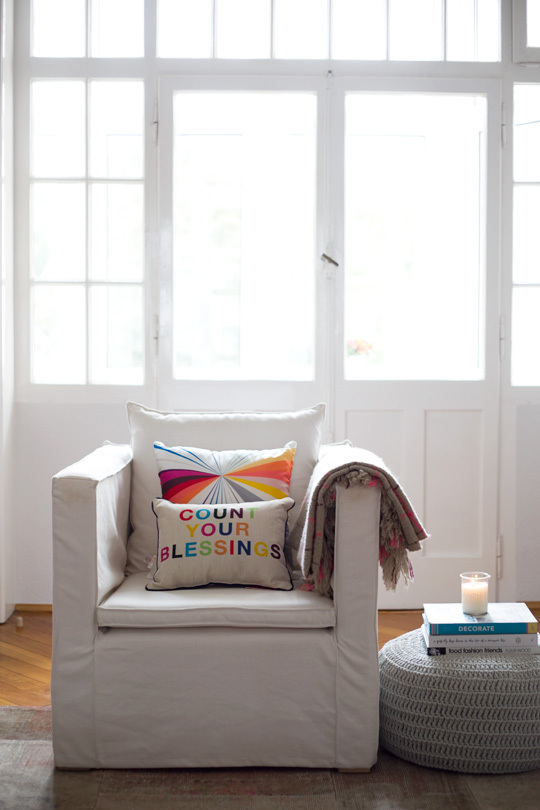
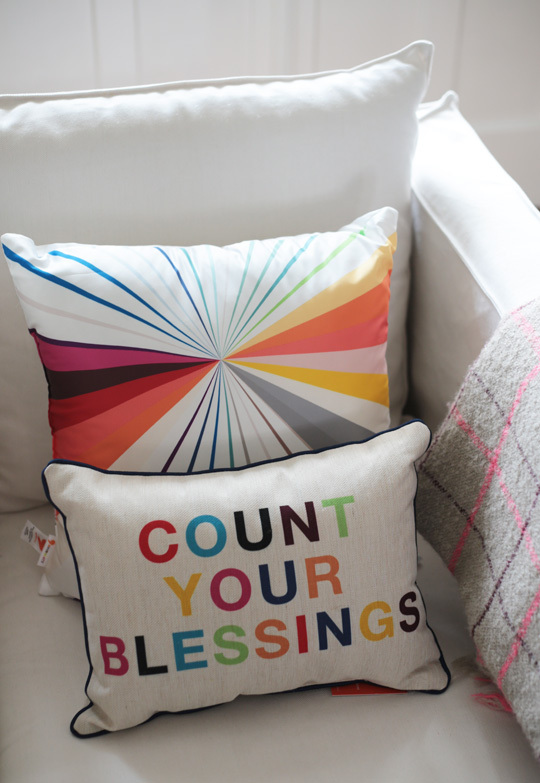
And the Count Your Blessings and Color Wheel cushion on my chair in my living room for now – but the color wheel may end up in my new office  – and a big P.S. — it’s not silk but looks just like it and the colors really shine against the pure while background.

novogratz_decor8_3

The Love Letters cushion is another favorite, shown above.

novo

So let me quickly tell you about the Novogratz family shown pictured above. You can see their website for the full scoop, but they are a creative family of 9 (Yes, my jaw dropped too), first their is Bob and Cortney Novogratz followed by their 7 children. YES, you heard me right. S E V E N. I have ONE and struggle at times with my schedule so to have 7 completely blows my mind. To be as cool as this family to run a design firm producing collections for huge stores (like Walmart, Macy’s, CB2), developing and designing property, writing books, designing interiors, living in the big city (Manhattan), it seems like a total dream slash fantasy life. I think they need a reality show because I’d tune into that just to get the scoop on how they balance everything. Very inspiring…

(Brought to you by decor8 + The Novogratz. Photography in my home photographed by me. All words are my own.)


decor8

Benjamin Hubert's WW Carafe Features A Steel Aerator To Improve Wine's Flavour

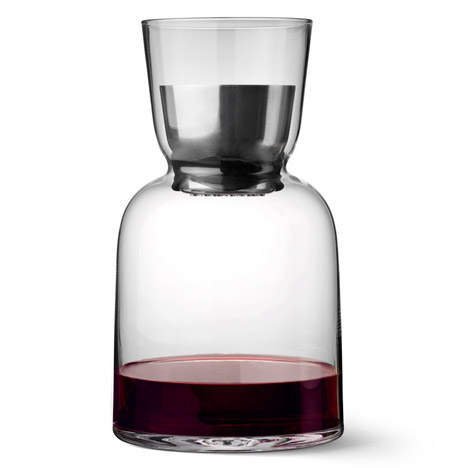
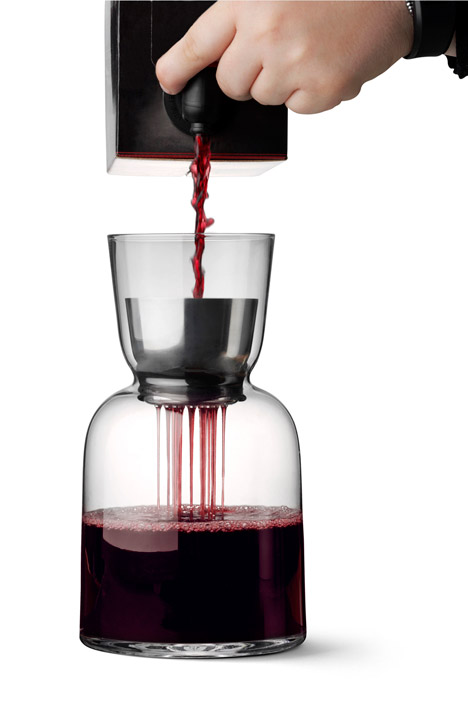
Maison&Objet 2014: London designer Benjamin Hubert has developed a carafe that decants wine through a stainless steel aerator to improve its flavour.

Water and Wine by Benjamin Hubert for Menu

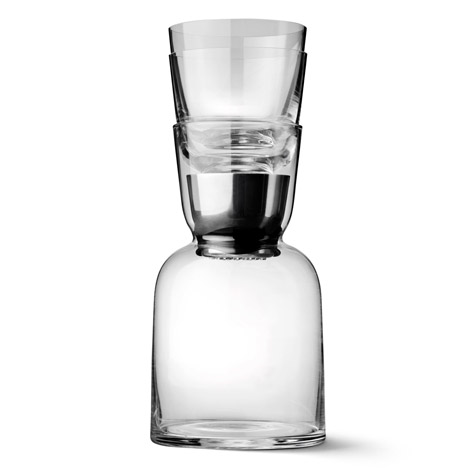
Benjamin Hubert designed the WW Carafe and an accompanying set of glasses to expand the range of wine accessories produced by Danish design brand Menu.


Related story: Alliance glass collection encourages drinkers to match wine with water


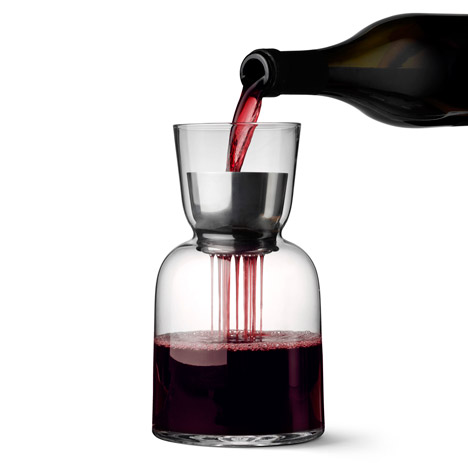
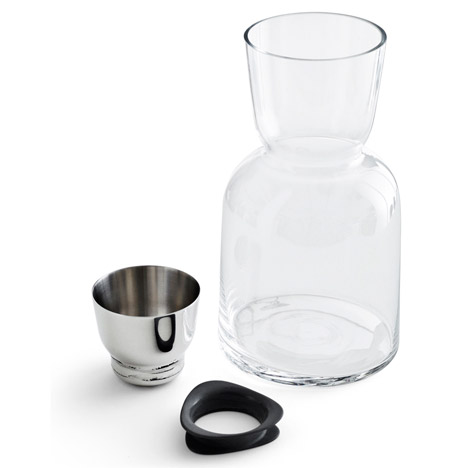
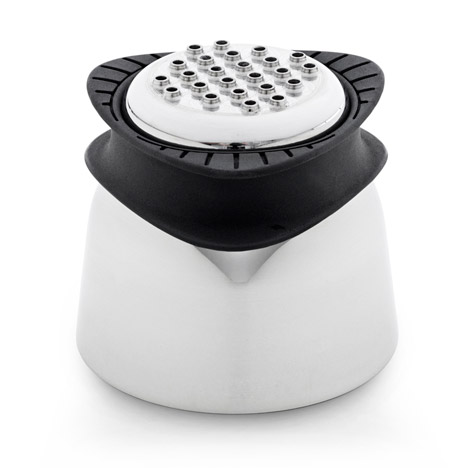
Wine transferred to the carafe drains through a matrix of holes in the base of the steel insert, which is held in the neck of the carafe by an injection-moulded silicone collar.

Water and Wine by Benjamin Hubert for Menu

“The final ‘raining’ process is both visually arresting and, as the wine is poured from the bottle into the carafe, increases the surface area of the wine by eight times a normal pour from the bottle,” said the designer.

Water and Wine by Benjamin Hubert for Menu

As the wine drips through the holes, more of the liquid is exposed to the air, which helps to enhance its flavour.

Water and Wine by Benjamin Hubert for Menu

Wine can then be poured into glasses via gaps around the edges of the collar and the holes in the breather component.

Water and Wine by Benjamin Hubert for Menu

The WW Carafe can also be used to serve water or soft drinks, with the steel insert helping to prevent ice or garnishes from reaching the glass when pouring.

Water and Wine by Benjamin Hubert for Menu

Hubert and his team produced over 20 prototypes during the development process to test the flow of liquid and the best configuration of the holes to optimise aeration.

Water and Wine by Benjamin Hubert for Menu

The resulting carafe and glasses are produced from mouth-blown glass, with the silicone seal fitted by friction to the stainless steel aerator.

Water and Wine by Benjamin Hubert for Menu

The glasses stack inside the neck of the carafe to make the product easier to package, transport and carry to the table.

Water and Wine by Benjamin Hubert for Menu

Menu launched the WW Carafe at the Maison&Objet trade fair in Paris earlier this month, along with a hammer-like nutcracker fitted with a silicone head to catch the broken pieces.

Dezeen

Farnan Findlay's Beachside Clovelly House Designed To "look Better In 20 Years"

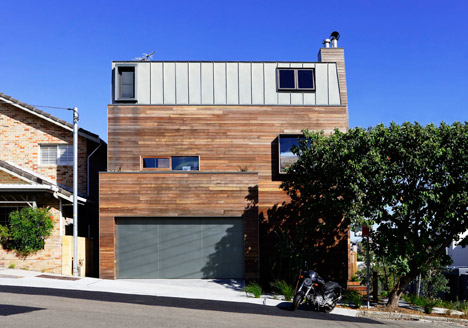
This Sydney house by Farnan Findlay Architects has been clad in materials “that can take a beating” from the salty air and wind of its beachside location, including spotted gum timber that will turn grey over time .

Clovelly House by Farnan Findlay Architects

Clovelly House is located 50 metres from a beach in the Sydney suburb of the same name, so Victoria-based studio Farnan Findlay Architects clad it in spotted gum – a hardy local timber – and aluminium at roof level to withstand the elements.


Related story: Blairgowrie House by Wolveridge Architects offers a timber-clad seaside home


Clovelly House by Farnan Findlay Architects

“The client’s brief was for a relaxed beach house, with materials that will weather and can take the punishment of living near the coast,” architect Michelle Findlay told Dezeen.

“Sand is a constant companion. The clients didn’t want a precious house.”

Clovelly House by Farnan Findlay Architects

Farnan Findlay, whose other projects include a timber-clad home perched on rocky terrain, designed the four-storey house for a couple with two young children. It replaces a brick-veneer house on the site.

Clovelly House by Farnan Findlay Architects Photograph by Farnan Findlay Architects
“The previous house was tired, had little sense of place, and didn’t perform well in summer or winter,” said Findlay, whose projects also include a timber-clad house perched on rocky terrain.

“Clovelly feels like a beach village even though it’s only 15 minutes from the city centre, so the architecture needed to reflect this. It had to be a beach house with a sense of belonging,” she said.

Clovelly House by Farnan Findlay Architects

The house was designed with an H-shaped plan to overcome the constraints of the site, which is on a corner and faces south, attracting little direct sunlight.

It features two linked pavilions, which allowed for private set-backs, natural cross-ventilation, and north-facing areas that catch the sun.

Clovelly House by Farnan Findlay Architects

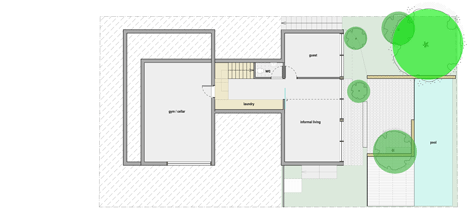
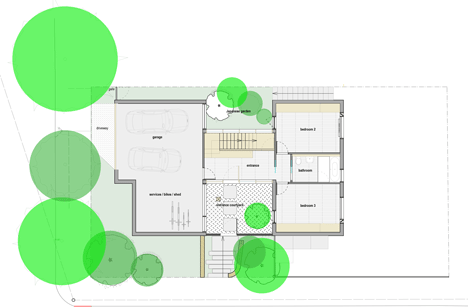
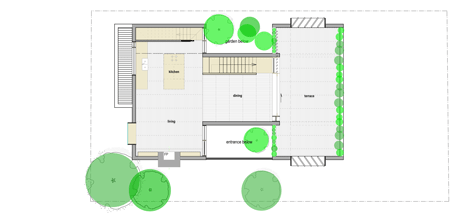
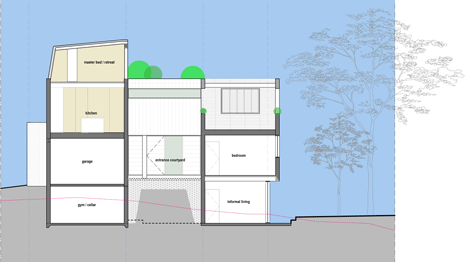
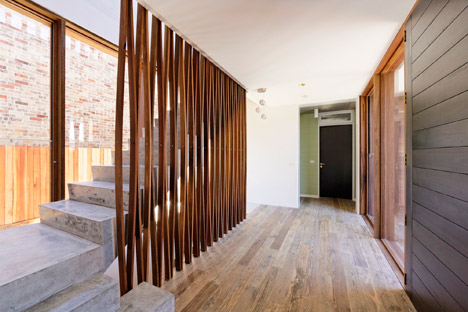
The basement level has space for a gym to be installed, and a secondary living room, while the ground floor accommodates a garage, two bedrooms, an entrance hall and a stairway enclosed by bowed lengths of spotted gum.

Clovelly House by Farnan Findlay Architects

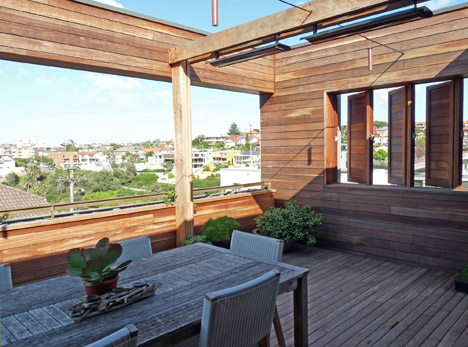
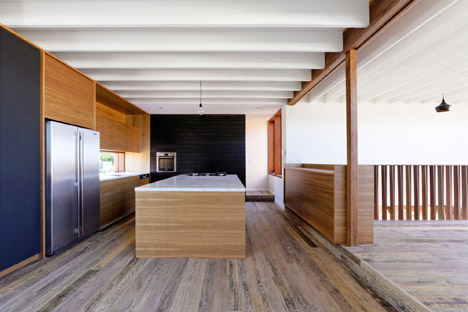
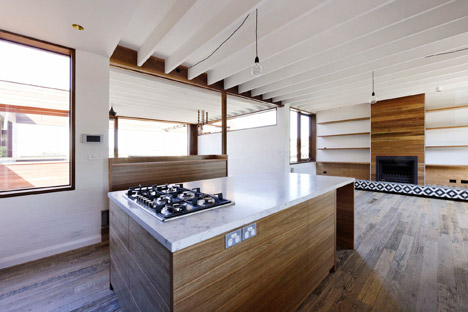
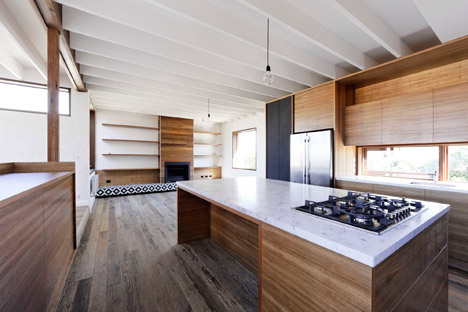
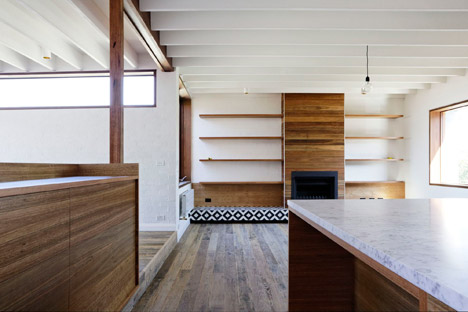
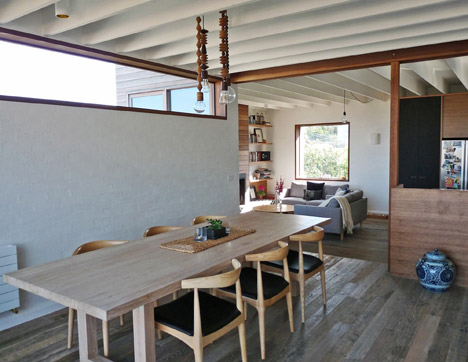
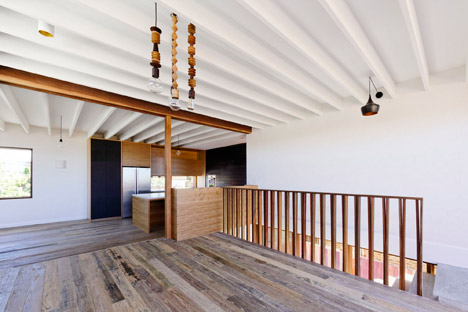
The kitchen, living area and dining room are on the first floor, and open on to a terrace at the back.

Clovelly House by Farnan Findlay Architects

“An important element of the brief was the ability to live outside, so we added the oversized deck to maximise ocean views but still maintain privacy,” said Findlay.

“It is designed as an outdoor room, with flanked sides and a skeletal sense of enclosure for wind protection, as the ocean climate has many personalities.”

Clovelly House by Farnan Findlay Architects

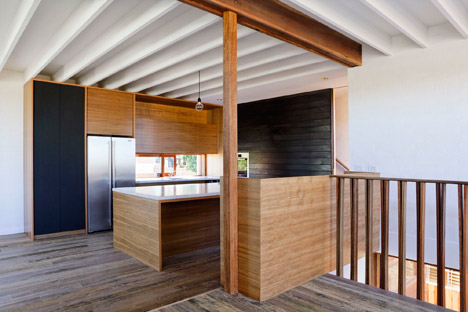
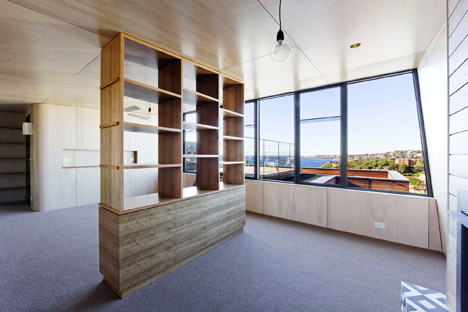
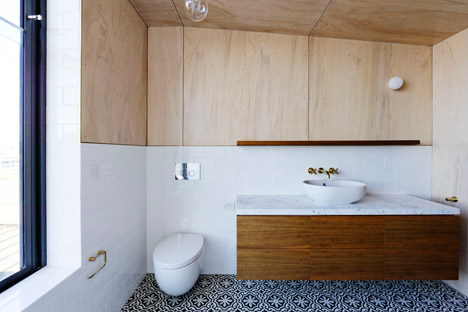
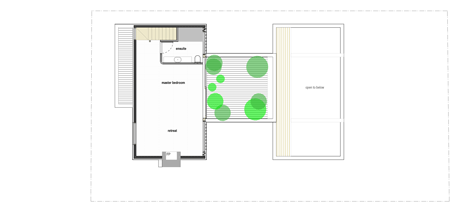
A separate staircase leads from the kitchen to the master bedroom and bathroom on the top floor, which is designed as a more reclusive space.

Clovelly House by Farnan Findlay Architects

“The second staircase is tucked behind the kitchen, so you wouldn’t really know it’s there, however coming down, it offers views through the courtyard, the deck and beyond,” said Findlay.

“The house has been designed to allow for views through courtyards and adjacent spaces.”

Clovelly House by Farnan Findlay Architects

The house was constructed with a reverse brick veneer that lines the inside of the rooms. This helps to modulate temperatures by naturally soaking up heat and releasing it later as temperatures drop.

Clovelly House by Farnan Findlay Architects

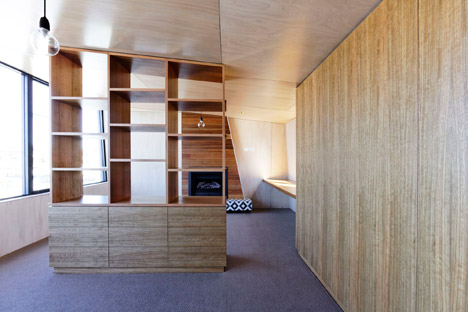
A range of woods were used together inside, including recycled oak for the flooring, spotted gum for the kitchen cabinets, and plywood for the walls and ceiling in the master bedroom.

Clovelly House by Farnan Findlay Architects Photograph by Farnan Findlay Architects
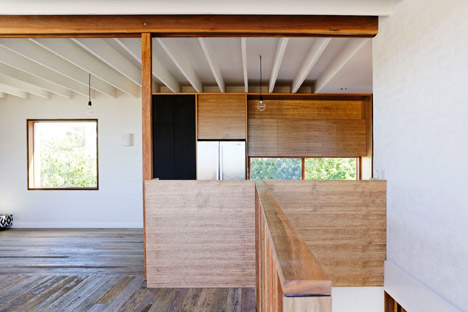
“People often shy away from having too much timber. We never do. We think people connect with it,” said Findlay.

“It’s a robust material with endless variations, and it can sit comfortably next to other species – in fact, it enhances them.”

Clovelly House by Farnan Findlay Architects

Over time, Findlay expects the timber will age the home gracefully as it turns grey, in combination with planters that have been added to the terrace, the entrance, and on top of the garage.

Clovelly House by Farnan Findlay Architects

“There are lots of things still to grow, and the idea is that the house will soften as these elements flourish,” said Findlay. “We hope that as it greys and greens, it will look better in 20 years than it does today.”

Clovelly House by Farnan Findlay Architects

Photographs are by Kata Bayer, unless otherwise stated.

Clovelly House by Farnan Findlay ArchitectsBasement plan Clovelly House by Farnan Findlay ArchitectsGround floor plan – Clovelly House by Farnan Findlay ArchitectsFirst floor plan Clovelly House by Farnan Findlay ArchitectsSecond floor plan – Clovelly House by Farnan Findlay ArchitectsSection
Dezeen

Latest Ideas!