Mantois Technology Centre By Badia Berger Architectes Features Moveable Timber Shutters

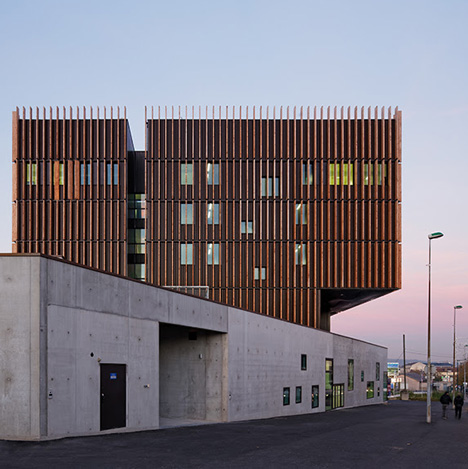
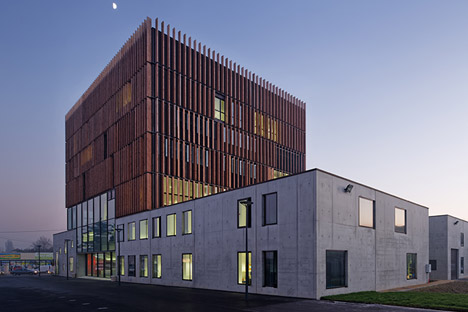
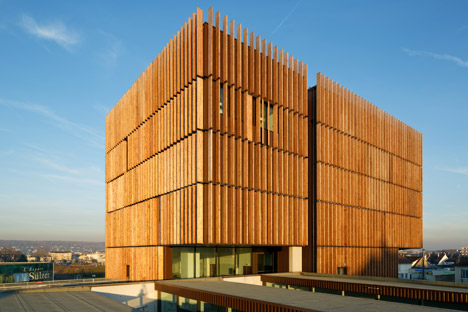
Moveable timber fins cover the top five storeys of this university technology centre by French architects Badia Berger to modulate light and shade inside.
Mantois Technology Centre by Badia Berger Architectes

Mantois Technology Centre is a new learning and research centre for the science and technology departments at the Université Versailles de St Quentin en Yvelines, near Paris. It was designed by Badia Berger Architectes for students and academics working in fields such as car design, home automation and mobility technology.


Related story: Zaha Hadid uses concrete and cantilevers for Issam Fares Institute in Beirut


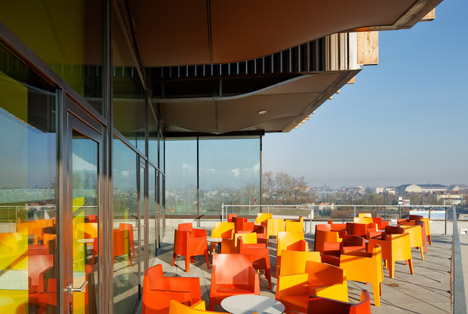
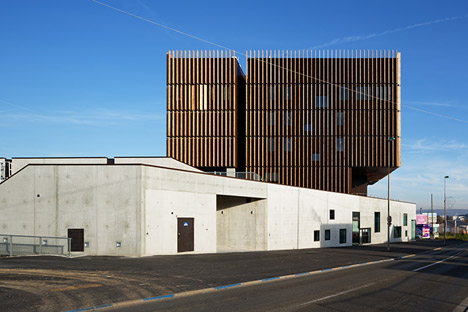
The jutting upper section is designed to announce the building as a new landmark on the campus, which is undergoing a wider regeneration, and also provides partial cover for a terrace on the first floor.
Mantois Technology Centre by Badia Berger Architectes

“The building constitutes the first phase of the redevelopment precinct – as such it was important for it to maintain a level of visibility,” the architects told Dezeen.
Mantois Technology Centre by Badia Berger Architectes

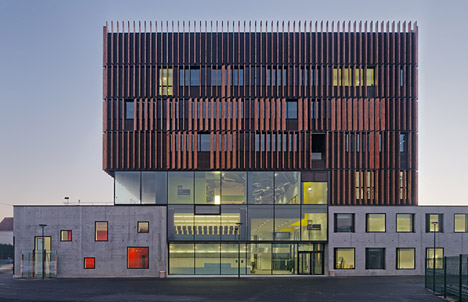
“It forms an angle which serves as a focal point, and the facade contributes to creating a vibrant public space, with its high-level visibility and the balcony open to the valley below, creating a belvedere,” they added.
Mantois Technology Centre by Badia Berger Architectes

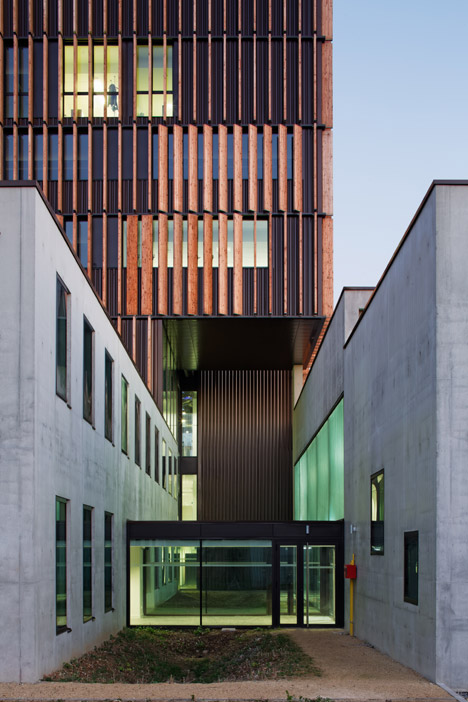
The timber fins that cover the exterior can rotate to alter shade and light inside, and are made from heat-treated pine.
Mantois Technology Centre by Badia Berger Architectes

“The thermo-treatment improves the timber’s durability and the process requires no chemicals – only heat, steam and oil,” said the architects.
Mantois Technology Centre by Badia Berger Architectes

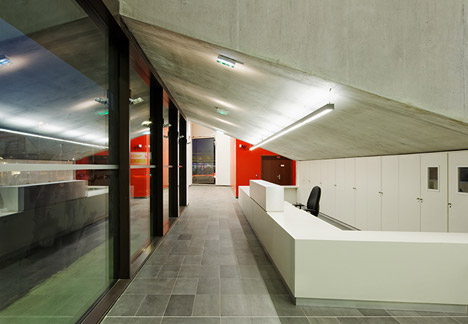
By contrast, the lower section of the building is designed as a more closed volume, made from self-levelling concrete that was poured on-site to offer a smooth and homogenous texture.
Mantois Technology Centre by Badia Berger Architectes

“The mineral-like quality and irregular apertures of the horizontal volume contrasts with the vertical volume suspended above,” said the architects.
Mantois Technology Centre by Badia Berger Architectes

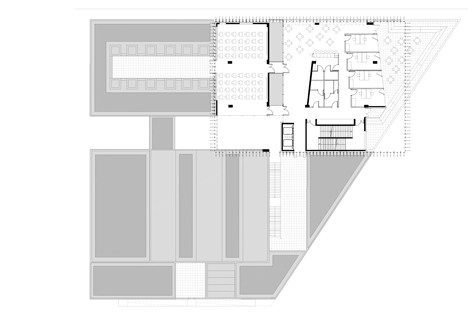
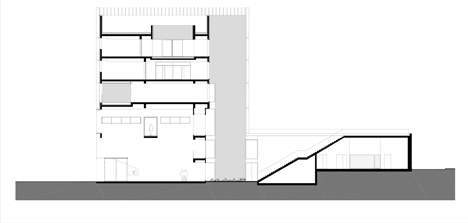
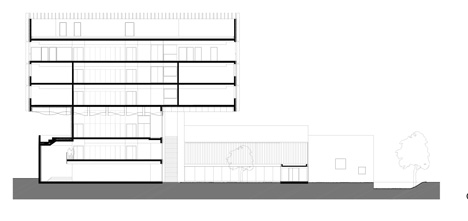
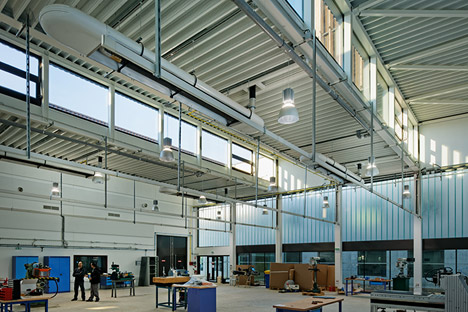
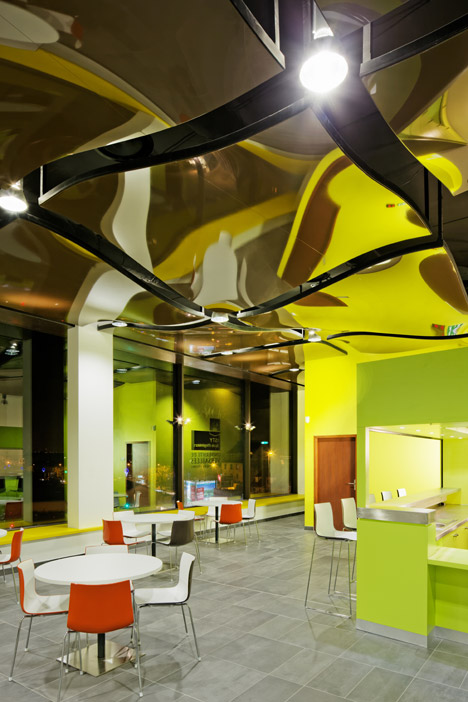
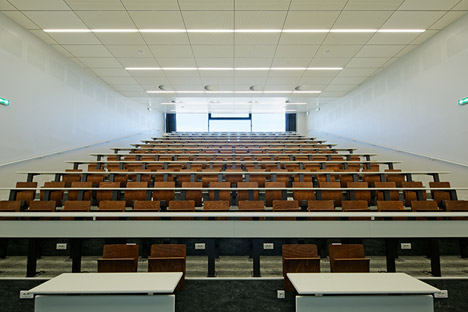
The bottom three levels of the seven-storey building are devoted to group activities, with an industrial workshop for creating robotic machinery on the ground floor, a cafeteria and outdoor terrace on the first floor, and a library and auditorium on the second floor.
Mantois Technology Centre by Badia Berger Architectes

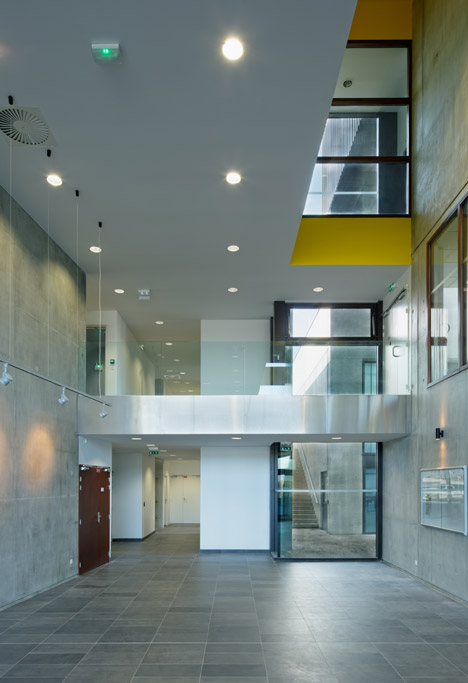
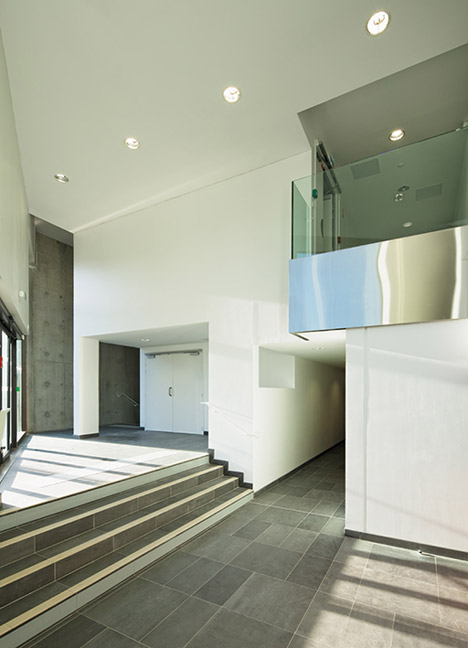
A triple-height foyer sits between these three floors, providing visual connections between the different levels.
Mantois Technology Centre by Badia Berger Architectes

“The building is designed around a sectional drawing that links its different levels and users, rather than offering functions and levels that are simply layered and compartmentalised,” said the architects. “It creates varied viewpoints, allowing the building to be read and understood.”
Mantois Technology Centre by Badia Berger Architectes

Large 60-centimetre-square clay tiles have been chosen for the flooring throughout to provide a hardy, dirt-resistant surface.
Mantois Technology Centre by Badia Berger Architectes

Reflective curved panels have been added to the cafeteria ceiling, made from a stretched textile on a metal frame. “The cafeteria faces the city and the ceiling reflects this view, linking the exterior to the interior,” said the architects.
Mantois Technology Centre by Badia Berger Architectes

In the auditorium, the ceiling has been covered in particle board and coated with a white laminate, which helps to reverberate sound and light throughout the room.

Photography is by Takuji Shimmura.


Project credits

Project lead: Stephane Nikolas
Economist: Gautreau Associés
Structural engineering: Batiserf Ingenierie
HVAC engineering: Sogeti
Acoustics: A. Taravella
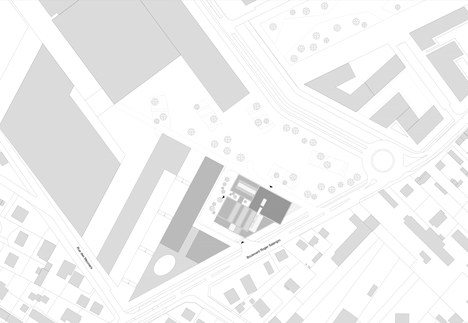
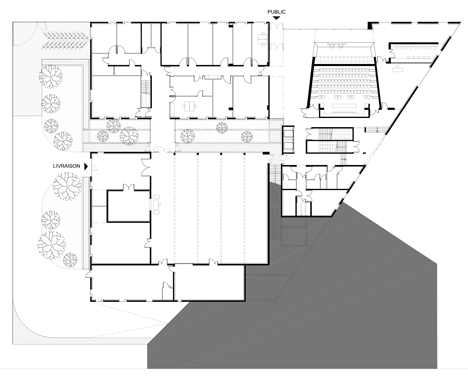
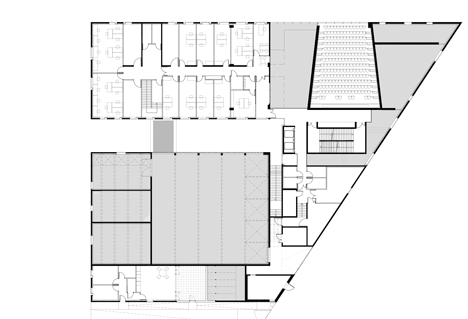
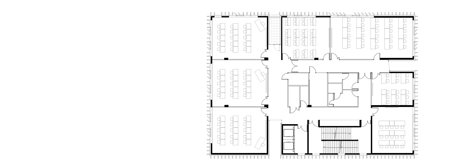
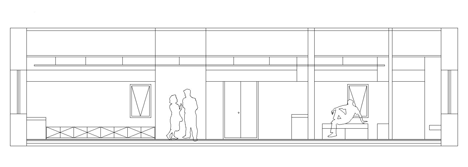
Mantois Technology Centre by Badia Berger ArchitectesSite plan Mantois Technology Centre by Badia Berger ArchitectesGround floor plan – Mantois Technology Centre by Badia Berger ArchitectesFirst floor Mantois Technology Centre by Badia Berger ArchitectesSecond floor – Mantois Technology Centre by Badia Berger ArchitectesTypical upper floor plan – Mantois Technology Centre by Badia Berger ArchitectesSection one Mantois Technology Centre by Badia Berger ArchitectesSection two
Dezeen

Studio Macura Designs Minimal Accessories Collection

Studio Macura

Maison & Objet 2014: Dutch firm Studio Macura has launched a collection of furniture and home accessories, including a marble tablet stand and oversized cork bottle stoppers.

Designers Marko Macura and Ingeborg van Uden, founders of Eindhoven-based Studio Macura, created a series of objects from marble, porcelain, steel, wood and cork to form a minimal collection of accessories.

Studio Macura Pero


Related story: Samuel Wilkinson designs faceted stationery for Lexon


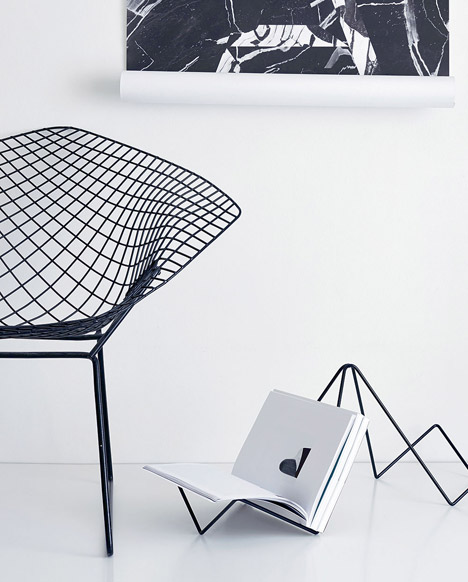
The range includes Lako: a geometric bent-steel wire rack for storing books and magazines, which can be propped open on either side. Its lightweight structure and handle at the apex enable it to be moved around easily.

Studio Macura Visi

The Visi coat hook, which references traditional shaker coat pegs, is constructed from beach or oak and available in a variety of finishes. The hooks can be arranged at random in a playful configuration or in horizontal line for a more traditional effect.

Studio Macura Lako

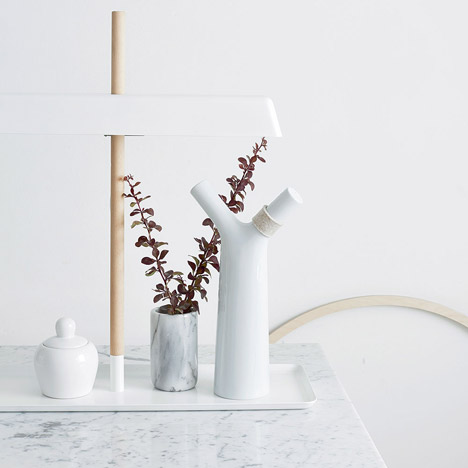
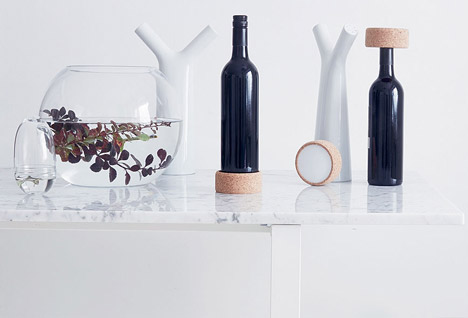
The Boca porcelain vessel is designed for watering plants. Its tree-like form provides a different functions from each “branch”: plants can be sprinkled gently from the shower opening or watered by a single stream from the spout. A decorative felt ring collects any droplets of water left behind.

Vino is a wine bottle accessory that can be used as a stopper for wine, or reversed and used as a bottle holder. Made from natural cork, it is capped with a brightly coloured plastic plate.

Studio Macura Vino

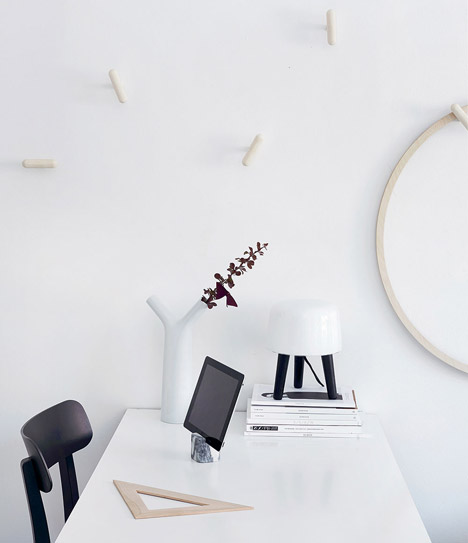
Blok is a marble stand designed to hold a digital tablet device – the weight of the natural material allowing for stable interaction with the screen.

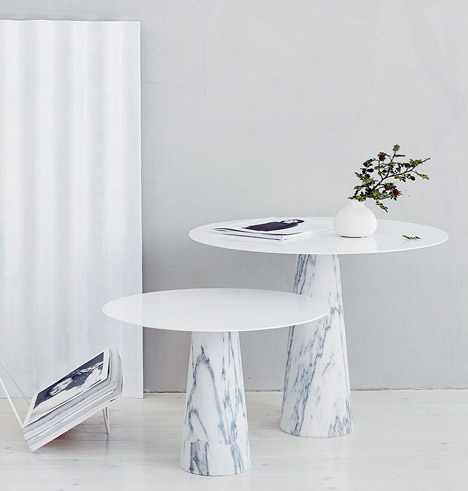
A pair of side tables, named Kamen, each feature a conical marble stand and circular steel top. “The interplay of matt-finished marble and a thin steel top, creates an elegant and timeless piece of furniture,” said the designers.

Studio Macura Kamen

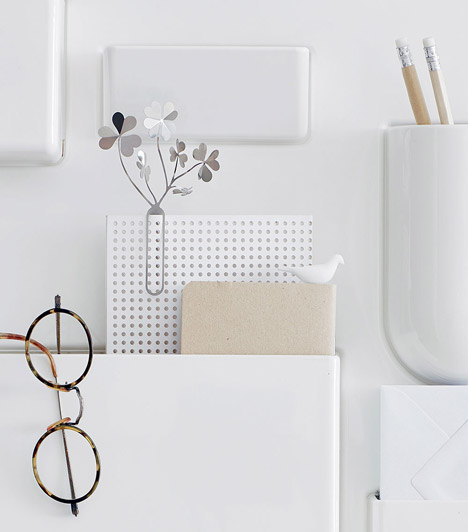
Finally, a small 3D-printed bookmark comes in the form of a dove. The bird perches on top of the pages while a long string keeps the reader’s place. The Pero doves are designed in two different positions, one standing and one pecking, and are available in a number of colours.

The collection debuted at Paris trade fair Maison & Objet last month.

Photography is by Riikka Kantinkoski and styling is by Susanna Vento.

Dezeen

Atelier Data Adds Concrete Volumes And Internal Courtyards To Algarve House

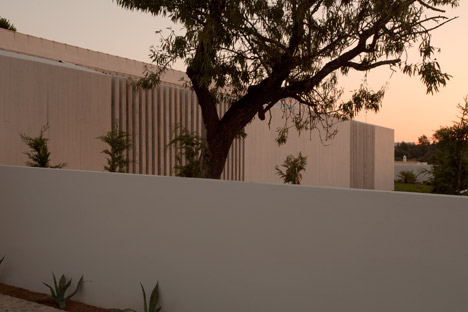
Atelier Data has extended a 1980s home in the Algarve, Portugal, with whitewashed concrete structures and fenced-in courtyards .

Casa Sol by Atelier Data

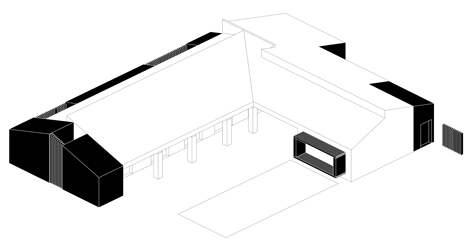
The Portugese studio added volumes to the one-storey building, named Casa Sol, intended to emphasise the shape of the existing building.


Related story: Atelier Data combines wood, concrete and cork for Varatojo House facade


Casa Sol by Atelier Data

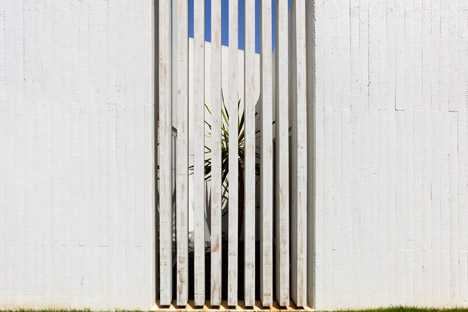
The extensions are connected by wooden railings that form interior courtyards and a solid L-shaped perimeter.

Casa Sol by Atelier Data

“Volumetrically, the project tries to introduce greater clarity to the constructed object by correcting some alignments and reinforcing the L configuration that the building originally held,” said Atelier Data.

Casa Sol by Atelier Data

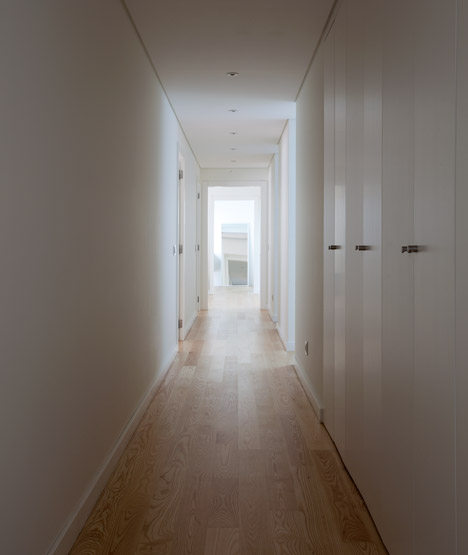
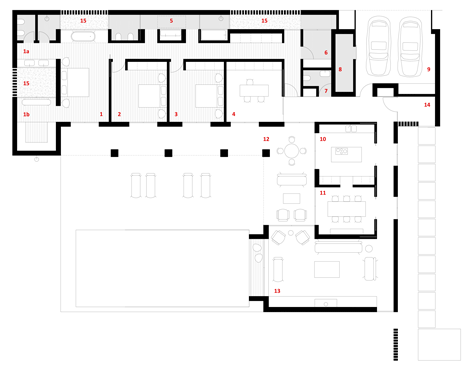
A hallway that runs the length of the building divides the bathrooms, a garage and laundry that border the road, from three bedrooms, a kitchen, dining room and living room that face onto a patio and swimming pool.

Casa Sol by Atelier Data

“The Hall operates as a ‘kneecap’ from which the two major areas are distinguished,” said the architects.

Casa Sol by Atelier Data

Atelier Data wanted to establish a connection between interior and exterior space with the creation of larger openings in the south and west facades of the building.

Casa Sol by Atelier Data

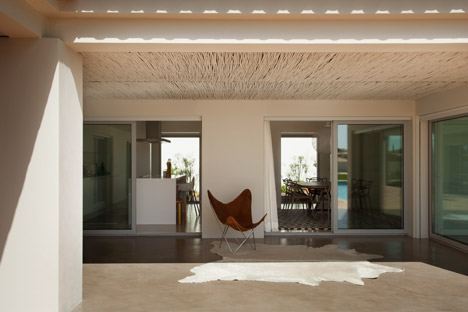
The main living areas, positioned around a patio in the crook of the L-shape, have glass sliding doors that open onto a covered veranda. The terrace follows the interior floor plan and is roofed with terracotta tiles.

Casa Sol by Atelier Data

“The patios and porches are responsible for mediating the interior spaces and the exterior of the house,” said the architects.

Casa Sol by Atelier Data

Two volumes attached to the end of the longest side of the building provide a toilet and dressing room for the master bedroom.

Casa Sol by Atelier Data

The spaces are bridged by a courtyard partially enclosed by wooden posts. The tops of the posts have been cut at an angle to visually complete the pitched roof.

Casa Sol by Atelier Data

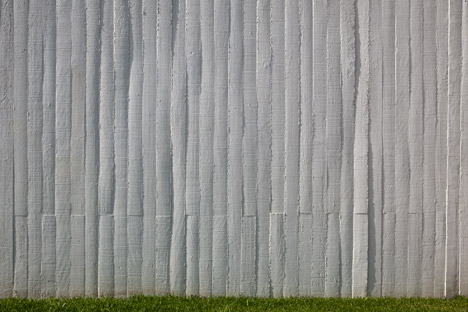
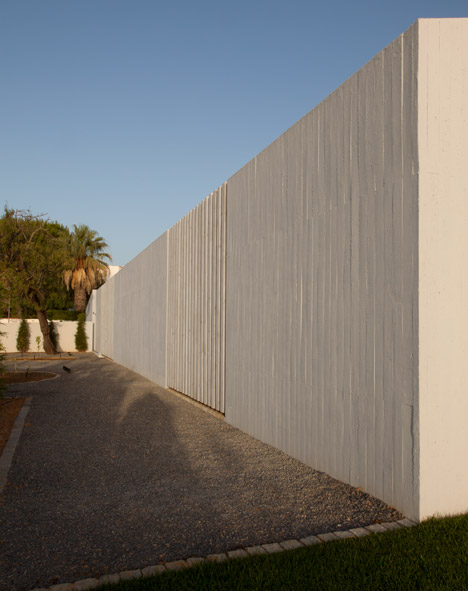
The concrete facades of the building were formed using shutter boards, which left behind imprints of the wooden mould. Slim widths of timber were used, taking into consideration the single-storey scale of the building.

Casa Sol by Atelier Data

The two time periods of the house are differentiated by the types of material, but unified by the colour palette.

Casa Sol by Atelier Data

“The painting of the house in an off-white colour acts as an articulating element of the design, unifying the pre-existing structure and new building elements,” said the architects.

Casa Sol by Atelier Data

Photography is by Mercês Tomaz Gomes.

Casa Sol by Atelier DataDiagram Casa Sol by Atelier DataGround floor plan
Dezeen

Arhitektura D.o.o. Renovates Cross-shaped Attic In Slovenia Into Holiday Home

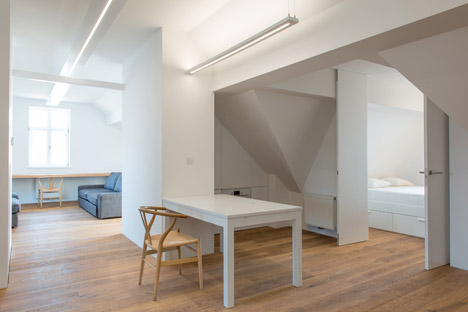
Slovenian studio Architektura d.o.o. has converted this Slovenian loft space into an open-plan two-bedroom holiday apartment – the second project we’ve featured by the architects today .

Attic Apartment by Arhitektura d.o.o.

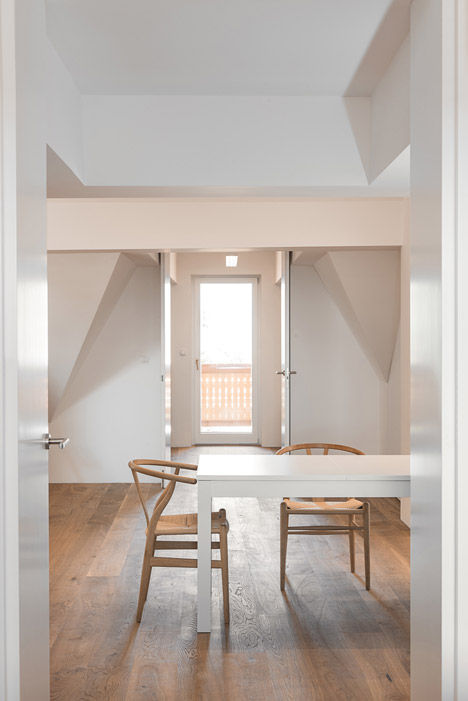
Alpine Apartment is situated within the attic of a house in Bled, a lakeside town in the north west of the country, designed by Architektura d.o.o. as a family holiday home for the client.

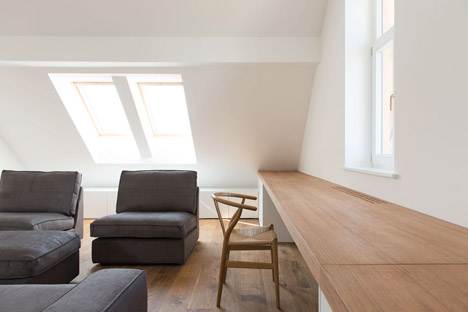
The dwelling has irregularly shaped fittings that are accommodated in the pitched attic ceiling, which references the mountainous terrain outside. “The apartment is an attic so its square meters yield less living space,” said the architects, whose minimal footbridge in Ljubljana we featured earlier.

Attic Apartment by Arhitektura d.o.o.


Related story: Black Barn by Arhitektura d.o.o. used for production of dried fruit and honey


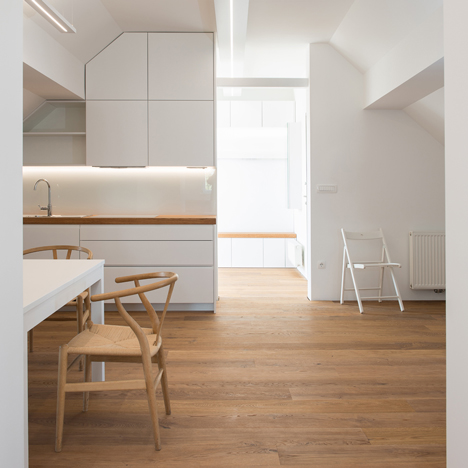
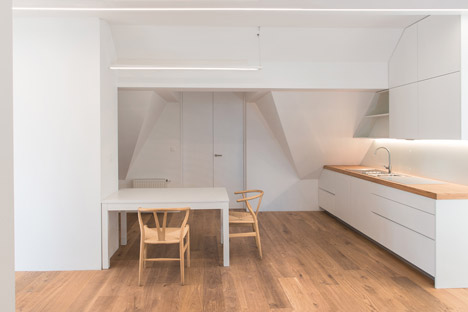
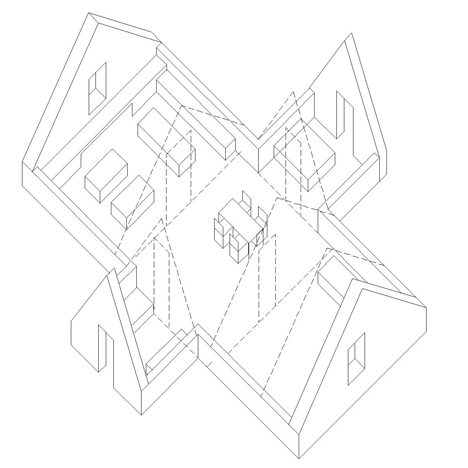
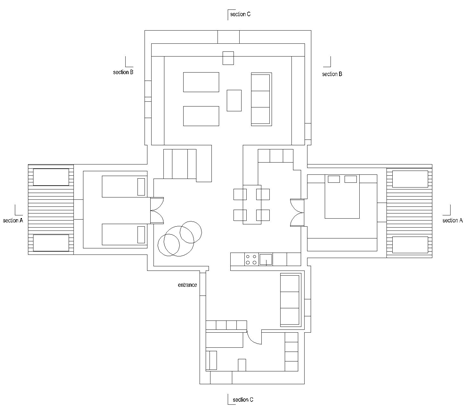
The cross-shaped floor plan has a kitchen and dining room at its centre, and four adjoining rooms – two bedrooms, a living room and an entrance hall that has been split to form a bathroom.

Attic Apartment by Arhitektura d.o.o.

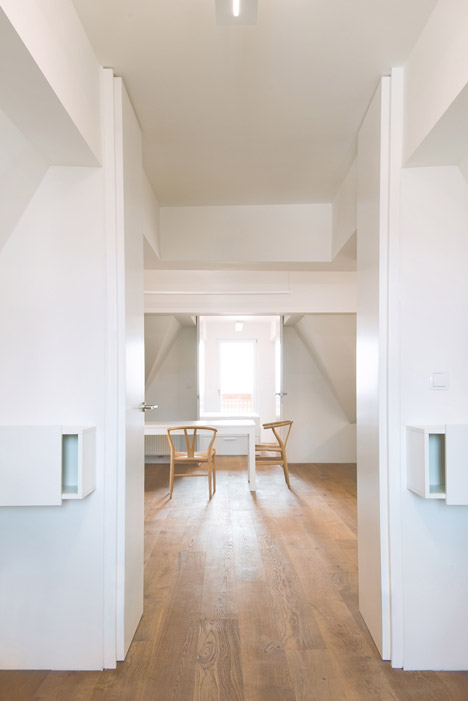
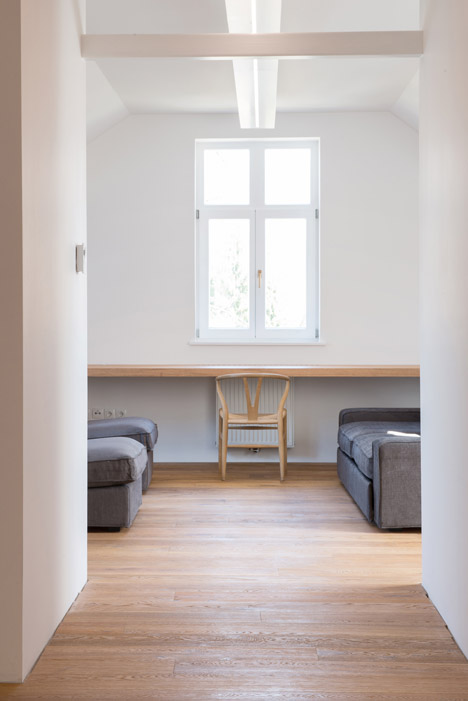
Two bedrooms on either side of the central space are separated by white double doors. While the bedrooms, hallway and living room have windows in their exterior walls, the central area has no natural light source.

Attic Apartment by Arhitektura d.o.o.

To maximise the limited floor plan and light the central space the living room and entrance hall have no doors. “The open plan configuration solves the problem of lighting the central part of the apartment which lacks windows,” said the architects.

Attic Apartment by Arhitektura d.o.o.

A suspended lighting strip runs through the apartment from entrance to living room. The 12-metre light is constructed in sections so isolated areas can be lit or darkened. Two further lighting panels in the two bedrooms run perpendicular to the central light column, reinforcing the cross shape.

Attic Apartment by Arhitektura d.o.o.

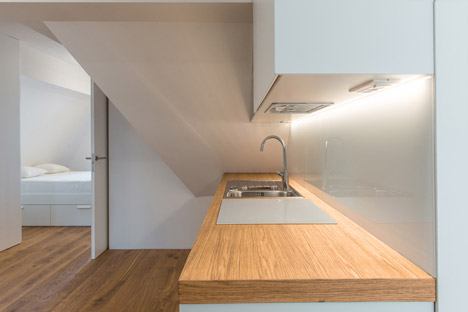
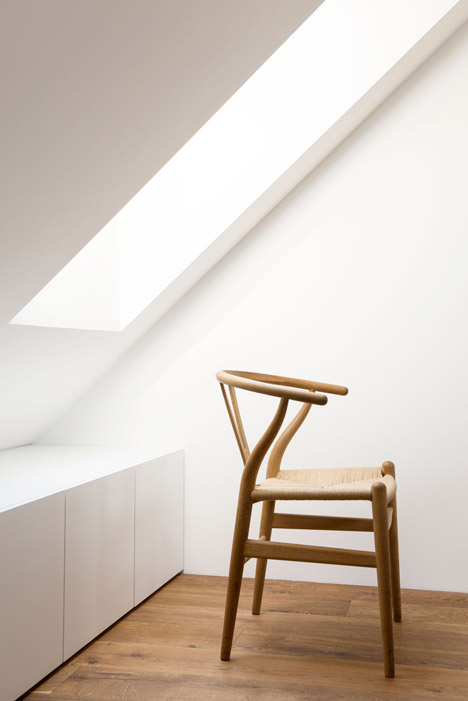
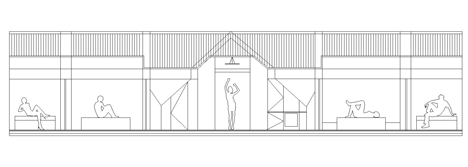
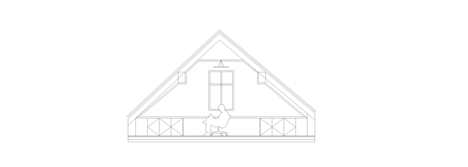
Custom-built furniture has been installed throughout to meet the specific requirements of the irregularly shaped attic ceiling. White kitchen cupboards and shelves have sharply angles and missing corners that accommodate the varying ceiling heights and beams.

Attic Apartment by Arhitektura d.o.o.

“In this way the niches were all filled with fitted wardrobes and storage spaces, which at the same time visually smooths out the space,” said the architects. The white built-in storage units are intended to create the illusion of greater space and light.

Attic Apartment by Arhitektura d.o.o.

Pale wooden floorboards and oak chairs and countertops are intended to make a connection between the apartment to its location. “The wood gives the interior a slightly Alpine feel, as well as the wooden flooring, which appears slightly rustic,” said the architects.

Attic Apartment by Arhitektura d.o.o.

Photography is by Jure Goršič.

Attic Apartment by Arhitektura d.o.o.Diagram – Attic Apartment by Arhitektura d.o.o.Floor plan Attic Apartment by Arhitektura d.o.o.Section A – Attic Apartment by Arhitektura d.o.o.Section B – Attic Apartment by Arhitektura d.o.o.Section C
Dezeen

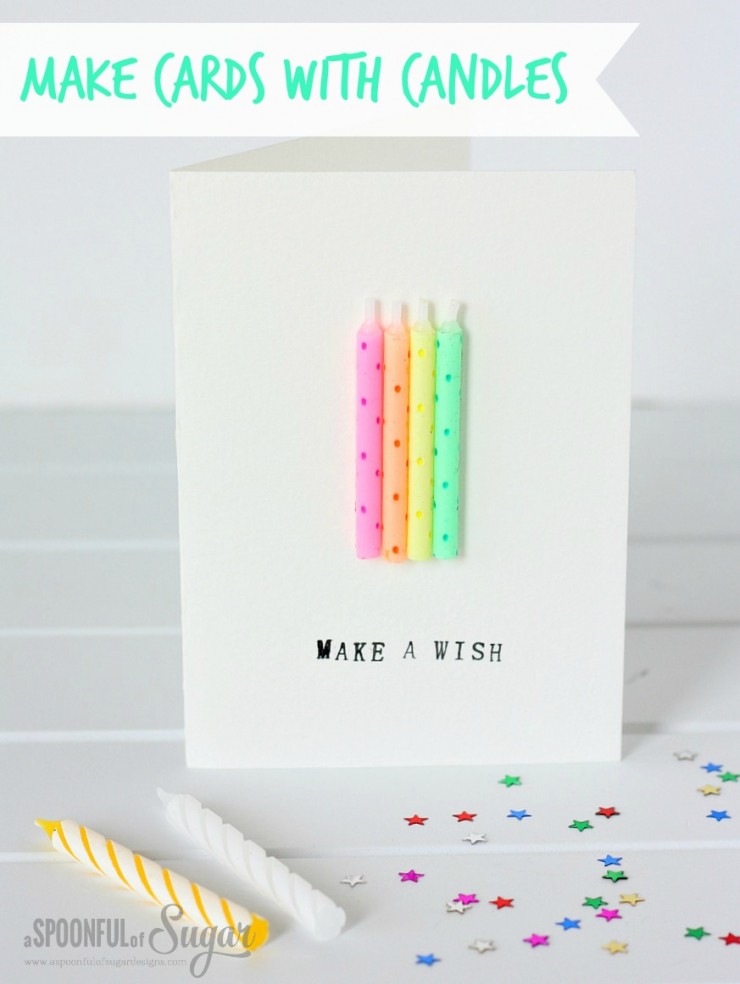
Make Cards With Candles

Make Quick Cards With Candles

There have been a lot of birthdays in our extended family recently and our card supply was getting low. I was inspired by this card that I spotted on Pinterest to make a series of cards featuring birthday candles.

Make Quick Cards with Candles

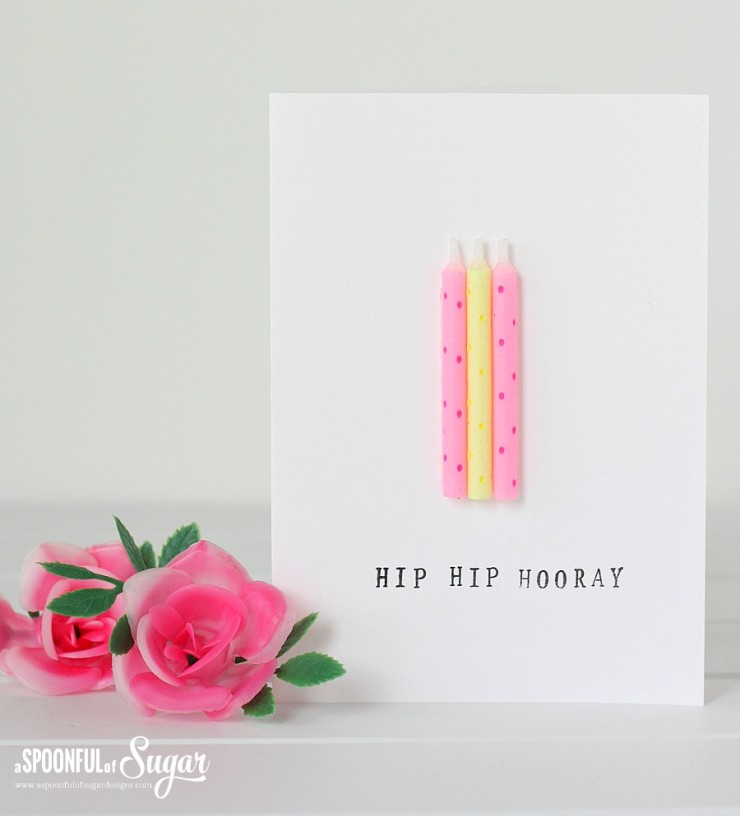
I raided my birthday candle stash and stuck the candles onto some nice white card using double sided tape. I stamped a simple message stamped underneath using a Papyrus Rolling Alphabet Stamp.

Make Quick Cards with Candles

To make cards with candles you need a few simple supplies that you probably already have on hand.  It is a fun craft idea for kids to keep them busy.

Make Quick Cards With CandlesFor some other simple card ideas, check out :

Quick Cards Using Hama (Perler) Beads

Origami Dress Card

Quick Fabric Cards

We are spending more time on Instagram lately – you can follow us here.

The post Make Cards With Candles

A Spoonful of Sugar

Latest Ideas!