Dezeen promotion: Italian brand Pedrali has provided the furniture for a restaurant within the new Milan headquarters for food company Nestlé .
VIP area within the Nestlé headquarters. Photograph by Dario Tettamanzi
Designed by DEGW Italia, the interior of the headquarters is intended to provide staff with a flexible working environment.
Open-plan offices, meeting rooms and designated quiet areas are all located within building, which is situated in the Milanofiori Nord neighbourhood.
A large restaurant with a VIP area, lounge space and balcony is located on the second floor.
Restaurant area within the Nestlé headquarters. Photograph by Dario Tettamanzi
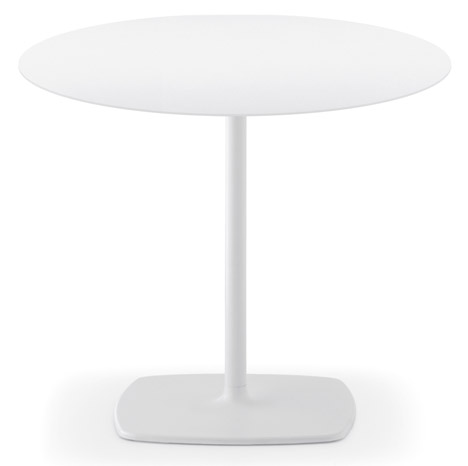
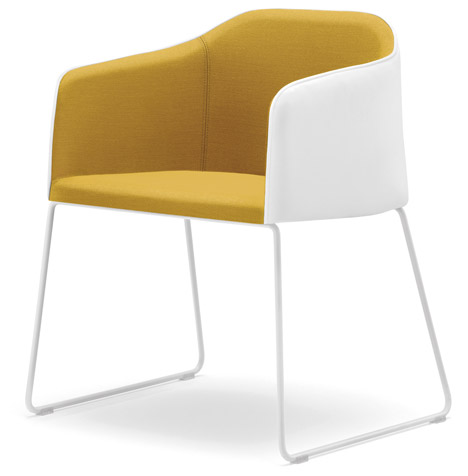
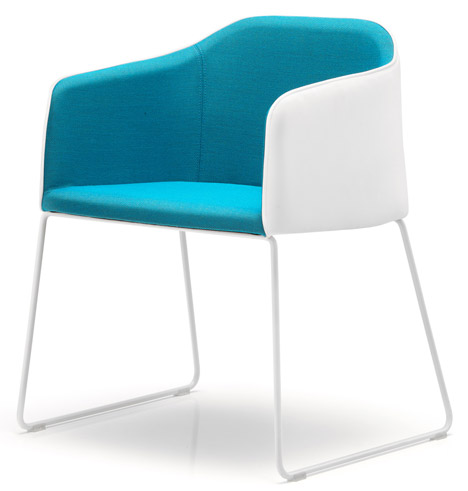
Pedrali’s white Stylus tables and Laja armchairs have been used to furnish the VIP area.
Helping to provide a minimalistic and clean-looking space, the armchairs are upholstered in white and grey with a chromed steel frame.
Reception area of Nestlé headquarters. Photograph by Dario Tettamanzi
Stools and chairs from the Kuadra collection are located in the balcony and lounge area. The plastic shell and chromed steel frame are designed to make the seats flexible and scratch-resistant.
Nestlé headquarters in Milanofiori Nord Italy. Photograph by Dario Tettamanzi
Pedrali’s most recent furniture collection launched at Salone Del Mobile in April, along with the 2015 edition of the brand’s New Ideas magazine.
Read on for more information from Pedrali:
Nestlé Group – Milan offices
DEGW Italia has designed the interior spaces for the new Nestlé headquarters in the Milanofiori Nord neighbourhood of Assago, Italy.
DEGW Italia’s contribution mainly focused on coming up with the most suitable solutions to encourage the dynamic use of the premises and to accommodate flexible working methods geared to Nestlé’s overall strategy that is particularly attentive to developing corporate welfare projects and agile working.
Stylus by Pedrali R&D
Stylus by Pedrali R&D
The concept-layout of a standard floor consists of open-space offices well supported by a combination of different-sized meeting rooms, touchdown spaces and project areas, quiet rooms and phone booths for work that requires real concentration.
This concept fully exploits the courtyard-shaped layout of the building with break areas and thematic hubs located at the intersection between its various wings (Nespresso, Sanpellegrino, Perugina etc), which act as functional hinges and condensers of relations on the various different levels.
Laja armchair by Alessandro Busana
There are also large special areas forming an extensive, integrated support system for the entire building: the entrance hall, whose multi-hyped spaces accommodate a wide range of reception and communication functions; a food promenade on the first floor consisting of a sequence of five meeting rooms whose graphics represent the basic ingredients of the Group’s different products (water, coffee, cocoa powder, cereals); the large company restaurant on the second floor (with a VIP area, balcony, lounge area and free-flow space), furbished with special niche-spaces for either group or individual work.
Laja armchair by Alessandro Busana
The Pedrali contemporary and versatile products have been selected to furnish the large company restaurant on the second floor. For the VIP Area the minimalistic look of the Stylus tables in white is well combined with the bichromatic upholsteries of the Laja armchairs, with a steel chromed rod frame. The technopolymer chairs and stools of Kuadra collection were chosen for the balcony, the lounge area and the free-flow space.
Project credits:
Firm: DEGW Italia Client: Nestlé Italiana Area: 22.000 sqm Date: 2014 Location: Italy, Milan – Assago, Milanofiori Industry: Food and Beverage Office Fit Out / Interior Design: DEGW Italia Architectural Design: Park Associati Photography: Dario Tettamanzi
New York 2015: in the first of a series of interviews with prominent New York designers, Lindsey Adelman tells Dezeen about how she became a pioneer of the city’s burgeoning lighting scene (+ slideshow + transcript).
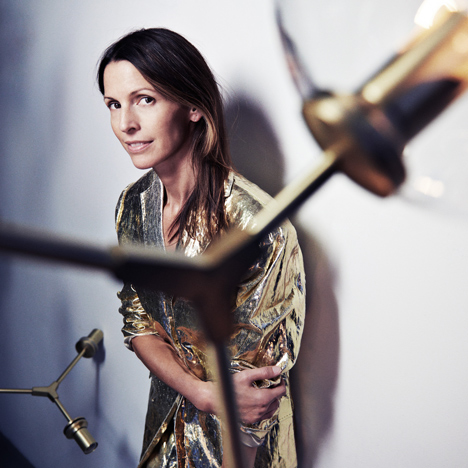
Adelman, 45, has become a key figure in New York design since setting up her eponymous studio in 2006. Her lighting designs are sold by internationally renowned galleries including Nilufur in Milan and BDDW in New York, and have been exhibited at the Cooper Hewitt National Design Museum and the Design Miami fair.
Her DIY approach to design and production influenced a number of emerging New York designers, resulting in a “makers” scene that Adelman said began after the financial crash in 2008.
Lindsey Adelman. Portrait by Steven Pan
“I think a lot of people wanted to stay as creators and really started looking into options of doing it themselves,” she told Dezeen at this year’s International Contemporary Furniture Fair (ICFF) in New York. “Cutting down an overhead, finding other spaces, not taking a salary, setting up a shared woodshop or a collective ceramic studio etc.”
“Just making it happen rather than relying on other companies, because that wasn’t an option,” she continued. “I think for those reasons, there’s a huge burst of creativity that came after that time.”
Adelman’s fascination with lighting began during her studies at the Rhode Island School of Design (RISD). She then worked with David Weeks – another pioneer of New York’s lighting scene – before setting up her own studio and continuing to work with the field she describes as “fun” and “spontaneous”.
“I find [lighting] interesting because it’s an immaterial substance,” Adelman said. “This idea of working with something that’s about effect; it’s intangible, you’re really shaping form to maximise a lighting effect.”
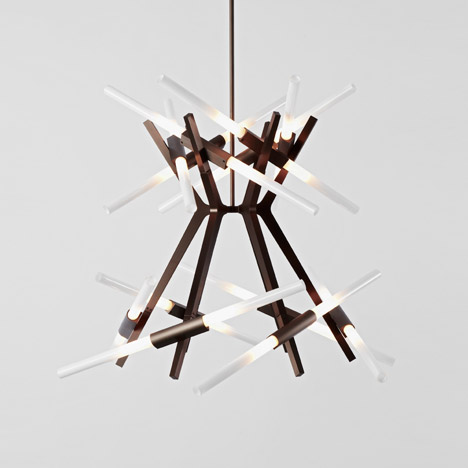
Astral Agnes for Roll & Hill
In their Manhattan loft space, Adelman’s team of 28 works on full-scale models of the predominantly glass and metal lighting pieces before producing and shipping limited runs of each design in-house.
A large portion of New York designers also focus on lighting because it is relatively easy and cheap to produce, according to Adelman.
Related story: Roll & Hill presents seven new product lines in New York
“A kid could make a light,” she said. “It’s positive wires and negative wires that get spliced together with a bulb and a socket. There’s so much freedom in it, it’s not like you need a specific type of training. It’s not very expensive as well.”
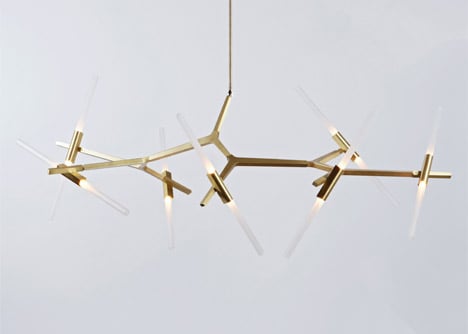
Adelman also designs collections for Brooklyn lighting brand Roll & Hill, which produces the Agnes lamp – perhaps her most recognisable design.
Agnes for Roll & Hill
At this year’s ICFF she debuted work by Mary Wallis, who has worked with the studio for over five years. Another of her protégés, Bec Brittain, presented work under her own name at the event earlier this week.
The spirit of collaboration between New York’s designers and brands is aided by an unusual shared interest in archery, initiated by the founders of design gallery BDDW.
“They’re into archery and they started a club, then invited a number of companies and studios and individuals to be part of it,” she explained. “When you go up to shoot arrows, you end up talking in a different way that’s more relaxed.”
Adelman’s other projects include creating the set and furnishings for an upcoming music video, in which she also features as a backing dancer.
Photography is by Lauren Coleman, unless otherwise stated.
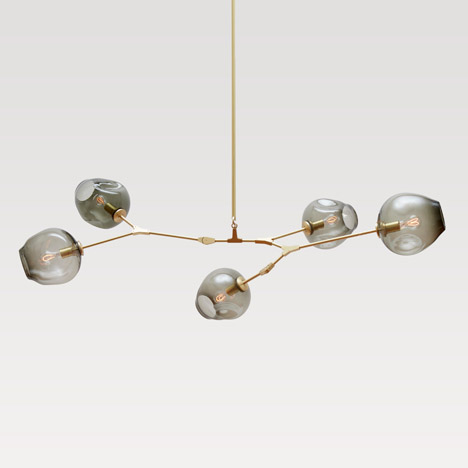
Branching
Read an edited version of the transcript from our interview with Lindsey Adelman below:
Dan Howarth: How did you get into design?
Lindsey Adelman: I really discovered industrial design ages ago when I was working at the Smithsonian institution – that was when I already had a degree in English.
I’d not crossed paths with this kind of design, but I learned about exhibition fabrication while I was an editorial assistant at the Smithsonian and became really interested in this idea of having a professional career making things that were outside of sculpture or being an artist.
I wanted to find out more so I applied to RISD [Rhode Island School of Design] and I started focusing on lighting while I was still in school. I graduated in 1996, and ever since then I’ve been in the same industry trying new things.
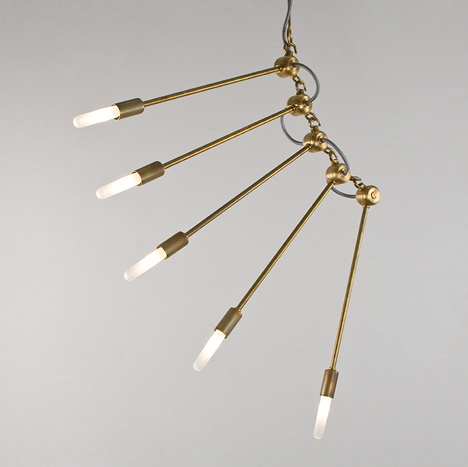
You Make It Mobile
Dan Howarth: Why did lighting in particular interest you?
Lindsey Adelman: I find it interesting because it’s an immaterial substance. This idea of working with something that’s about effect; it’s intangible, you’re really shaping form to maximise a lighting effect.
It’s a very different way of working than say doing a sofa, or table or chair, and I think that it affects everything else in the room in terms of mood.
It’s an interesting category where you can have an effect on vintage pieces, nature, or different types of wall surfaces. That’s why it interests me.
Dan Howarth: How did you come about setting up your studio?
Lindsey Adelman: I got started after I worked with David Weeks, I worked for his company and then we partnered on another company called Butter. Then I took some time off when I had a baby and in that time I really gave some thought as to what kind of studio I want to have and what kind of process I wanted to have in my daily life.
When I set up my studio, it was really just one model of a light. I was working out of my apartment, I didn’t have any employees. Little by little, orders started coming in because I had the first pieces in an exhibition.
When I had a bit of money I hired someone as an assistant, so it grew very slowly that way.
Catch
Dan Howarth: You’ve always kept the idea of making and hands-on testing in-house. Why is that important to you?
Lindsey Adelman: Everything we do is developed through daydreaming, through conversations, through one-to-one scale models, through testing with actual bulbs and sockets and putting them around a space.
In the secondary or third step we bring in CAD and start doing models in Solidworks. I think it really shows in the end product that there’s been so much hands-on experience with materials first.
Dan Howarth: After you became established there was an explosion of young designers that are part of a “makers” scene in New York. How did that come about?
Lindsey Adelman: It was just after the crash in 2008-2009. I think a lot of people wanted to stay as creators and really started looking into options of doing it themselves. Cutting down an overhead, finding other spaces, not taking a salary, setting up a shared woodshop or a collective ceramic studio etc.
Just making it happen rather than relying on other companies, because that wasn’t an option. I think for those reasons, there’s a huge burst of creativity that came after that time.
Clamp
Dan Howarth: Quite a few of these studios also do lighting. Why is it so popular?
Lindsey Adelman: I love lighting because it’s relatively easy. It’s positive wires and negative wires that get spliced together with a bulb and a socket. A kid could make a light.
There’s so much freedom in it, it’s not like you need a specific type of training. And it’s fun, it’s spontaneous and there’s no right or wrong way to do it.
Technology evolves so quickly, basically every month something is better. Either a transformer or the temperature of an LED, all of these things get better and better and I think that’s very motivating. You can design products around exactly what is getting released that month.
It’s not very expensive as well, compared to working in mahogany, say. So I think that’s part of it too.
Dan Howarth: What’s currently going on in the New York design scene?
Lindsey Adelman: The Collective Design show is in its third year and I think that might reflect a lot of what’s happening in design. Before, you could only see furniture collected at Art Basel and Design Miami, and various trade shows around the world, but not so much in New York.
I think that show is kind of proof that that culture exists in New York as well. So perhaps there’s a population making work on a limited basis, like rare limited-edition furniture pieces, and there’s also a growing market of informed collectors.
Boom Boom Burst
Dan Howarth: There’s more of a taste for luxury?
Lindsey Adelman: Yeah, because in New York previously it was mostly vintage work that was perceived as having the highest quality and value. Now, I think pieces that are made today are starting to receive that perception.
Dan Howarth: As a studio you’ve started collaborating with designers. Is this something that will continue?
Lindsey Adelman: Mary Wallis has worked with me for over five years, she’s amazingly talented and it was very fun to put her collections into production. We can offer this work to our client base, which is really nice.
I didn’t really think about it as a huge decision frankly, it was more organic. I love working with her and I still get to work with her every day, so it wasn’t a huge policy change or anything like that.
Edie by Mary Wallis for Lindsey Adelman, presented at ICFF 2015
Dan Howarth: What else do you have coming up?
Lindsey Adelman: Other projects I’m doing – next month I’m releasing a music video, which will be really fun. Every year I make work for Milan, I have a few exclusive collections with Nilufar Gallery. It’s my push per year, creatively.
Our studio is releasing two collections per year in limited numbers, that’s how we’re handling standard models, which is quite different than in the past. When they sell out, they sell out and people wait until the next collection is released. That’s helped to keep the quality up on all levels in our studio, because I think if quantity gets too high our studio becomes something entirely different. It’s almost impossible to maintain quality.
Dan Howarth: Then it becomes more about distribution and less about design?
Lindsey Adelman: Yeah, there are so many things about it that aren’t the type of challenges that I’m interested in.
Dan Howarth: Tell me more about this music video.
Lindsey Adelman: We got together, 16 of us from the studio are backup dancers. My friend who is a choreographer, Danielle Martinelli, she choreographed it and she taught us the routine once a week for a couple of hours.
I designed the whole set and our studio designed the costumes, the jewellery, the wallpaper, the rugs, candelabra and all this stuff. For two days, we shot it and it’s a three-minute video.
It was so fun. This summer I’m going to start shooting the next one, and probably release it in the spring or something. Every year we’ll do something like this.
Edie by Mary Wallis for Lindsey Adelman, presented at ICFF 2015
Dan Howarth: And your studio is also into archery? That seems to be a popular thing among New York designers.
Lindsey Adelman: BDDW started this. They’re into archery and they started a club, then invited a number of companies and studios and individuals to be part of it. We have three teams and it’s great fun. It’s all because of them.
Dan Howarth: That seems representative of the way designers and studios work together in New York.
Lindsey Adelman: It’s nice for us to have a focus, for us to come together. When you get a lot of people like me who are geeky in a way, you need a focus.
It’s like when you’re at a table at a family reunion and there’s a puzzle going on the table and everyone’s putting pieces in, this subconscious chatter happens. It’s like that when you go up to shoot arrows, you end up talking in a different way that’s more relaxed.
The competition is fun and it’s pretty easy to get good at archery, so everyone feels pretty good about themselves. It’s really fun and it’s great that it started.
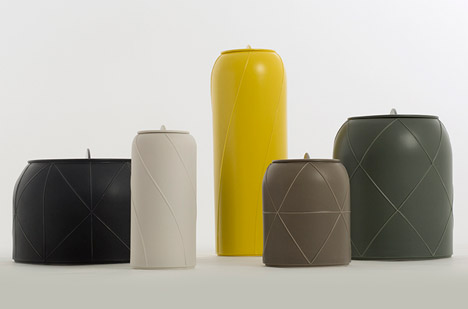
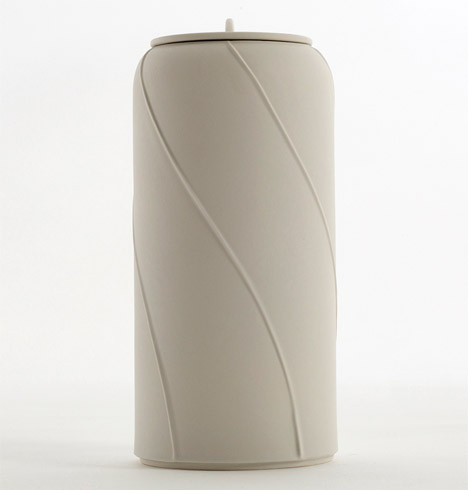
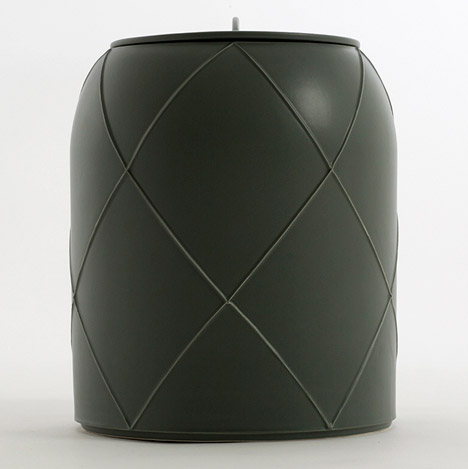
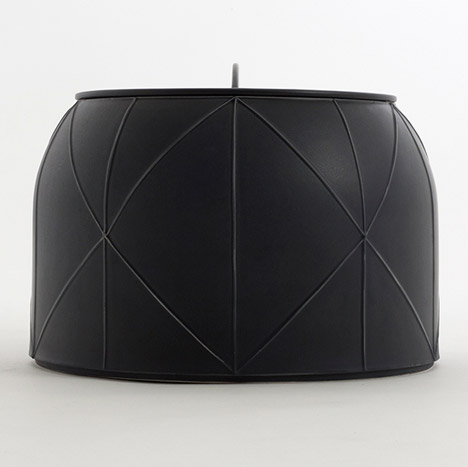
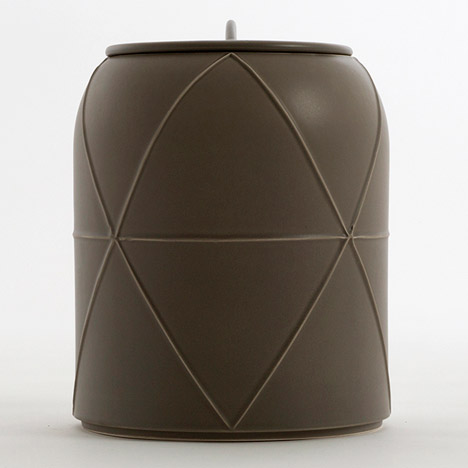
London designer Benjamin Hubert has moulded a range of ceramic containers to leave spiral and criss-crossing seams around the outside .
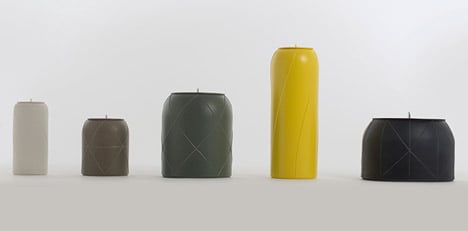
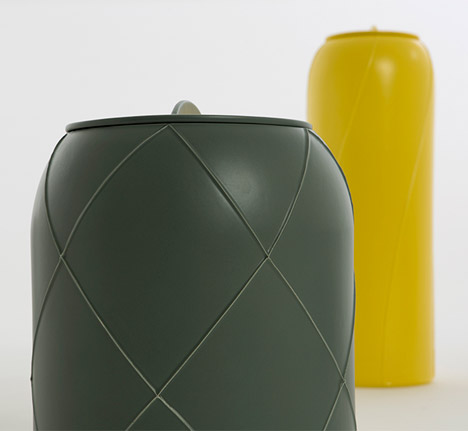
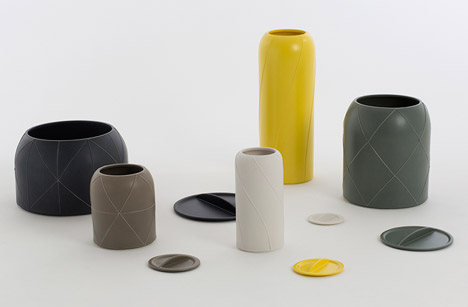
Designed for Italian ceramic manufacturer Bitossi Ceramiche, the collection of five Canisters are developed from Hubert’s previous collection for the brand that was decorated in a similar way.
“Canisters expands the Seams range created last year, which became Bitossi Ceramiche’s best-selling product in a 20-year history,” said Hubert.
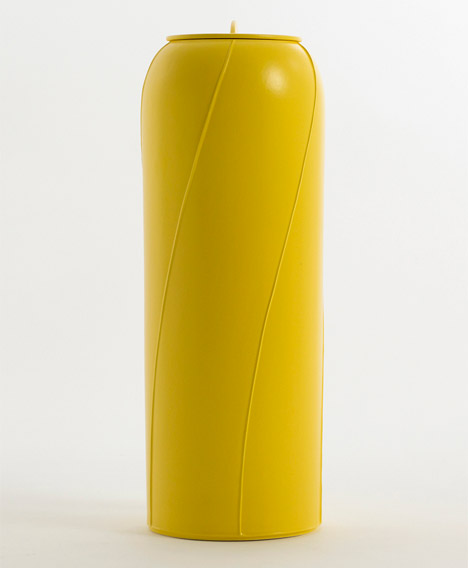
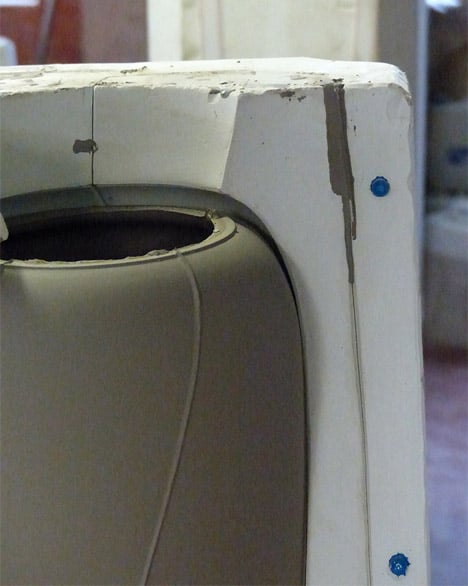
To create the thin lines across the exterior of the cylindrical containers, the moulds are spilt into several sections so the material escapes into the joins during the slip-casting process.
Related story:Benjamin Hubert experiments with glass blowing to create Beacon lamps
“The moulds require an intricate and innovative method of production to split them into the multiple components necessary to create the seam lines,” the designer said.
Instead of removing these seams after production, they are left as details across the surfaces.
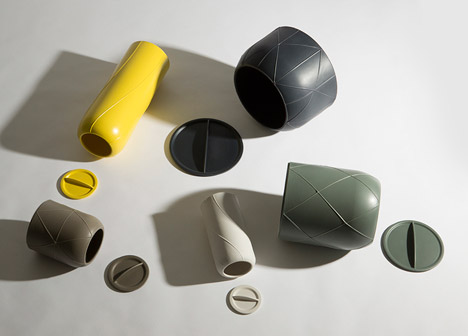
Each of the vessels is a slightly different size, ranging from tall and thin to short and wide.
The slimmer designs are patterned with spiralling lines that curve from the circular opening in the top down to the base.
Diamonds and triangles are formed by the seams on the wider pieces, created using small mould sections.
“The new collection stems from the studio’s research into creating mass-produced products with unique details by manipulating a traditional ceramic manufacturing process,” Hubert said.
“The studio began the project with a study into the slip casting process to establish how it could be utilised to introduce decorative elements to the product,” he added.
Removing a Canister from its mould
Each is coloured in a different hue and is finished with a matt glaze. Matching lids feature slender vertical tabs for lifting.
Removing a Canister from its mould
Hubert has also launched a collection of blown-glass lampshades and a modular sofa system this year.
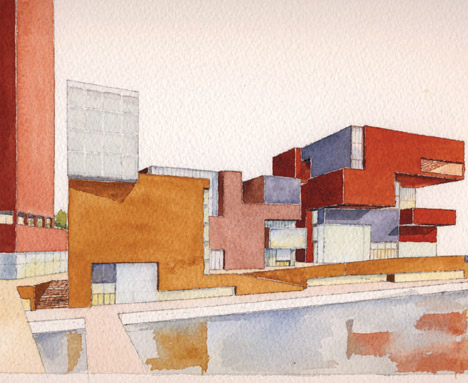
Architecture firms Allies and Morrison and O’Donnell & Tuomey have won their bid to design a new cultural quarter at the London 2012 Olympic Park, expected to include new outposts of the V&A and Smithsonian museums.
London-based Allies and Morrison, the firm behind the park’s original masterplan, and Irish duo Sheila O’Donnell and John Tuomey – winners of the 2015 Royal Gold Medal for architecture – will collaborate on the 70,000-square-metre scheme at Stratford Waterfront.
Forming part of the so-called Olympicopolis scheme, the site will include new buildings for the V&A museum of art and design, and performing arts venue Sadler’s Wells. London College of Fashion will also relocate there.
Talks are still underway with the Smithsonian Institution, which is considering opening its first museum outside the US as part of the project.
Related story:University College London to open dedicated design school at the Olympic Park
Bob Allies of Allies and Morrison commented: “Having been involved in the design of the Olympic Park from the submission of the initial bid to the completion of the legacy masterplan, we are very excited to have been selected to bring forward this final component of what will be an extraordinary new piece of London, a remarkable collaboration between outstanding institutions.”
Sheila O’Donnell and John Tuomey said their ambition was to create “an exciting urban quarter in this new part of town”.
Aerial view of the site showing the nearby Olympic Stadium and Aquatics Centre
“Cultural and educational buildings and the public realm have been the critical purpose of our practice for more than 25 years,” they stated. “It feels like all our work has been leading towards this extraordinary commission.”
The two firms were selected ahead of five other teams of architects, which included David Chipperfield, Stanton Williams, Alison Brooks Architects, Haworth Tompkins, Robbrecht en Daem, David Kohn and DRDH Architects.
The team will now work with Spanish architecture office Arquitecturia, landscape studio Gustafson Porter, engineer Buro Happold and construction firm Gardiner and Theobald to move the scheme towards a planning application.
The Olympicopolis project was first unveiled by London mayor Boris Johnson at the end of 2013 to form a new gateway to the Queen Elizabeth Olympic Park. The ambition also includes the creation of a 75,000-square-metre residential development.
Close-up aerial view of the site
“Stratford Waterfront is set to become a world-leading centre of culture and higher education, and I am thrilled that we have been able to appoint some serious talent to work on the designs,” said Johnson.
“Their work will be key to a project that is expected to generate nearly £2 billion and bring 3,000 new jobs to the Olympic Park.”
Allies and Morrison is also one of the five firms shortlisted to design a new campus for University College London, which will be located nearby. UCL, which encompasses the Bartlett School of Architecture, plans to open its first school of design.
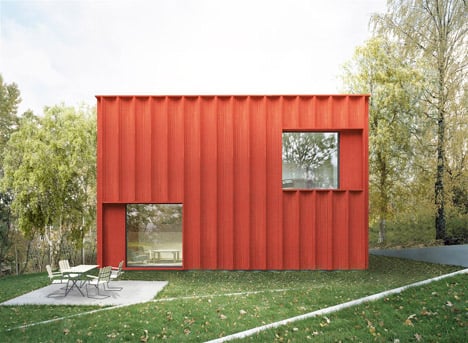
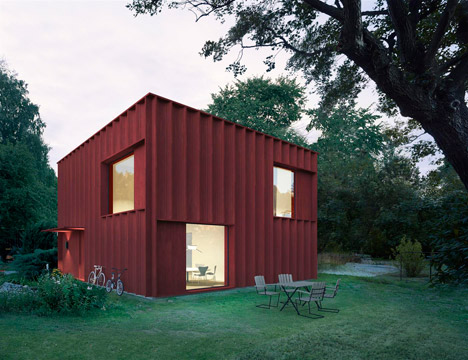
Swedish firm Tham & Videgård has attempted to design Sweden’s most desired house – a mash-up of the nation’s traditional red-painted timber cottages and a functional box.
Architects Bolle Tham and Martin Videgård – whose past projects include a mirrored treehouse – were commissioned by property agency Hemnet to design “Sweden’s statistically most sought-after home”.
The architects came up with The Hemnet Home – “a new typehouse for everyone by everyone” – after measuring the popularity of the agency’s 86,000 online property adverts, which was calculated through 200 million user clicks.
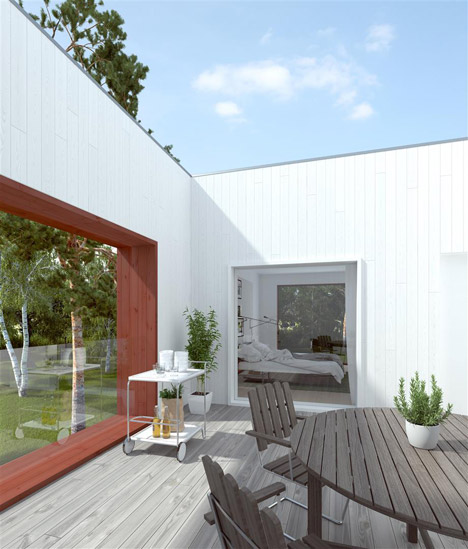
They combined the two most-searched for archetypes – the traditional timber-clad cottage and the functional white box – to create an ideal house, envisioned as a red timber cube with an enclosed terrace and generously sized windows.
Related story: Tham & Videgård’s Husarö House is a scenic retreat on the Stockholm archipelago
“A home built by two million Swedes, the Hemnet Home is a data experiment to lead the way for a new type of architecture,” said Tham and Videgård.
“A direct interpretation of statistics from all the Hemnet users gave an average value that determined the measurable properties of the home including size, price, number of rooms, bathrooms and floors.”
“The aim was to create an architecture that combines the statistics with the features of the two iconic types – the rationality of the functionalistic box combined with the quality of craftsmanship and material presence of the Falu red cottage,” added the architects.
Curving channels cut in the Falu red cladding – a vibrant red wood stain and preservative typically used on Scandinavian buildings – give the facade a wavy texture of hollows and ridges.
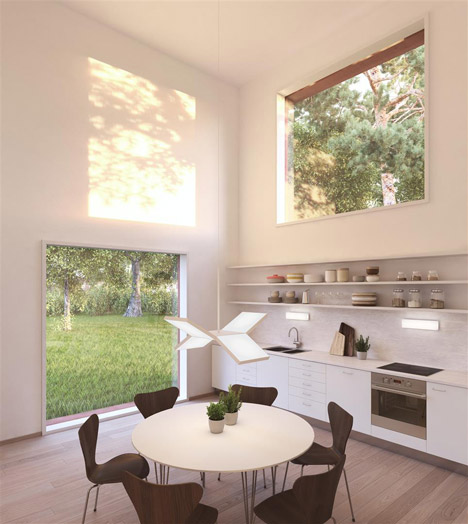
Translating the common desire for an open-plan kitchen and dining area, the architects planned a double-height kitchen as the focal point of the hypothetical property.
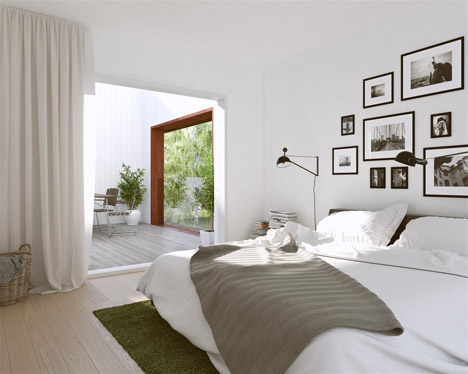
Panels of floor-to-ceiling glazing and an atrium draw on the ambition for light-filled interiors, while a partially enclosed terrace provides a sought-after space for dining and entertaining.
“A terrace is inscribed within the cube and thus provides a sunny terrace protected from the wind and also offering privacy,” explained the architects. “This is beneficial, particularly for denser housing areas.”
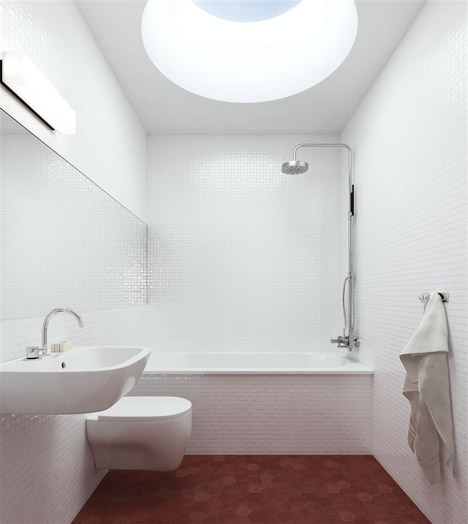
Abundant storage would be built into a entrance hall fronted by a traditional porch, while more unusual details include a bathroom covered with hexagonal tiles and a porthole-shaped skylight.
The fictitious 120-square-metre property is priced €300,000, which is approximately £215,000.
Project credits:
Architect: Tham & Videgård Arkitekter Team: Martin Videgård, Bolle Tham, Johannes Brattgård. Client: Hemnet


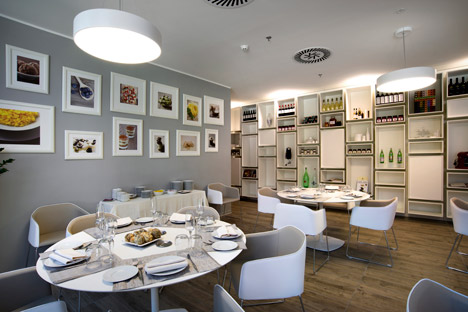 VIP area within the Nestlé headquarters. Photograph by Dario Tettamanzi
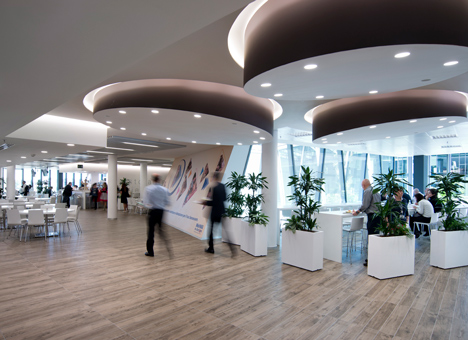 Restaurant area within the Nestlé headquarters. Photograph by Dario Tettamanzi
 Reception area of Nestlé headquarters. Photograph by Dario Tettamanzi
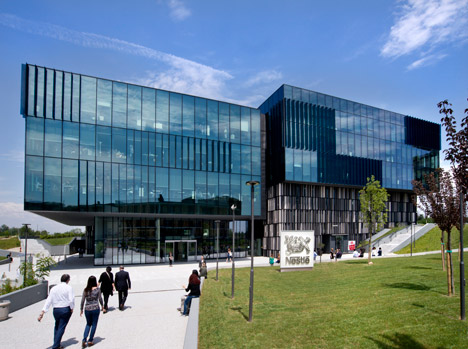 Nestlé headquarters in Milanofiori Nord Italy. Photograph by Dario Tettamanzi
 Stylus by Pedrali R&D
 Laja armchair by Alessandro Busana
 Laja armchair by Alessandro Busana
 Lindsey Adelman. Portrait by Steven Pan
 Astral Agnes for Roll & Hill
 Agnes for Roll & Hill
 Branching
 You Make It Mobile
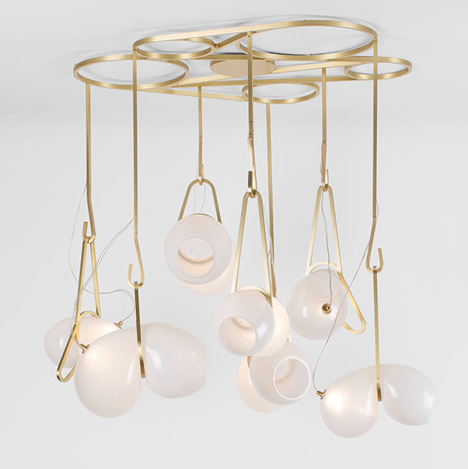 Catch
Catch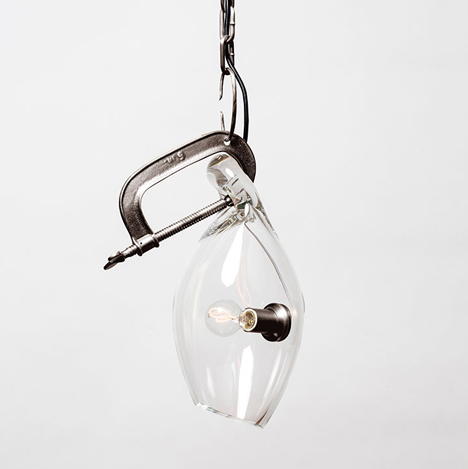 Clamp
Clamp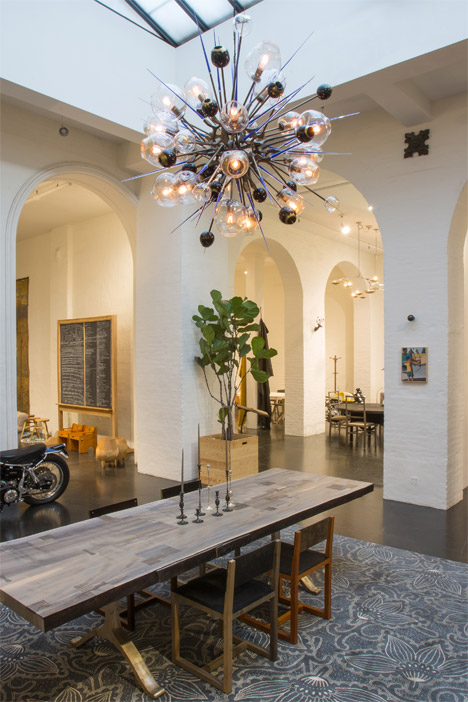 Boom Boom Burst
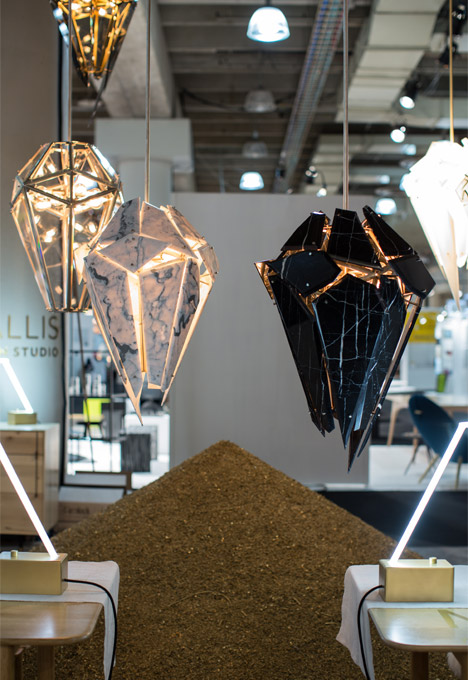 Edie by Mary Wallis for Lindsey Adelman, presented at ICFF 2015
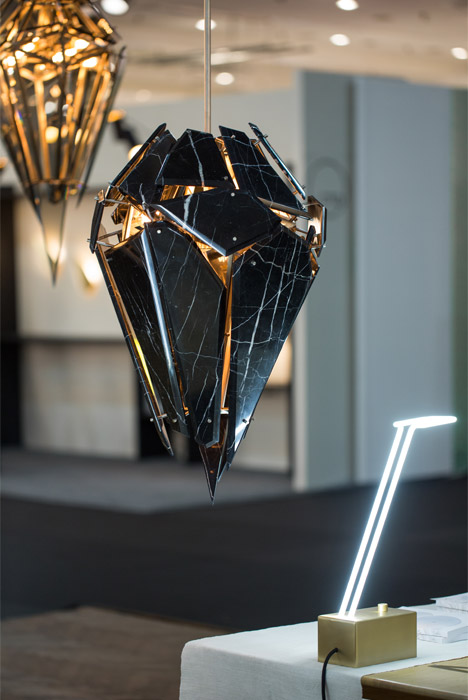 Edie by Mary Wallis for Lindsey Adelman, presented at ICFF 2015
 Removing a Canister from its mould
 Removing a Canister from its mould
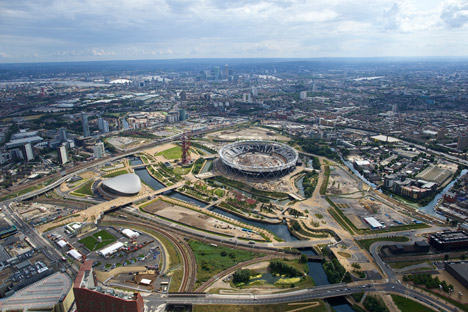 Aerial view of the site showing the nearby Olympic Stadium and Aquatics Centre
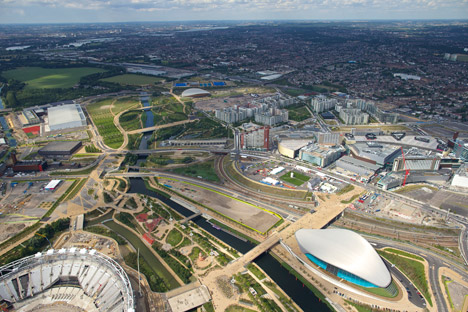 Close-up aerial view of the site
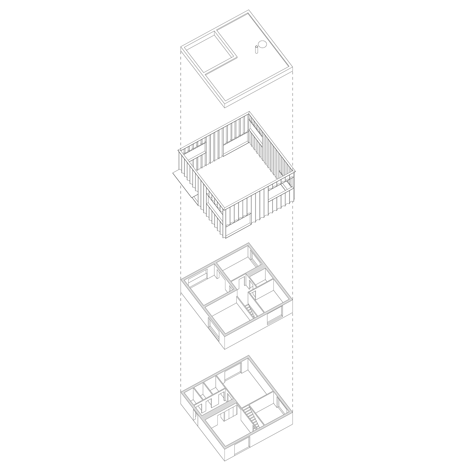 Exploded axonometric diagram
 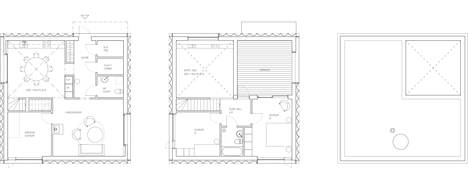 Floor plans
 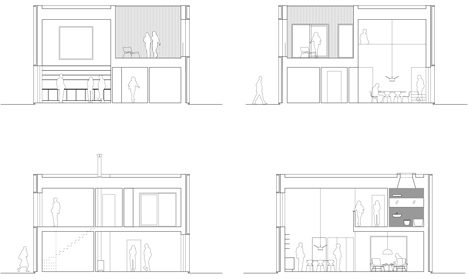 Sections