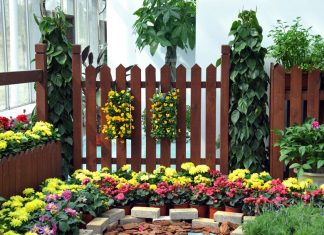
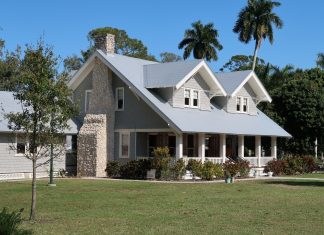
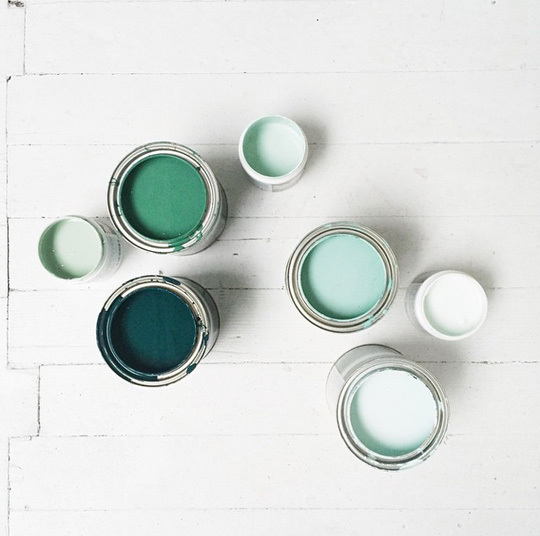
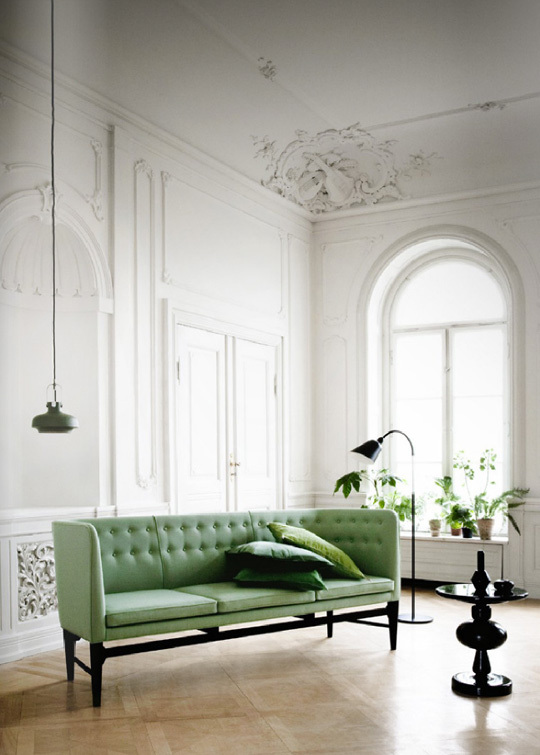
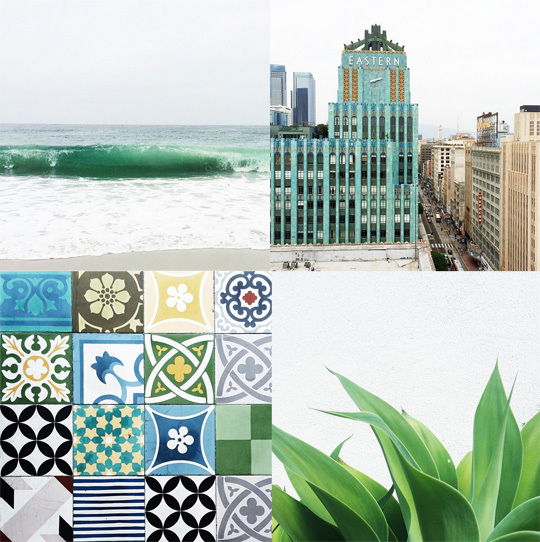
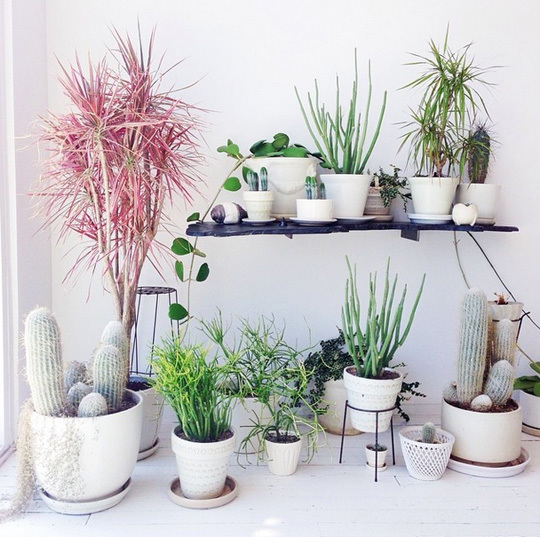
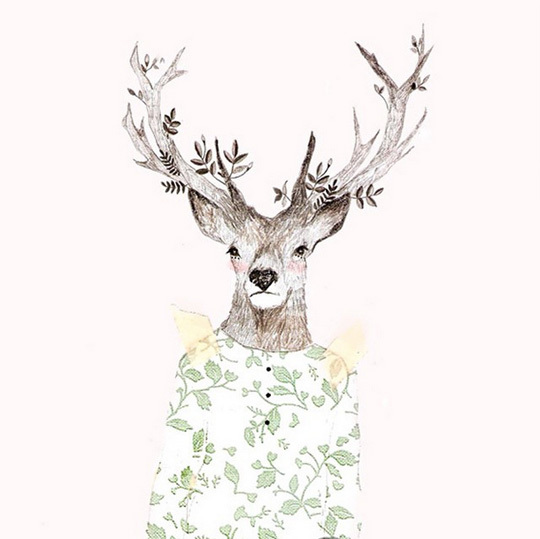
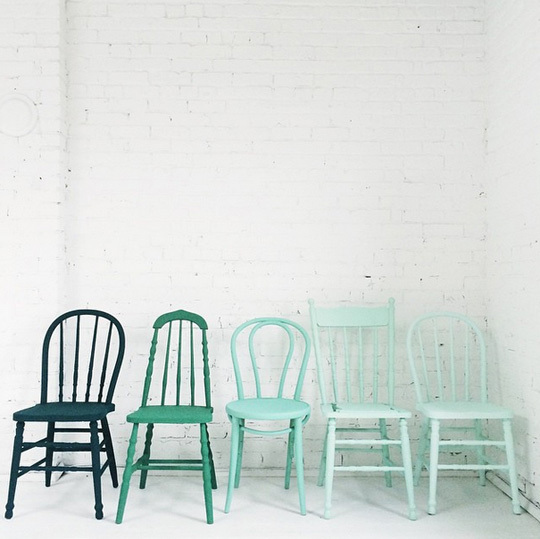
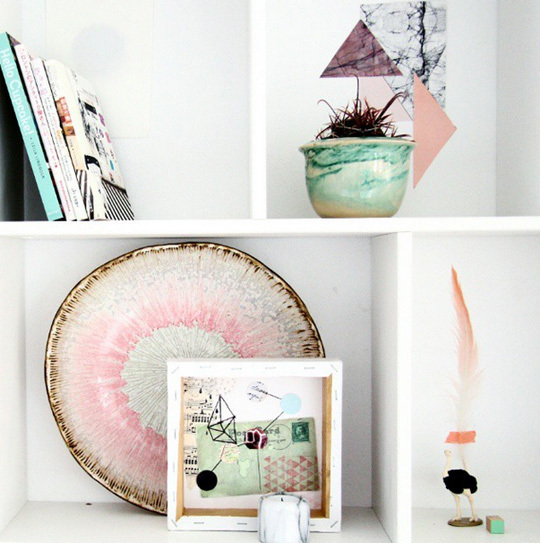
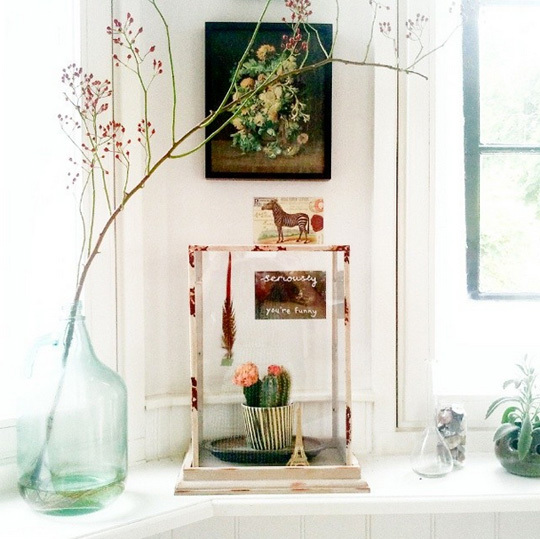
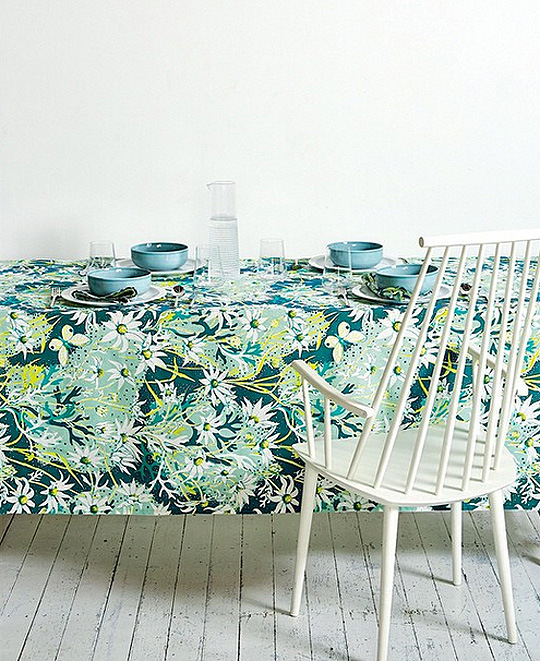
I’m really feeling green lately you guys! I thought I would share some beautiful finds from Instagram that inspired me this past weekend. Things that really made my heart feel full of joy and loaded with interior inspiration. And perhaps it’s the coming of the holiday season with its evergreen overload, but I adore everything in many shades of green at the moment from pale mint to the deepest emerald. Here are some gorgeous and happy inspirations to encourage you along in the same green direction with a shot of coral, pink and black, and of course, loads of bright clear white. This embodies the perfect interior palette at the moment in my opinion.
Leslie Shewring
BonjourBlissBlog
Architrend from &Tradition
Leslie Shewring
Design Love Fest
fleursdamelie
Illustrator Daniela Dahf Henríquez via Little Gatherer
Garance Dore for Zara Worldwide
Leslie Shewring
fleursdamelie
Leslie Shewring
fleursdamelie
InsideOut mag
Pickled Thoughts
fleursdamelie
Concrete Geometric
InsideOut mag
This is all so crazy pretty right? And be sure to click on all of the links above to discover a ton of great Instagrammers that I follow. And now that I have a new iPhone 6 Plus, I can actually SEE the stuff people post a lot better – so if you’re on the fence about the new 6 Plus then yeah, I can say it’s a big phone BUT if you’re a blogger using it for Pinterest, Instagram and Skype like I do, it’s the bomb diggity!
There’s something happening in our little home blogger niche right now. Call it an awareness or consciousness, a reprioritization or awakening, like something out of a Mary Poppins song… winds in the east, mist coming in like something’s a brewin’ and ‘bout to begin… Some are switching gears, slowing down, taking breaks, reevaluating their priorities and their work/life balance.
Anyone who works to create content for a blog, the DIYers and designers, alone or with a team, knows that blogging is work. From the research and creativity to execution to photography and writing and responding to readers and fielding emails from brands and running a website, yes it’s work. We’re not curing diseases or saving lives, let’s keep it in perspective, but we are spending our hours contributing something I believe to be worthwhile.
Despite how we go on and on about decor and trends, for me it’s never been about the things. It’s about the rooms created through hard work and the expression of creativity, and the value from what stems from those projects and spaces. Time together with family in a comforting place. A laugh with a good friend who sits on your sofa whether it’s old or freshly slipcovered. Blogging about home has always been about three things that started this journey and they keep me coming back.
Sharing.
Blogging provides a forum where we constantly share our ideas on making homes happier, livable, more organized, more stylish, more relaxed. They’re also an opportunity to put our tastes and personalities on display. Blogging about home is like having hundreds of friends to sit around and chat with about what works, what doesn’t, what’s new, what’s next. The conversation can be frivolous or it can be meaningful. The internet has created this place where we can meet and chat with like minded people and that brings us joy. We all crave something to talk about, blogging about home give us that.
Connection.
We have a need to hear from each other and share our experiences, not in a businessy LinkedIn kind of way, but in a human heartfelt way. Poignant stories, craft fails, progress reports, tips on where to score great deals or the best source for this or that, we smile at our screens when we connect and feel the same or learn from each other’s insight. Blogging is this big piazza where we can join in on the people watching while in our pajamas or on a lunch break from work and live vicariously.
I read so many of your blogs too so know that when you write about your travels, your kids, your heartbreaks, your failures and successes, your favorite things, your new adventures in home improvement or otherwise, I’m along for the ride. I like hearing your voice and reading about your approach to life or design whether you write once a week or more. As a subscriber, I’m invested and you matter to me.
Inspiration.
Each of us has an idea to contribute, a new approach to an old method, a little place of beauty we’ve created in the world. We inspire each other with our ingenuity and resourcefulness. Home bloggers create beauty inside their homes in authentic ways and for all of you I’m grateful for your contribution. We love the shelter magazines, but I believe the blogosphere brings a realistic imperfect approach to decorating that is personable and achievable. Cheers to that.
As long as I have something to write about, I’m sticking around this little space of mine on the world wide web. I am thankful you stop by from time to time and I promise to (mostly) stay on topic. Know I truly love reading what you have to say and what you create in your homes too whether you blog yourself, leave an occasional comment, or share a thought in a personal email, it matters to me.
You know when something happens that rips out your heart? Tragic, confused, your tears won’t stop pouring down your face? All in a span of seconds, this just happened to me. I was playing with my baby and decided to step away for a moment to check my email. And there I found the most painful news. One of my students and a fellow blogger, Inga Lorig from Glomery Lane, passed away yesterday — cancer took her from us. I’ve been blogging for 9 years and never had to say goodbye to a blogger, it’s a first for me, and truly heartbreaking.
Too young to die – too full of life… love for flowers, love for beauty, too beautiful herself inside and out to have to exit this planet so suddenly. She was here and gone. Just like that. A beautiful, precious life vanished. And why? Why Inga. Why why why.
After having a baby and witnessing the beginning of things, I’ve developed a deeper appreciation for the way we enter this world. Seeing your helpless baby laying on a hospital table with a single cord connecting you is the single most intimate moment I’d ever experienced. Life altering. Inga’s mother must remember her birth and her wish that Inga would have a beautiful life laid out before her just as I wished the same for Aidan upon his arrival. Wanting to always be there for her, protect her as only a mother wants to do, to love her forever – all feelings that I have for my own little son. To think of Inga’s mom right now pains my heart. My prayers are for her – I believe the person who has to suffer the greatest of all I think, along with Inga’s other family members, friends and those whom she so lovingly touched throughout her life – her gentleness, kindness and beauty. Inga had a heart of gold.
I’ll always remember the gift she gave me nearly two years ago when she came to my home for a workshop – a beautiful crocus in a glass vase with a tiny white feather with glitter that I’ve kept and have displayed on my wall ever since. Inga spent the weekend in my home along with other very dear students – Gudy from Eclectic Trends, Louisa from West Egg, Nic at Luzia Pimpinella, Susanne from Liesschen Heiratet, Sabine at freundts, Magda from Nice & Nicer, Geraldine from little big bell, Orit from tweelingen design, Rincy from a little bird, Sabina at Gefiltzes, Holly at Avenue Lifestyle, Elisa at 7thingsfor7days, Brigitte from the little star blog, Louise at 30′s magazine, Dani at and cute, Jana at cookies for my soul and of course, dear Steffi from Ohhh Mhhh who taught along with me and who also adored Inga like the rest of us.
During our weekend together, we laughed and shared and hugged and Steffi made a beautiful video to document it all. We went shopping together at the Christmas market. We ate cake pops shaped like Twitter birds. We froze together eating yummy Christmas foods. We shopped little boutiques. We photographed everything along the way. You can see Inga throughout Steffi’s video here. This group of women grew to become a very close circle of friends and I’ve kept up with most of them ever since. There is something truly so intimate about inviting people to your home for a weekend to learn, share meals, and support one another in that special “girl power” way which is truly real and magical – not fake and stupid – and that weekend was truly one of the best weekends of my career. And with Inga gone from our girl power circle, it almost feels like all of us have to do even better as people, as women, to show her that we value life and her friendship – and prove to her that we appreciate what we have – because we are still alive and though that can change at any moment, we owe it to Inga now to be strong and courageous and value everything we have and to stop worrying about what we don’t have. Because life is precious and you don’t always “get” that until someone you love is transported to another place and you know little about when and how you’ll see them again. But you just hope that you will. And you hope that when you do, you have good stories to catch up on and plenty of laughter.
I’m not sure what else to write in this space. But I want to extend a warm hug to Inga’s family, to the other dear students mentioned above who also love Inga, and to remind everyone reading to be content – to be happy with what you have – and to cherish your life because I know Inga would do anything to be with us here again.
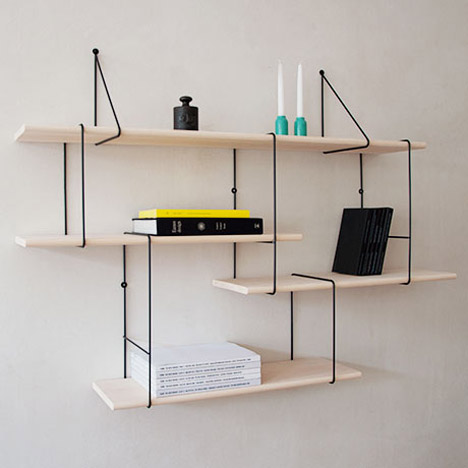
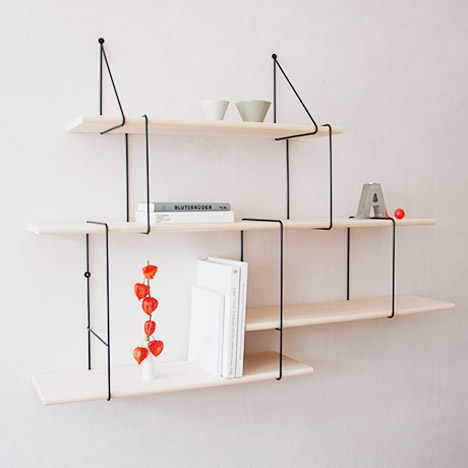
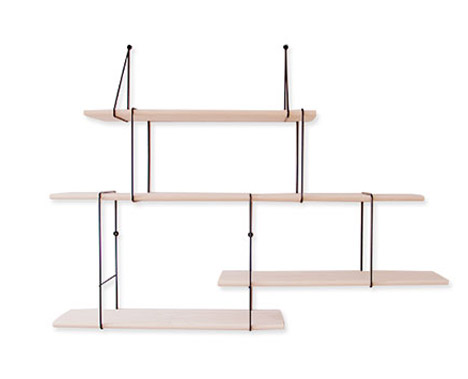
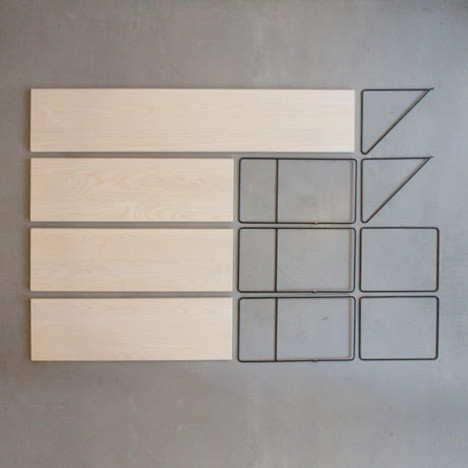
Described as an update of the “classic string shelf”, this customisable shelving system by Berlin design firm Studio Hausen comprises a series of steel and ash wood modules.
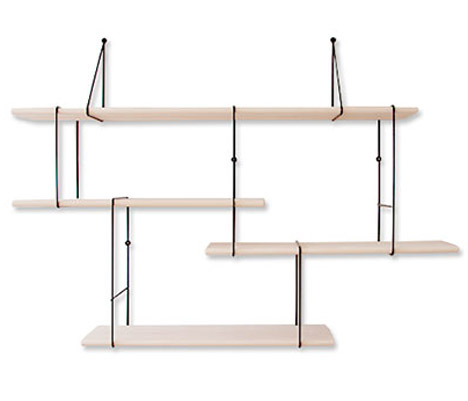
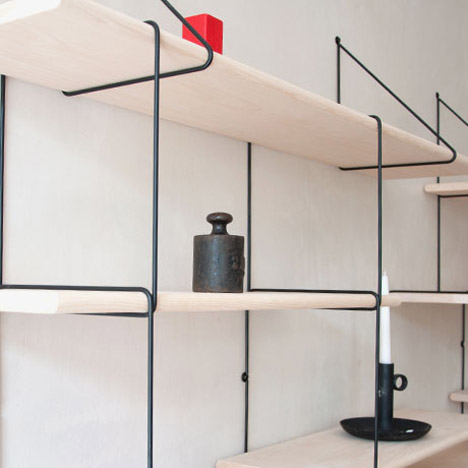
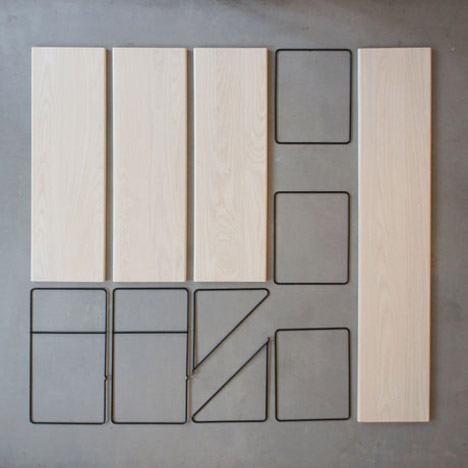
The Link Shelf by Studio Hausen consists of boards made from ash, with thin black steel mounting brackets.
Related story: Stackle modular shelving system designed by THINKK Studio
The four shelves in each set are the same width and depth, but come in two different lengths. Three different styles of bracket – one triangular, one square and one rectangular – create a variety of assembly possibilities.
Some of the brackets can be attached to a wall, while others create a suspension system between the shelves.
“A number of shelf boards made of massive ash wood, a set of mounting brackets made of black steel and an amazing simple design principle form an innovative and visually stunning product,” said the studio.
According to the experimental design approach of the Studio Hausen, the customer can arrange the elements of the shelf adapted to their needs and space requirements.
Produced in Germany, the system can be reconfigured over time and additional parts can be purchased to extend it. The product is available exclusively through online store Monoqi.
“It’s about time the classic string shelf got an update — and this time, it comes with its very own spirit,” said Monoqi, referencing the modular shelving design created in 1949 by Swedish architect and designer Nils Strinning.
“Its steel and ash-wood construction forms an engaging interplay with many potential compositions: asymmetrical, high-reaching, or laid out lengthwise, the link-shelf is designed to work perfectly for your individual environment,” added Monoqi.
Studio Hausen was founded by Jörg Höltje following his graduation from Berlin’s University of the Arts in 2009. The studio has previously produced work for brands including Ligne Roset, De La Espada, and Camper.
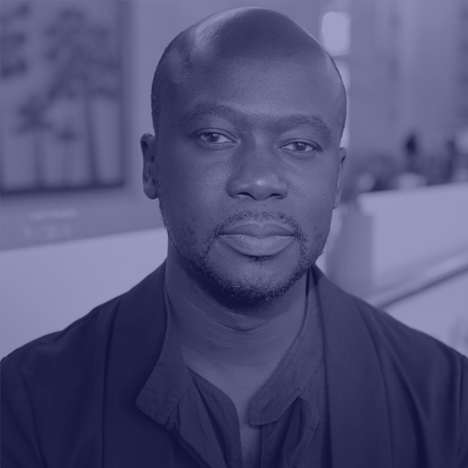
Dezeen Book of Interviews: in the third extract from our latest book, London-based architect David Adjaye discusses his longstanding fascination with Africa and the opportunities it holds for architects.
During an interview at Design Indaba 2013 in South Africa, Adjaye spoke to Dezeen’s editor-in-chief Marcus Fairs about his extensive survey Adjaye Africa Architecture and the new opportunities for architects working in Africa.
“Africa offers an extraordinary opportunity at the moment,” explained Adjaye, who said that the continent’s GDP growth was outperforming that of China.
“Suddenly with this rapid economic development, there is this mass migration into the cities, which is really traumatic. How do we plan for the expansion of these cities, which were originally built for a limited few?”
“With the right political agency and the right construction environment, you can create extraordinary moments in architecture. And that, for me, is very exciting.”
Adjaye, who has several projects currently under way in Africa, has opened an office in Accra – the city Adjaye describes as “his ancestral home” – to focus on work on the continent.
David Adjaye designed an office campus featuring ten conical towers, as part of the Naguru-Nakawa project by Plus Architecture
“Throughout Africa there is a great need for housing, so housing is incredibly important, and masterplanning, so we’ve developed those skills in the office and we have started to engage with that,” he said.
“You’ll see much more masterplanning and projects emerging from the Accra office that are very different from what usually comes from Adjaye Associates.”
Born in Tanzania and educated in the UK, Adjaye had been working on an 11 year project to document the architecture of the continent and discover more about the geography and history behind modern Africa, as well as the political climates of its cities, towns and villages.
The project ended up forming the basis of a seven-volume book entitled Adjaye Africa Architecture, which was published in 2011.
Terrain classifications, from Adjaye Africa Architecture
“We moved around so much that before I was 14 I had visited a dozen countries on the continent,” he said. “From a very early age I had a complex view of the continent, from being in my father’s village to seeing the metropolitan skyline of Nairobi, which, in the 1960s, was the incredible new modern city in Africa.”
“After graduation I realised that I wanted to revisit the continent of Africa – not through the lens of my parents, or through any kind of formal experience like tourism – but I wanted to claim it for my own, as a set of experiences that were about my negotiation of people.” he said.
“There are very extreme climates with extraordinary histories, which have created these incredible contemporary conditions. That is the lens through which you have to understand the continent.”
Dezeen Book of Interviews: our new book, featuring conversations with 45 leading figures in architecture and design, is on sale now
Marcus Fairs: What is your relationship with Africa?
David Adjaye: I was born in East Africa of Ghanian parents from West Africa. I grew up on the continent until I was 14, then I came to London, where I was educated. Africa was very important to me because that was a time when my father was a diplomat, at the peak of his career. We moved around so much that before I was 14 I had visited a dozen countries on the continent. From a very early age I had a complex view of the continent, from being in my father’s village to seeing the metropolitan skyline of Nairobi, which, in the 1960s, was the incredible new modern city in Africa. I had also been to North Africa and experienced Muslim culture and Muslim architecture. So I was already negotiating the differences across the continent before I came to Europe.
Marcus Fairs: You’ve visited every country in Africa over the past few years. What drew you back?
David Adjaye: After graduation I realised that I wanted to revisit the continent of Africa – not through the lens of my parents, or through any kind of formal experience like tourism – but I wanted to claim it for my own, as a set of experiences that were about my negotiation of people. So I spent 11 years, from 1999 to 2010, visiting every single African country and documenting every capital to understand the nature of cities in Africa, to understand their past and their present, their history and their geography.
After I did that, I realised how profoundly the geography and the history had created the contemporary condition, which is the Africa we know now. There are very extreme climates with extraordinary histories, which have created these incredible contemporary conditions. That is the lens through which you have to understand the continent. It’s very difficult to understand Africa if you don’t take this on board.
Rabat, Morocco, from Adjaye Africa Architecture
Marcus Fairs: So you’re talking about understanding Africa as a series of climatic zones, rather than countries?
David Adjaye: Absolutely. In doing this 11-year study, what I suddenly realised is that, because of the colonial construction and the language construction, most Africans don’t even know about their neighbours, because there might be a language barrier or a geographic barrier. What became clear to me from the political map of Africa is that we have a very difficult way of understanding the continent, and that fundamentally, the way to start looking at the continent is through geography.
I started doing a lot of research on the latest satellite and data maps and extracted a map that shows the continent now. What was clear was that unlike other continents, which have some hybrid zones, Africa has six absolutely distinct unique climates. There is no cross-pollination between them. The savanna is where the animal kingdom is. The super-dense forest is where the river deltas are, where the farm cultures are, where the great cultures are. Then there’s the mountain highland, countries like Namibia and Ethiopia. You’ve got the desert, which goes from Niger to Egypt. And then you have the Maghreb, which covers the Mediterranean coast and the coastal plain, with interesting vegetation that buffers the Sahara from the forest. These are where all the civilisations of Africa have manifested themselves, and their unique identities come from this.
The artefacts of the continent reflect that geography, through the choice of the materials. There are a lot of animal crafts in the savanna lands; you see a lot of timber work in the forest lands and a lot of abstract elements in the desert lands. I think this comes from human beings responding to their extreme climates very precisely, and it has created a culture and a history that are very precise.
Adjaye Africa Architecture, published by Thames & Hudson
Marcus Fairs: Your research has now been published as a book.
David Adjaye: The book is called African Metropolitan Architecture, or Adjaye Africa Architecture. It has seven volumes divided into the different geographies, plus a book of essays. I’m really proud of this – there are ultimately 11 years of work included, the analysis of all the capital cities, the architectural highs and lows, the people’s relation to their geography and their political and social histories.
Marcus Fairs: Do you have architectural projects in Africa?
David Adjaye: Yes I do. I have several projects in Africa. You know me, I’m very discreet about showing my work, but I’ve taken a lot of things on board. We’re working in the cultural sector – culture and education are areas that, again, I am most connected to. But also we’re doing commercial work here. Throughout Africa there is a great need for housing, so housing is incredibly important, and masterplanning, so we’ve developed those skills in the office and we have started to engage with that.
David Adjaye is one of 45 designers and architects featured in Dezeen Book of Interviews
We’ve just opened an office in Accra, which is my ancestral home. You’ll see much more masterplanning and projects emerging from the Accra office that are very different from what usually comes from Adjaye Associates. So it’s very important for me that we have this office, and from there I hope to be able to work more specifically on the continent.
Marcus Fairs: What opportunities does Africa offer architects? How is it changing?
David Adjaye: Africa offers an extraordinary opportunity at the moment; an opportunity and a paradox at the same time. What you have, which has been noted by various institutes, is GDP growth on the continent anywhere from ten to 15 percent, which is extraordinary. It’s greater than what China was doing. But it’s trickling and it’s changing the political paradigm, because as people are becoming more wealthy, they are starting to question their political structure. I think you are finding the political guards shifting now, and being shaken.
Gaborone, Botswana, from Adjaye Africa Architecture
But also there’s the idea of the city that’s being really thought through. Africa is a continent of rapid urbanisation. We had been seeing a stagnation of people moving from the agrarian landscape to the city, simply because the poor economies meant there was no need to come to the city. Suddenly with this rapid economic development, there is this mass migration into the cities, which is really traumatic. How do we plan for the expansion of these cities, which were originally built for a limited few? Most of the cities were built as small, elite centres. How do they grow while taking on board the issues of their colonial past? How do they take on modern planning in light of their heritage and history?
These, I think, are cosmopolitan paradoxes that the wider world is facing on a different scale. And they present fantastic opportunities. With the right political agency and the right construction environment, you can create extraordinary moments in architecture. And that, for me, is very exciting.
The kind of architecture I’m interested in seeks to make sense of environments that may seem chaotic, or programmes and ideas that seem not to have any architectural relevance but actually do. And when they are birthed, they have a profound effect on how we think and see ourselves in the world. Architecture can do that, and I’m very moved by that.





















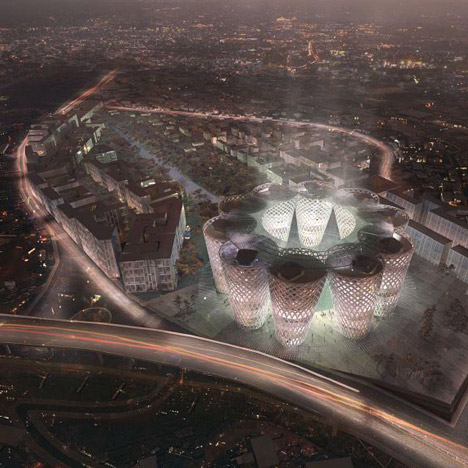 David Adjaye designed an office campus featuring ten conical towers, as part of the Naguru-Nakawa project by Plus Architecture
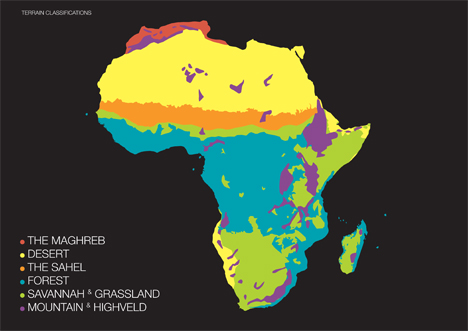 Terrain classifications, from Adjaye Africa Architecture
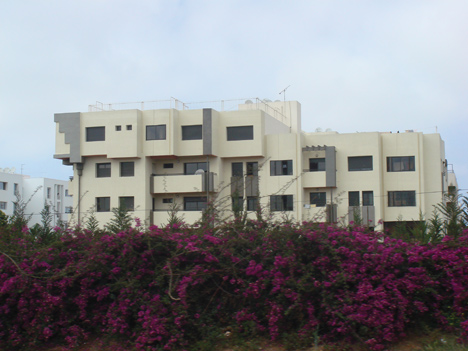 Rabat, Morocco, from Adjaye Africa Architecture
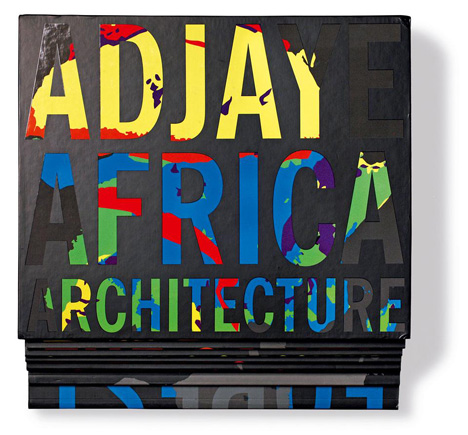 Adjaye Africa Architecture, published by Thames & Hudson
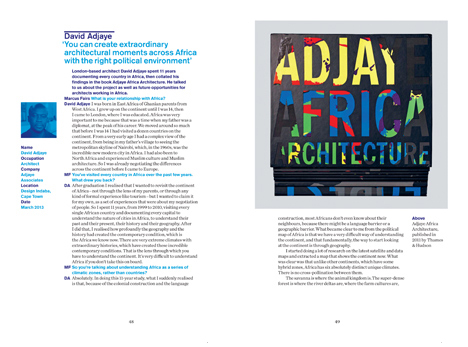 David Adjaye is one of 45 designers and architects featured in Dezeen Book of Interviews
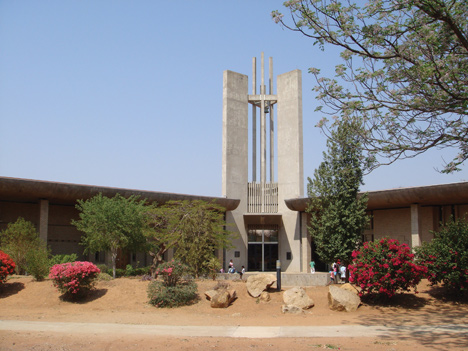 Gaborone, Botswana, from Adjaye Africa Architecture