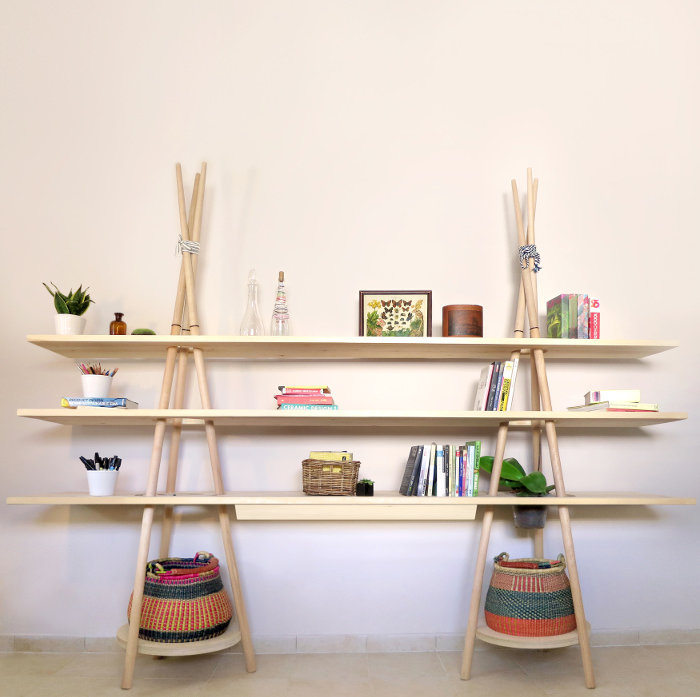
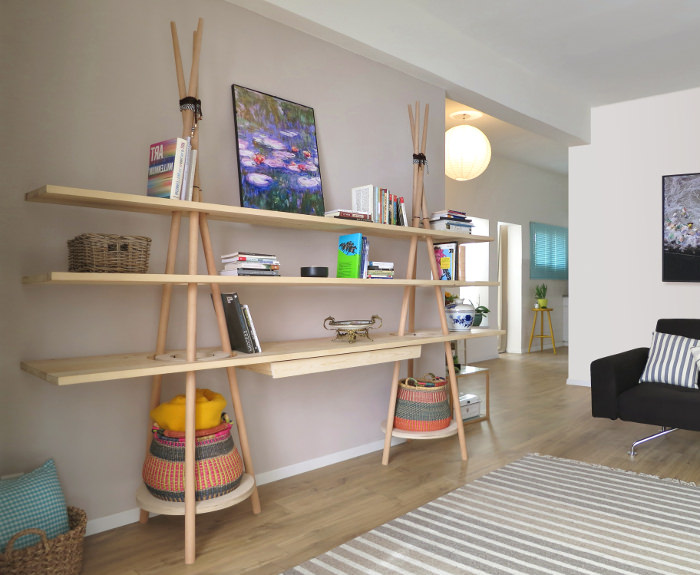
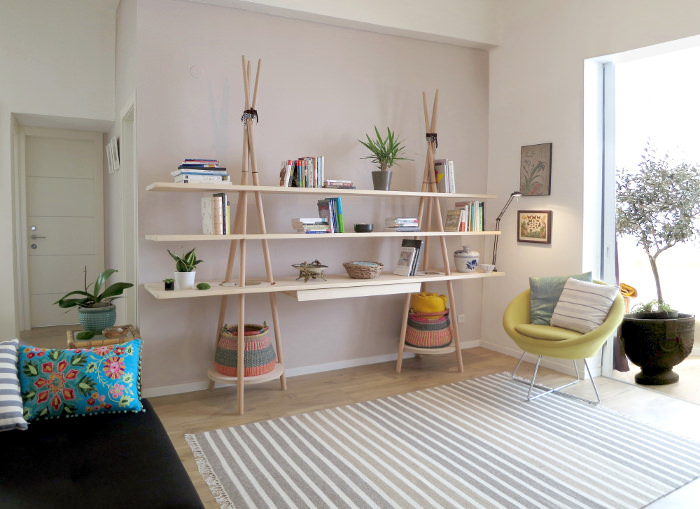
Assaf Israel, jeune designer pour le studio israélien Joynout, nous présente TIPI, modular shelving system, littéralement système modulaire d’étagères pour intérieur.
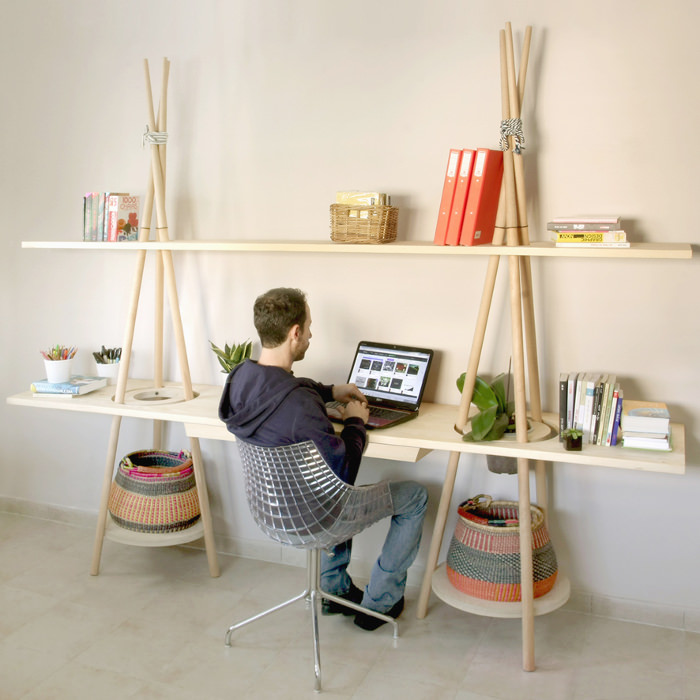
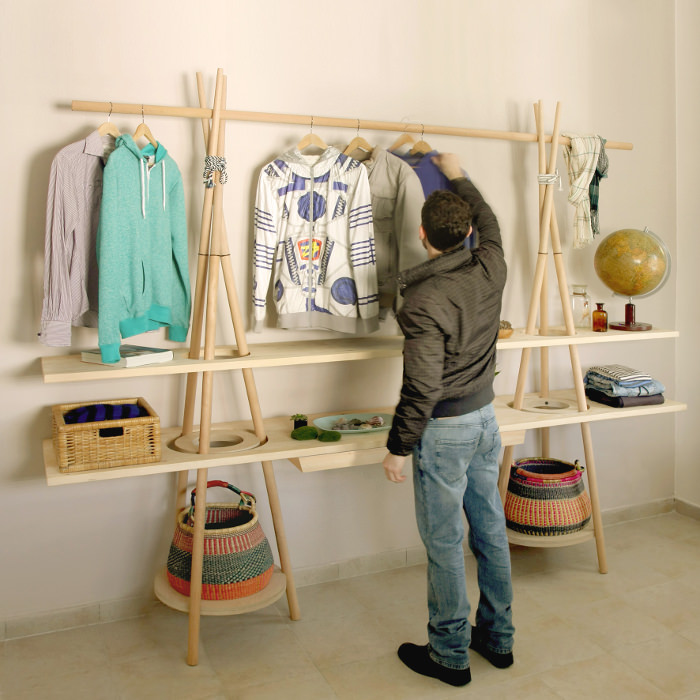
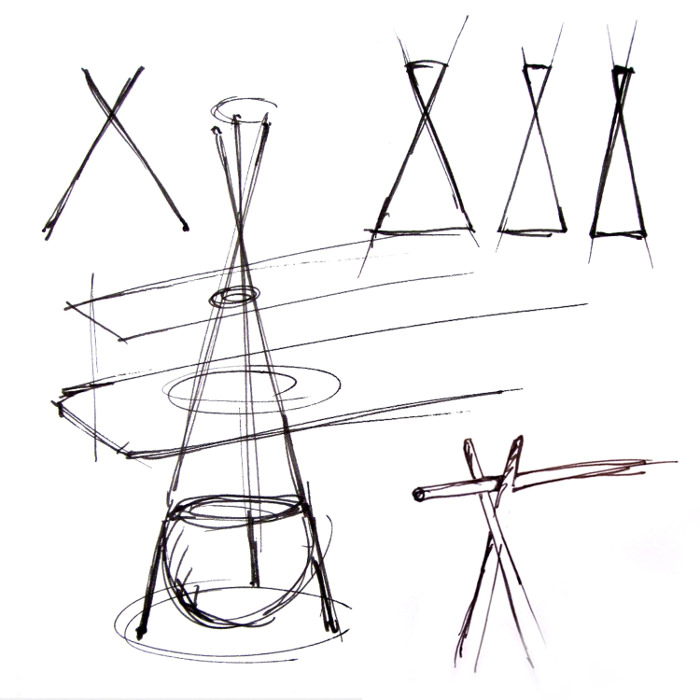
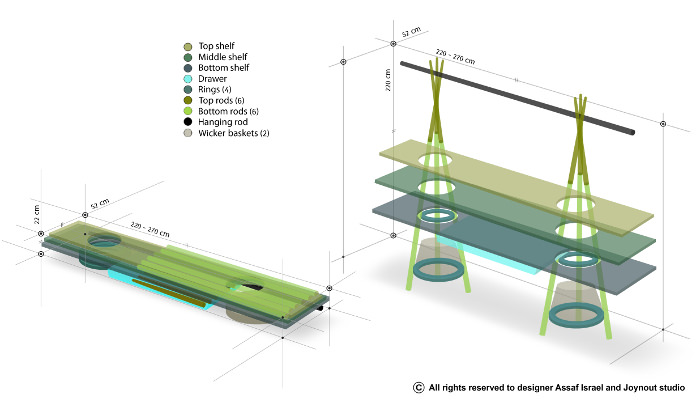
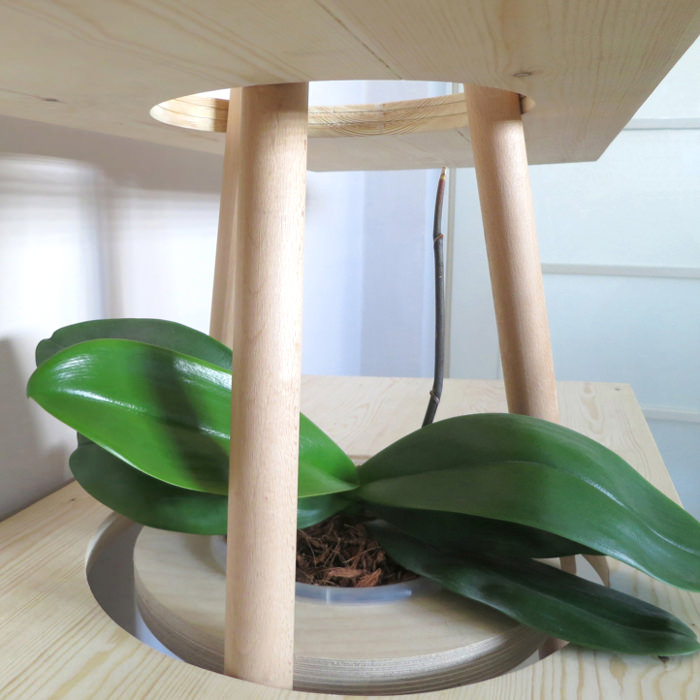
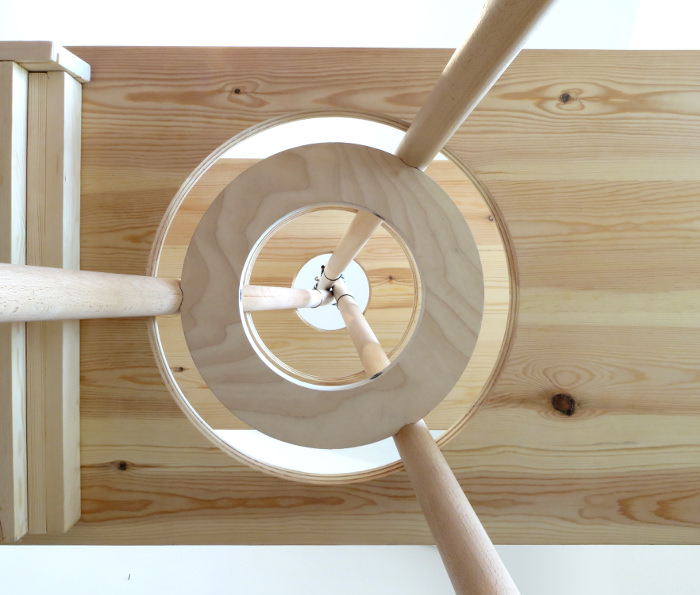
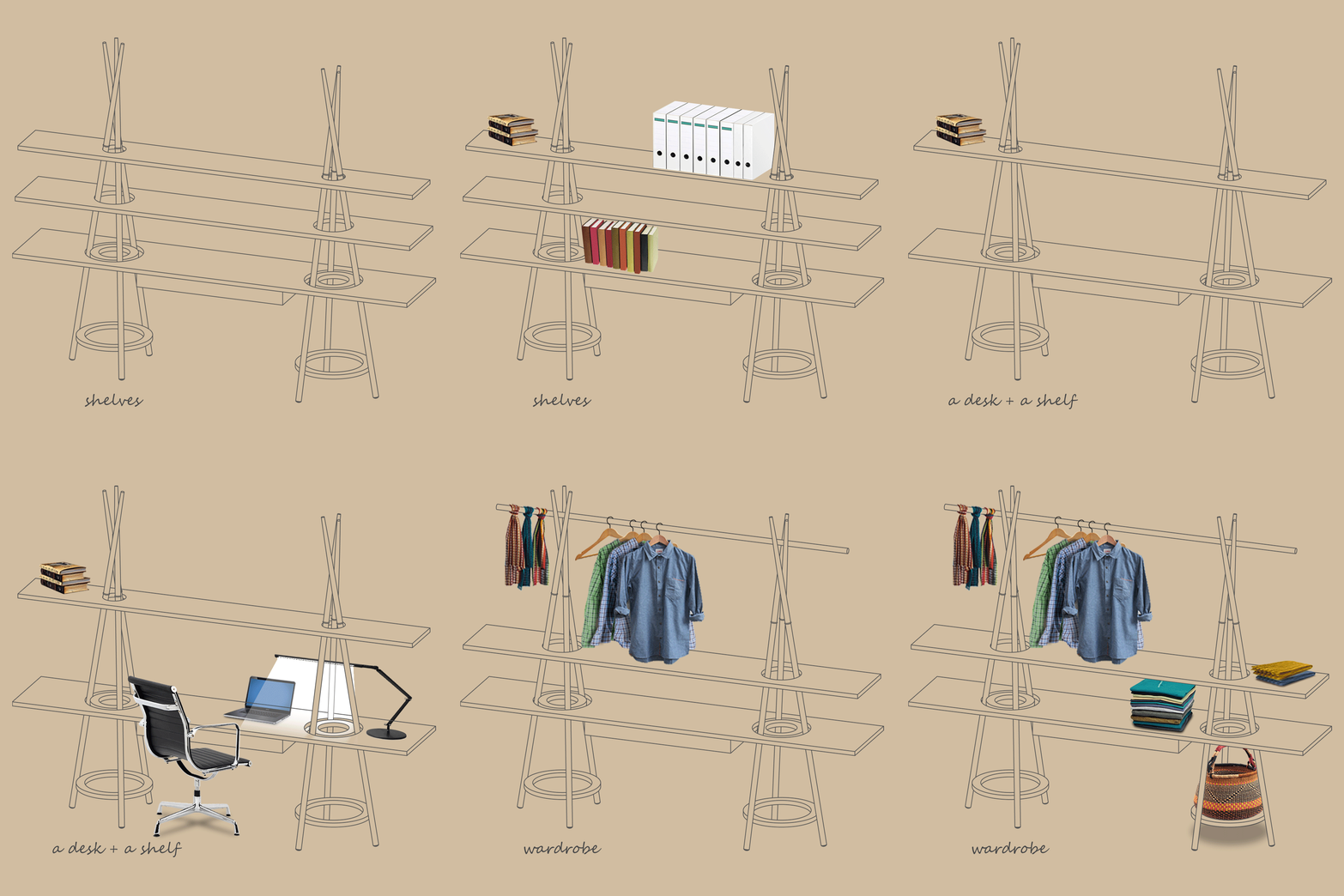
Suite à une année de tour du monde, il puise son inspiration dans ces modes de vie découverts, curiosité, rencontres, cultures, il agrège le tout et imagine TIPI, inspiré par la culture nomade où chaque élément utilisé peut être facilement transporter, assembler puis remonté. Entre une bibliothèque, des étagères et un bureau cet élément ingénieux reprend la conception en forme de cône le tout en bois massif.
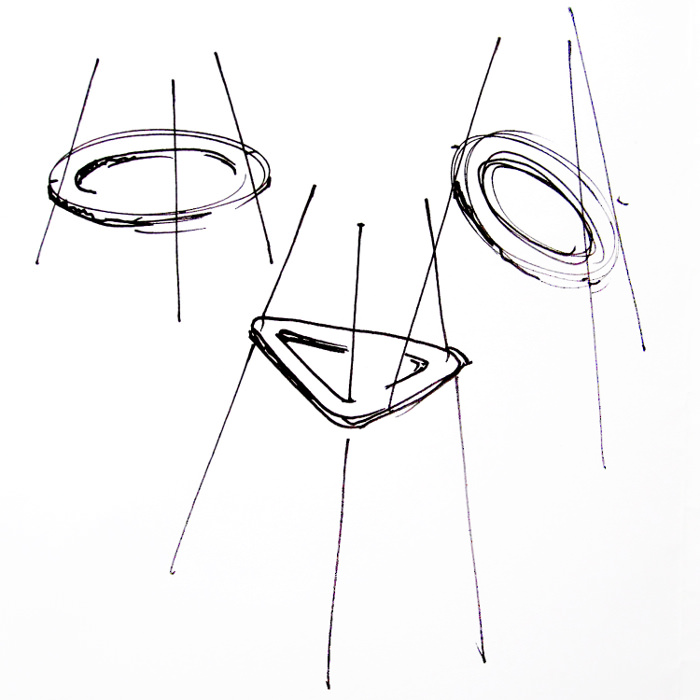
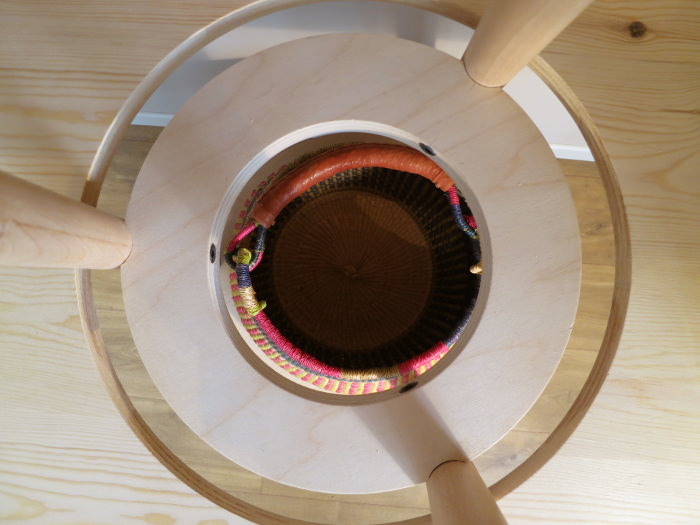
Tout est bien pensé, le cœur des cônes formés par les pieds accueillent deux sacs de rangement, puis un peu plus haut permettent de fixer une plante en suspension. Ses larges dimensions lui permettront à convenance de devenir espace de travail, ou d’exposition.
En version animée :
TIPI animé
Plus d’informations sur le studio : Joynout Studio
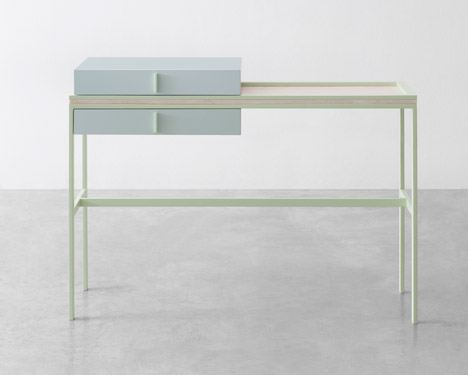
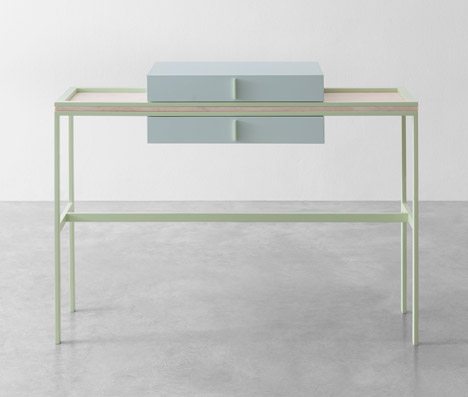
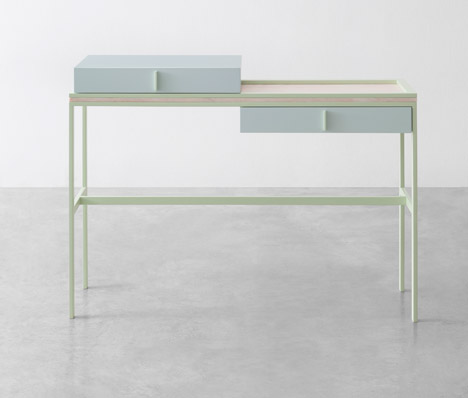
Italian designer Marco Guazzini has created a console with drawers that slide along its length to create different configurations .
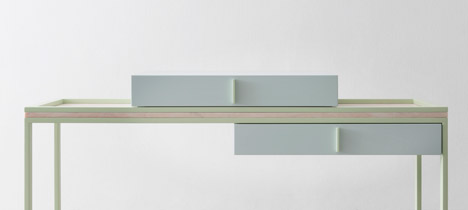
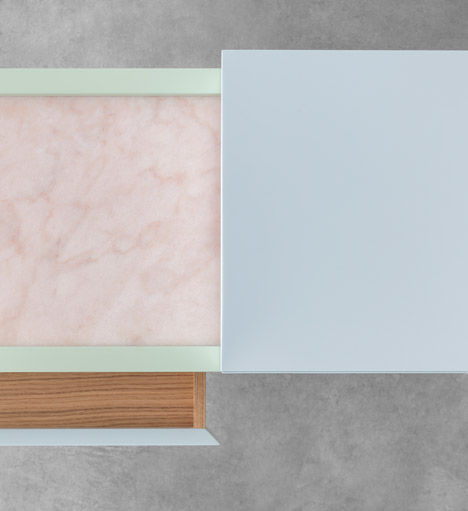
Marco Guazzini’s Flamingo desk features two drawers – one on top of the table’s surface and one below – that can each slide the length of the table.
Related story: Pivot by Raw Edges for Arco
Both drawers can be moved along to create different arrangements, including an S-shape created when one drawer is at either end, which reminded the designer of the curve of a flamingo’s neck.
“The Flamingo console represents my research into movement – the chance to create staggered volumes with solid and void spaces making the drawers slide lengthwise thus allowing various configurations,” Guazzini told Dezeen.
The slim console, which measures 123 centimetres wide, 90 centimetres high and 36 centimetres deep, comprises a varnished steel frame, a pink Portuguese marble tabletop and solid oak drawers lacquered in blue.
The metal bars are machined and then welded together using Tungsten Inert Gas (TIG). “I used solid bars of iron, because I wanted a clean aspect – linear and light to the eye with sharp edges,” said Guazzini.
The marble slab used for the tabletop is cut using a two-axis bridge sawing machine and the drawers are made using traditional joinery techniques.
The desk’s shapes and colours were influenced by Miami’s Art Deco architecture. “People seem to really love the balance between the light pastel colours and geometric shapes that resulted,” said Guazzini.
Flamingo console was exhibited at Ventura Hive as part of Ventura Lambrate, during Milan design week earlier this year.
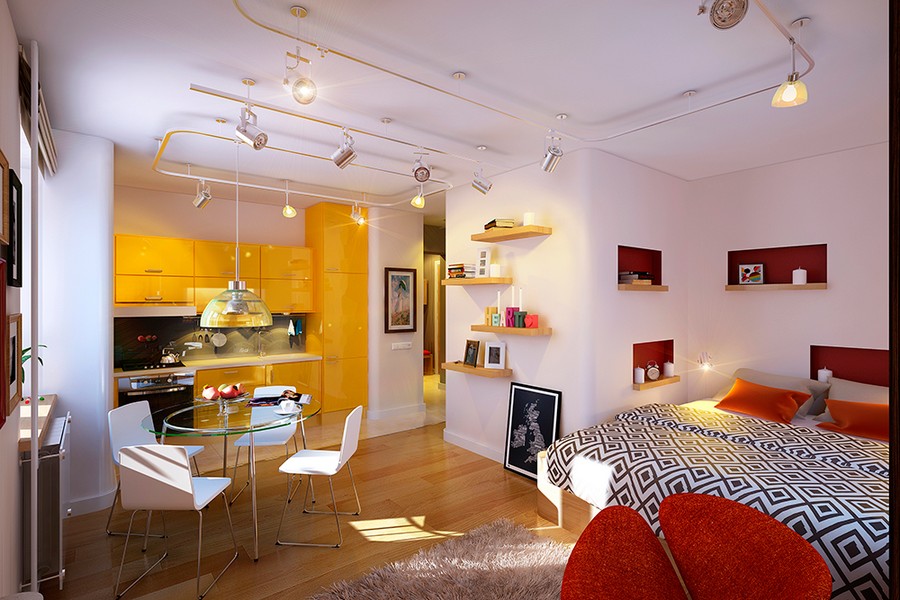
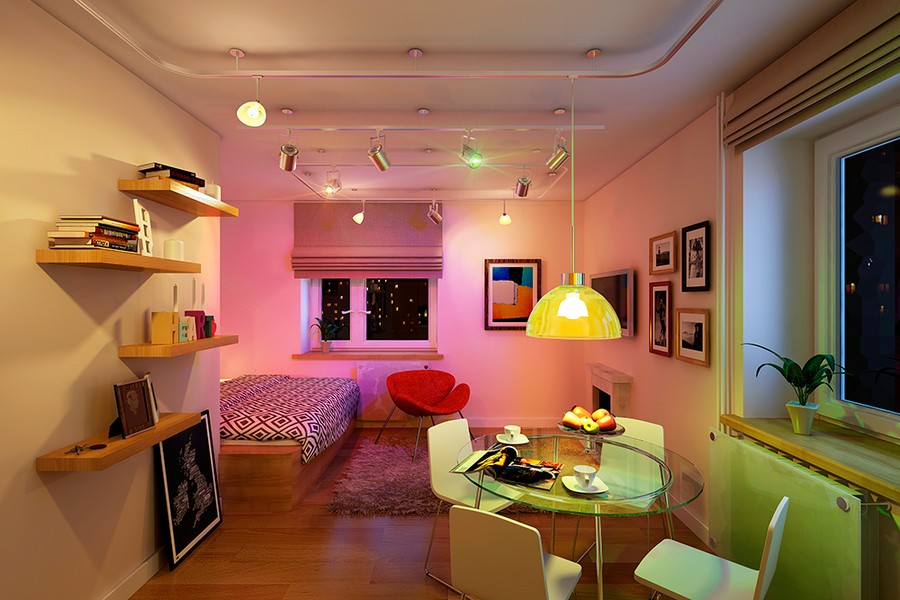
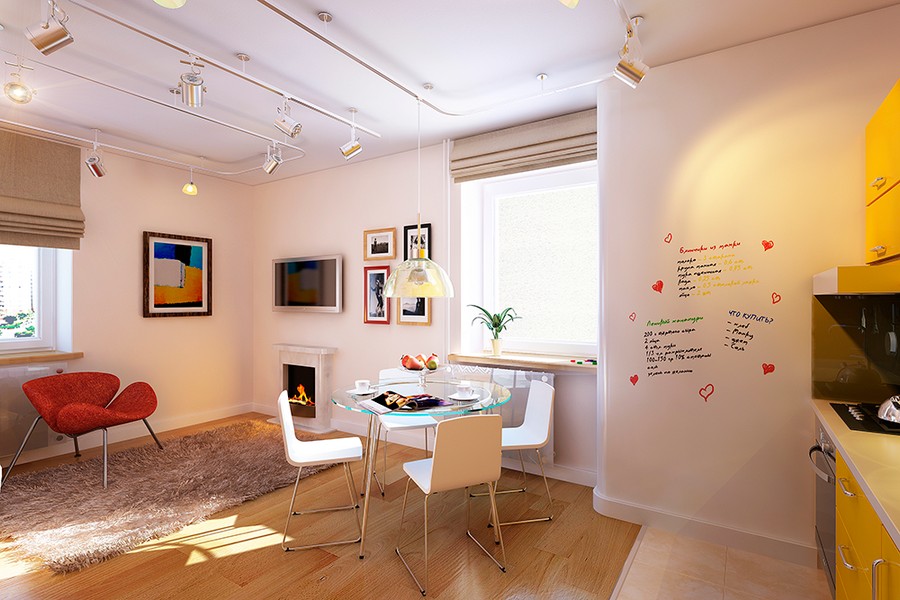
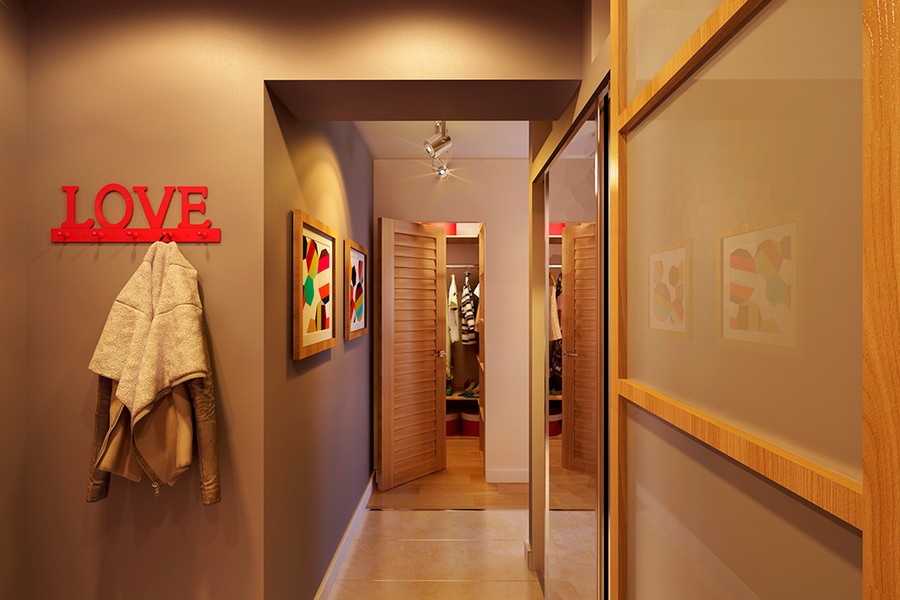
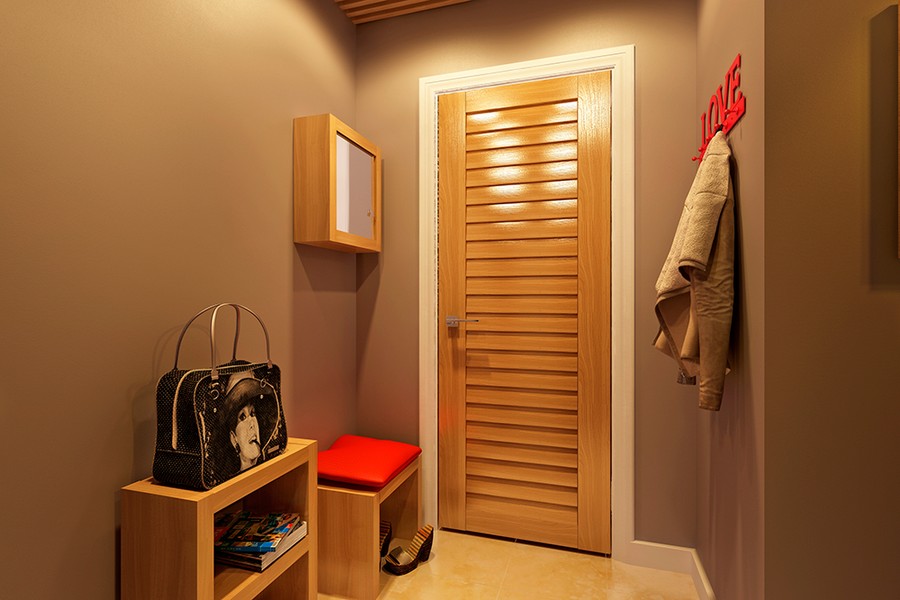
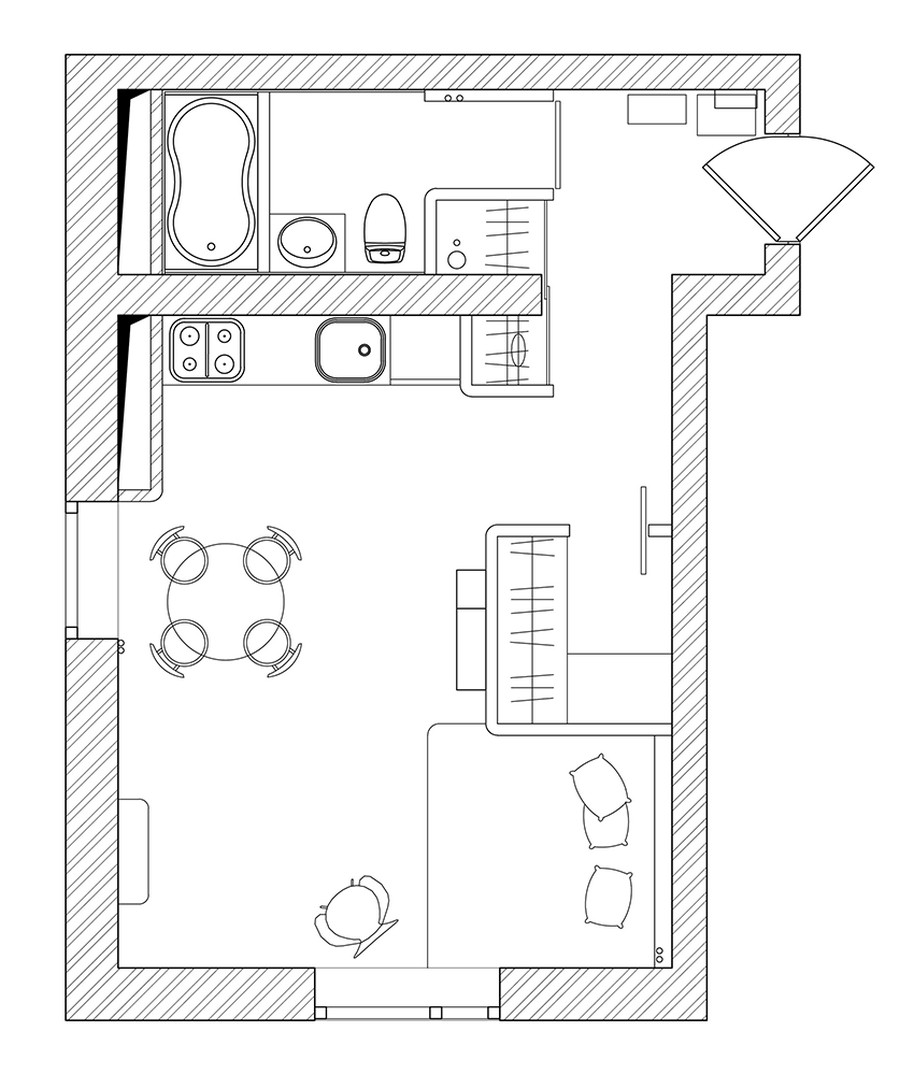
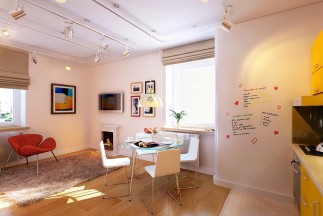
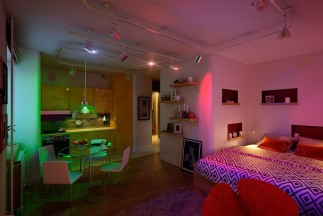
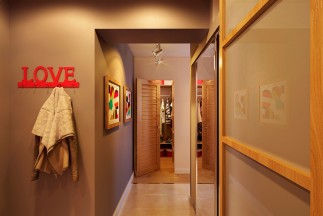
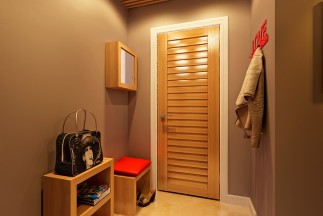
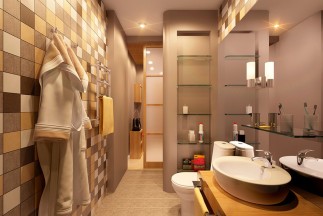
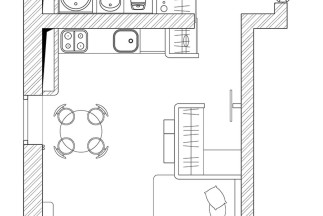
Welcome to a cheerful small apartment envisioned by Geometrium and located in Lensovetovskij, a village near Saint Petersburg, Russia. The crib was especially developed for a young couple who requested that aesthetics and usability be the main features of their new home. Painted white walls visually enlarge the space, while bright and colorful lighting elements contribute to a vivid ambiance. An open plan layout defines the apartment, yet the sleeping, dining and entertaining areas are well individualized.
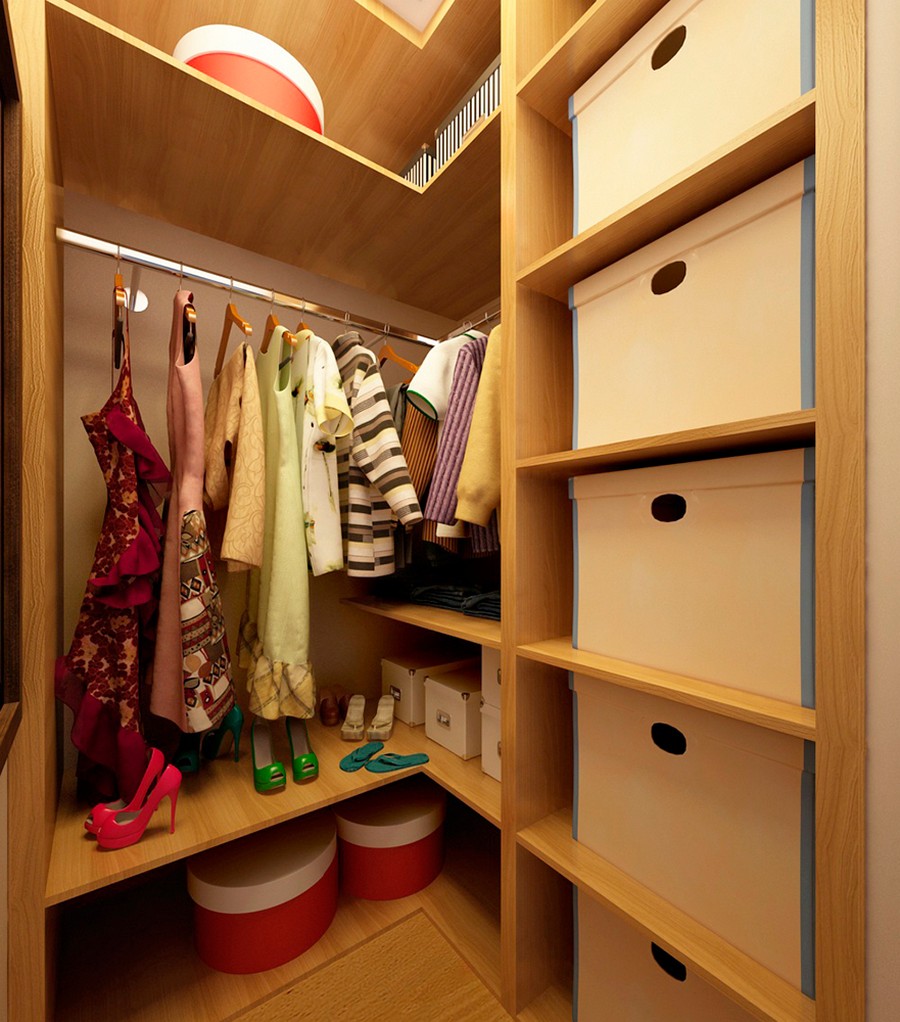
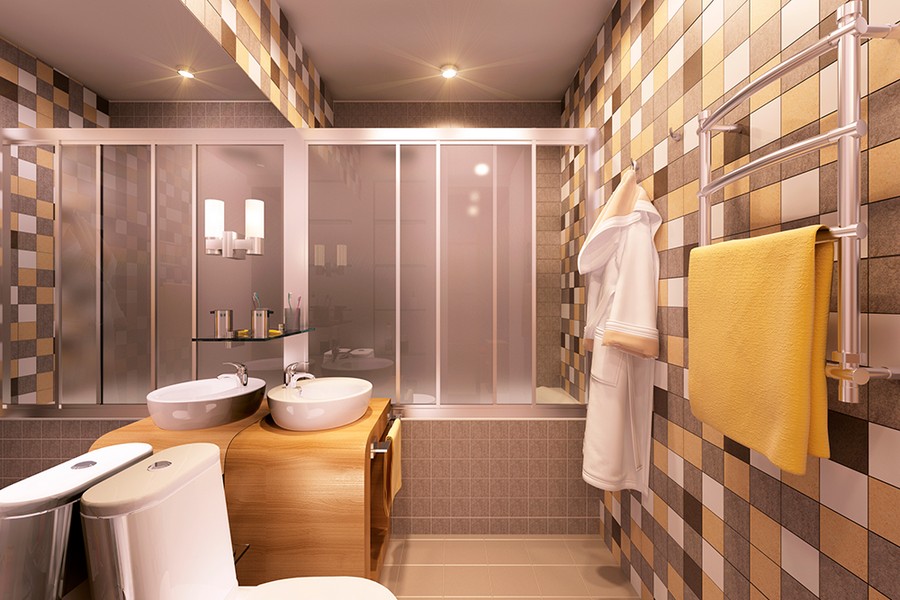
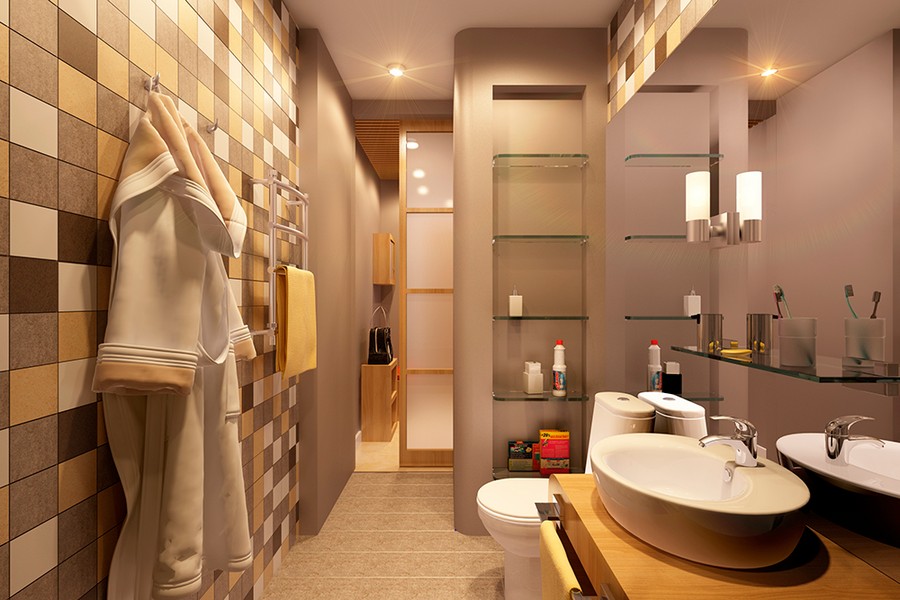
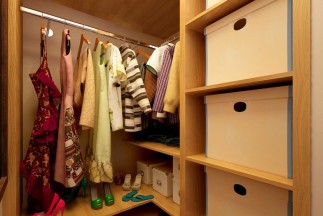
The overall design pays tribute to creativity and function: “We divided the sleeping area and made a separate dressing room. In the living area we placed a bio-fireplace, with TV set above so it is convenient to watch TV while you are in your bed or chair, as well as in the kitchen. Ventilation hub was painted as a desk, so the user can write or draw on it as he or she wishes. Full-sized folding doors were used to save more space in the apartment. For the bathroom we used small-sized tiles 10×10 cm (4×4 in) in different colors to decorate the walls and placed a large mirror with heated film (anti fog) system and waterproof plaster.” [Photos and information provided via e-mail by Geometrium]
Recommended For You
Dreamy St.Petersburg Apartment by Anton Valiev
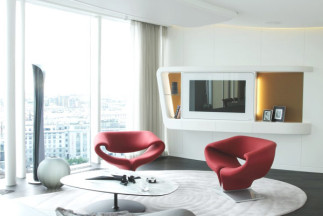
Sophisticated Triplex in Saint Petersburg With Panoramic City Views
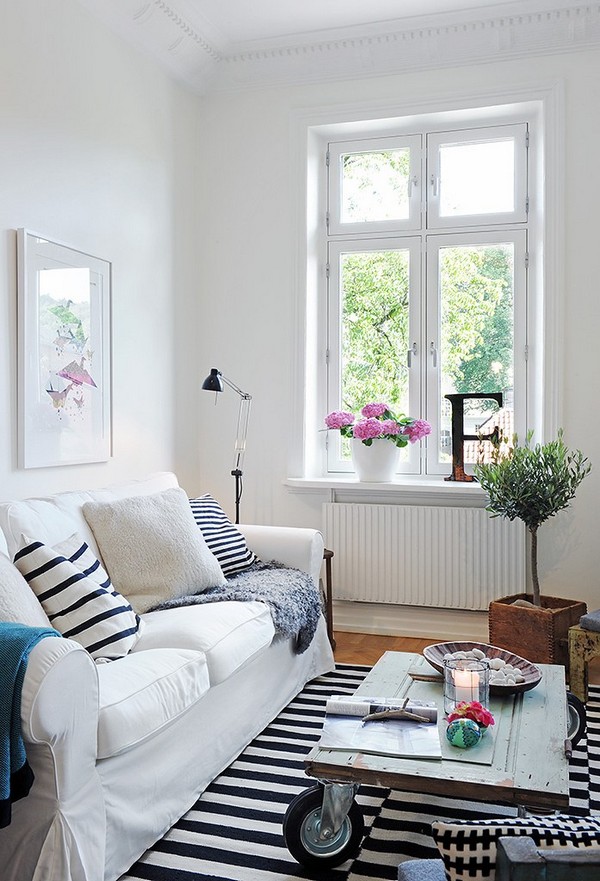
Charming Decorative Elements in a Vivid Scandinavian Apartment
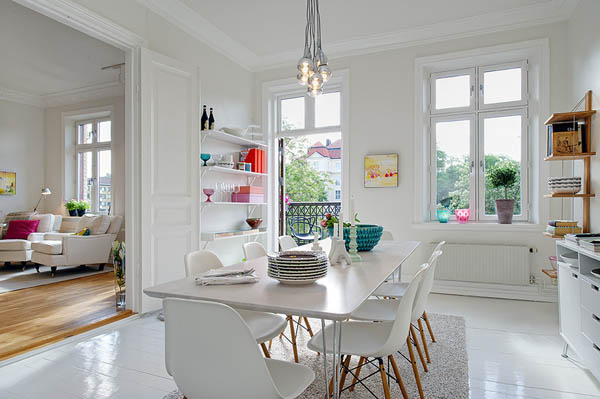
Cozy Gothenburg Crib Insisting On Showcasing Its Vivid Colors
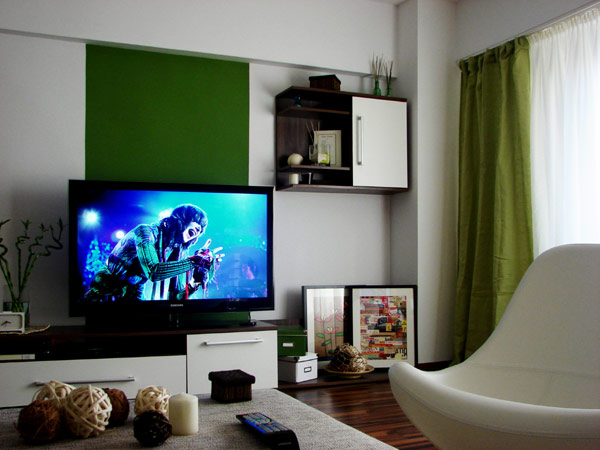
Calm Retreat in an Agitated City: Small and Fresh Apartment in Bucharest
Saint Speaker
Want more stuff like this?
We’re on a mission to spread inspiring content far and wide. Try our daily email and see for yourself!
By Lavinia in Apartments
Tags:
small apartment
0 comments
10 Mistakes That (Almost) Everyone Makes in Interior Design
10 Things You Should Know About Becoming An Interior Designer
The 10 Most Common Causes of Roof Leaks
Why Our Brains Love Symmetry in Design
The Psychology of Achieving Balance In Interior Design
10 Reasons You Should Use Sustainable Building Materials
10 Mistakes That (Almost) Everyone Makes in Interior Design
40 Small Bedrooms Ideas To Make Your Home Look Bigger
Lovely Scandinavian Duplex Inspiring a Calm and Welcoming Ambiance
40 Best Money Saving Decorating Ideas for Your Home
Live/Work Conversion Loft in San Francisco With Vaulted Concrete Ceilings
40 Small Bedrooms Ideas To Make Your Home Look Bigger
10 Mistakes That (Almost) Everyone Makes in Interior Desig n
30 Small and Functional Bathroom Design Ideas For Cozy Homes
10 Things You Should Know About Becoming An Interior Designer
10 Best Free Online Virtual Room Programs and Tools
40 Small Bedrooms Ideas To Make Your Home Look Bigger
30 Small and Functional Bathroom Design Ideas For Cozy Homes
10 Best Free Online Virtual Room Programs and Tools
30 Best Small Apartment Designs Ideas Ever Presented on Freshome
10 Design Lessons You Can Learn From Scandinavian Interiors
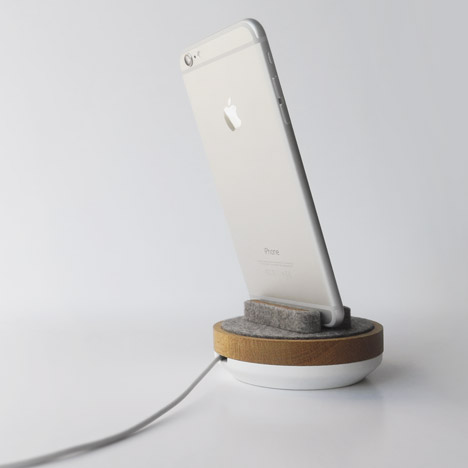
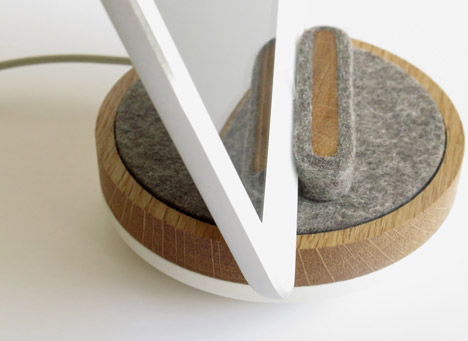
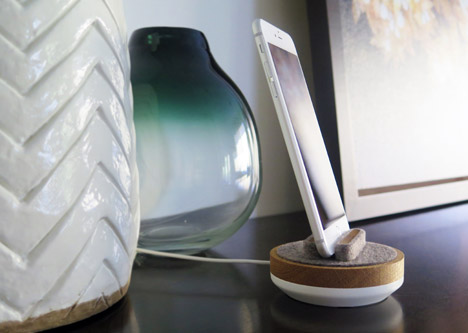
American brand Quell & Company has referenced Scandinavian home design for its first product: a docking station made from white oak, Merino wool felt and a metal base (+ movie).
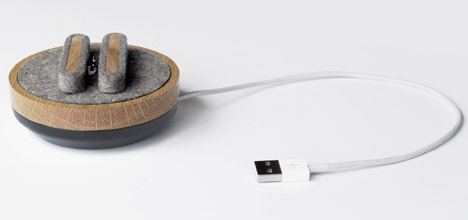
Quell & Company’s swivelling Spool Dock works as both a charging dock and cable manager.
Related story: Moshimy by Michael Young for Native Union
The dock is compatible with the iPhone 5c and later editions, as well as the iPad mini and fifth-generation iPod touch.
Conscious that the dock would be on show in a home environment, the brand’s co-founder Jeremy Saxton wanted to create something more in keeping with interior design than technology design.
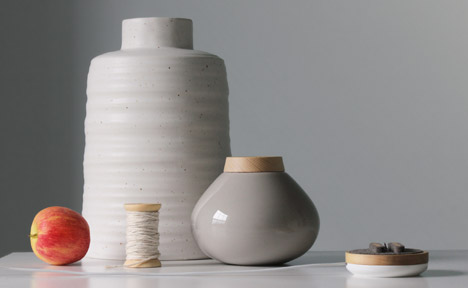
“Most tech accessories try to mimic the devices they hold, but knowing that a dock is only used for a small fraction of the day I wanted to create an object that felt at home in the home,” he told Dezeen. “Similar to a nice vase, I wanted it to look right whether it was being used or not.”
Saxton selected materials for both their functionality and their Scandinavian aesthetic.
“The cast metal base provides a nice weighty foundation, the white oak spool gives the functional geometry without expensive tooling or machining, and the merino wool felt provides cushioning and compressibility needed to allow for different sized devices and cases,” he said.
“I’ve long looked to Scandinavian design inspiration. By mixing natural materials with clean lines it creates a harmony that is at once calming and warm.”
The base is die cast and powder coated, while the felt is die cut into shape. The wooden spool is precision machined on a vacuum table, branded with a hot wood stamp and hand oiled.
“I hope people recognise the thought that has gone into every part of the dock,” said Saxton. “We’ve truly sweated every detail, trying to make not only a very clever and useful product but a beautiful object that will enhance the aesthetic of the home.”
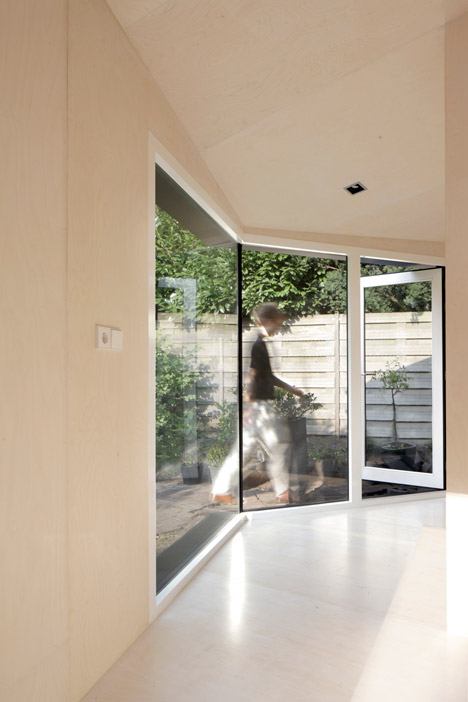
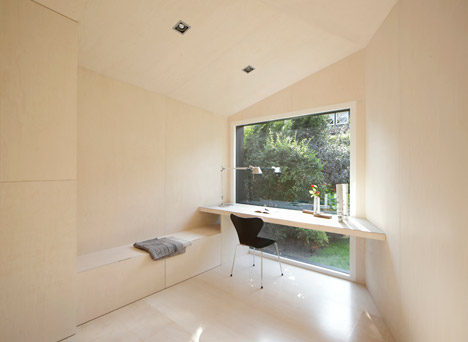
Dutch office Serge Schoemaker Architects meticulously arranged different-sized sections of plywood that “fit together seamlessly like a jigsaw puzzle” across the interior of this angular garden studio.
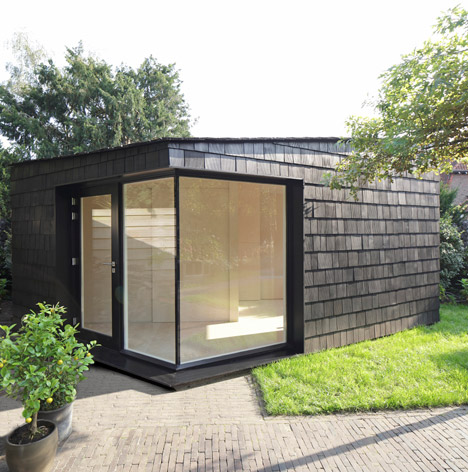
Bussum Garden Studio was designed by Serge Schoemaker Architects as a home office for a Dutch family with two children, which also includes storage for bikes and garden tools and can double as a guest room.
Related story: Abandoned trailer converted into garden hideaway by Karel Verstraeten
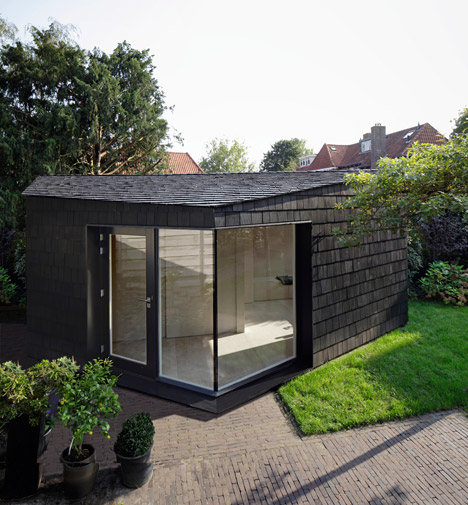
“We did not want to make a regular shed, but more a little house,” Schoemaker told Dezeen. “Contrasting with the dark, rough, textured exterior, the transparent white-lacquered birch plywood interior appears seamless and light.”
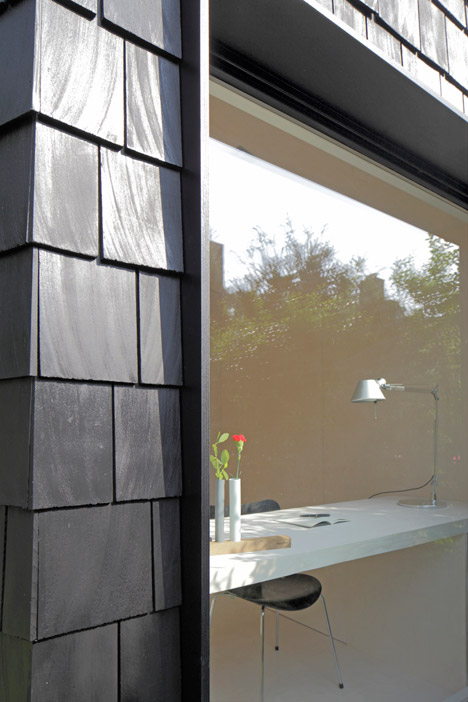
To emphasise the studio’s angular form, and to reference the craftsmanship of surrounding 1930s houses in the town of Bussum, the exterior walls and roof were clad in approximately 2,000 red-cedar shingles that were sanded and painted by hand.
“We wanted a homogenous cladding to emphasise the modern, sculptural character of the design, but did not want an industrial look,” said Schoemaker, who previously worked with Peter Zumthor and was project architect for the Kolumba Art Museum before setting up his own practice.
“That is why we chose shingles of different sizes, which are sanded and painted by hand. The little irregularities communicate that it is made with care.”
A corner of full-height glazing at the entrance provides a crisp contrast with the irregular textured facade.
“Careful attention was required for the construction of this window, as the glass panes meet at a non-perpendicular angle without a window frame,” explained Schoemaker.
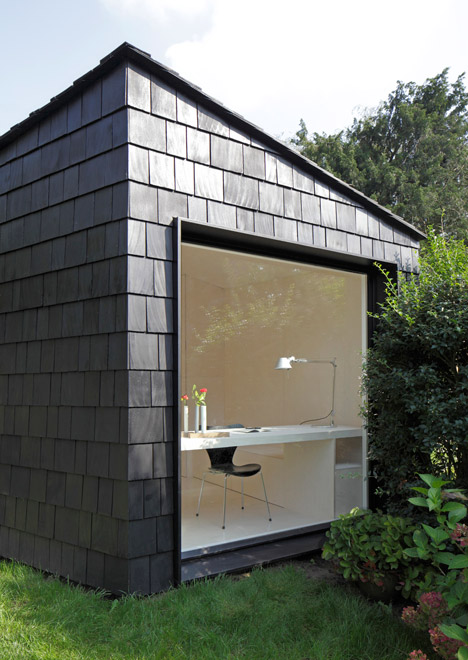
At the back, which faces west, another full-height window measuring approximately two square metres was added to provide the desk with a garden view.
“When you sit at the desk behind this big window, you have the feeling you are sitting in the garden, between the flowers, plants and trees,” said Schoemaker.
Deep recesses with black plywood surrounds in front of the windows emphasise the thickness of the studio’s walls.
“The thick walls show that this is not a shed, but a house, and emphasise the sense of comfort inside the well-insulated structure,” said Schoemaker.
“When you make a little object like this and you don’t want it to look simple, every detail is important,” he added. “The craftsmanship shows the object is small, but created with care.”
Photography is by Raoul Kramer.
Project credits
Team: Serge Schoemaker. Beatrice Nespega
Site plan – click for larger mage Floor plan – Elevations Dezeen








 By Lavinia in Apartments




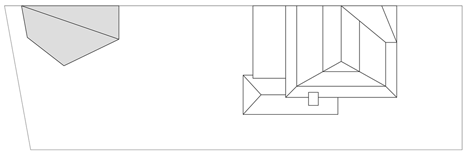 Site plan – click for larger mage
 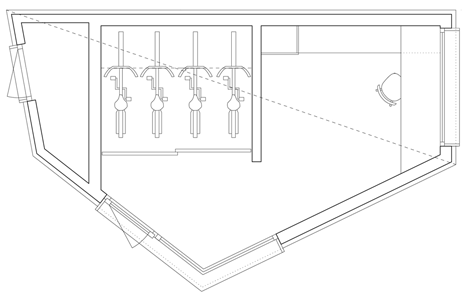 Floor plan –
 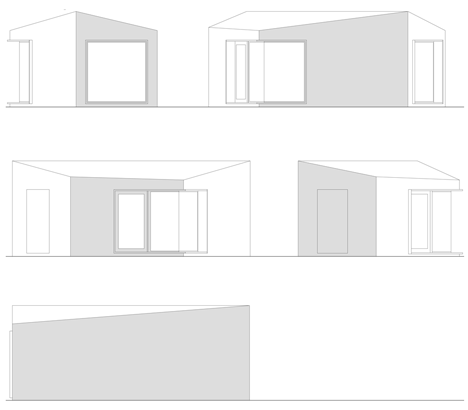 Elevations