"No More Weird Architecture" Says Chinese President

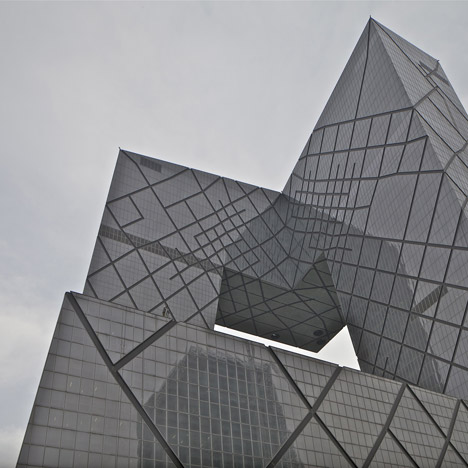
CCTV-OMA–Philippe-Ruault_dezeen

News: Chinese president Xi Jinping has called for an end to the “weird architecture” that has come as a result of China’s construction boom.

Xi, who took over as China’s Communist Party leader nearly two years ago, attacked projects including the Rem Koolhaas-designed CCTV headquarters in Beijing in a two-hour speech made at a literary symposium last week.


Related story: “Architects in China are lost” – Neri&Hu


“No more weird architecture” said Xi, reports the website of Chinese state newspaper the People’s Daily – whose own new headquarters building came under fire last year after being compared to a giant penis.
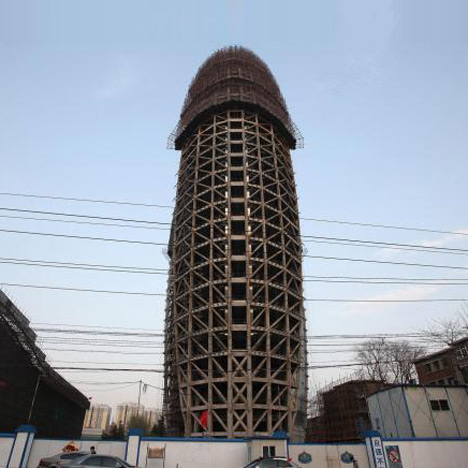
New headquarters for the Chinese state newspaper People’s Daily, which has been compared to a giant penis

As well as lambasting Koolhaas’ building, nicknamed “big pants” in reference to its trouser-like shape, Xi also targeted a pair of bridges over the Yangtze and Jialing rivers in Chongqing, which have been compared to female genitalia.

His comments follow the completion of several unusually shaped structures in China – ranging from a skyscraper shaped like a giant doughnut, to Zaha Hadid’s pebble-shaped complex for real-estate developer Soho China – that came about as a result of the Chinese property boom.
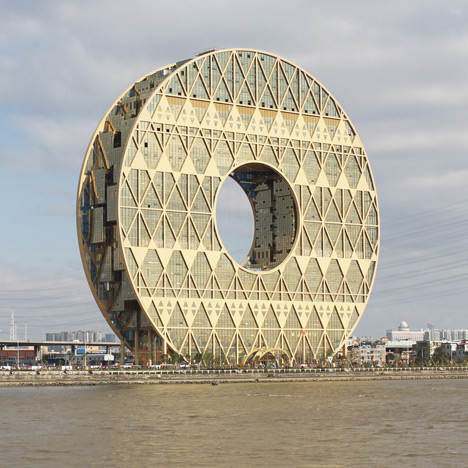
A skyscraper shaped like a giant doughnut was completed in Guangzhou earlier this year

Xi delivered his speech to some of China’s leading figures in the fields of art, theatre and literature. He also spoke about the need for more inspiring artwork and urged Chinese creatives not to sacrifice artistic and moral value in favour of commercial gain.

“Fine art works should be like sunshine from the blue sky and the breeze in spring that will inspire minds, warm hearts, cultivate taste and clean up undesirable work styles,” he said.

Main image of CCTV Headquarters by OMA is by Philippe Ruault.
Dezeen

Nendo's Modular Office Tables Create "casual Spaces For Standing Conversation"

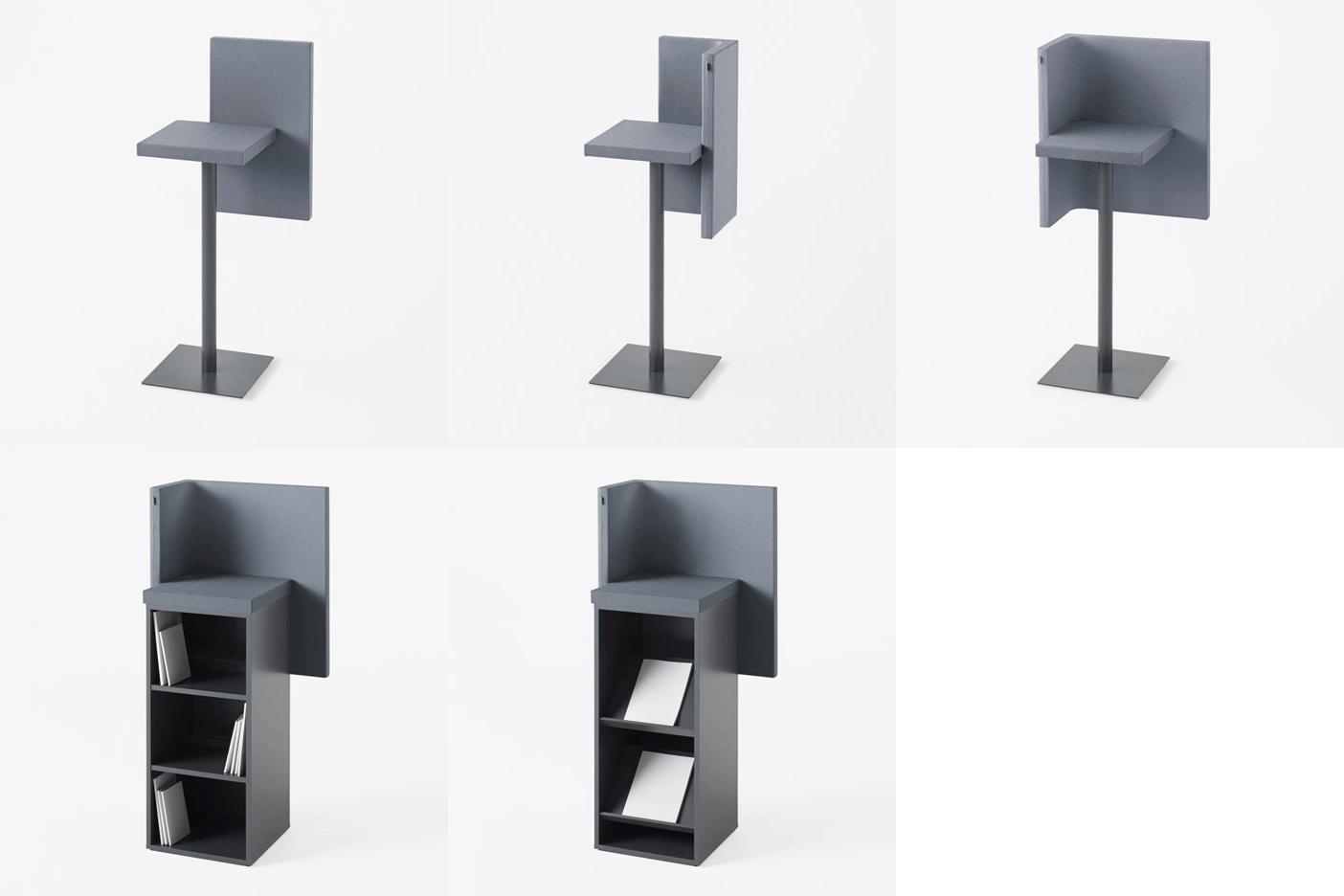
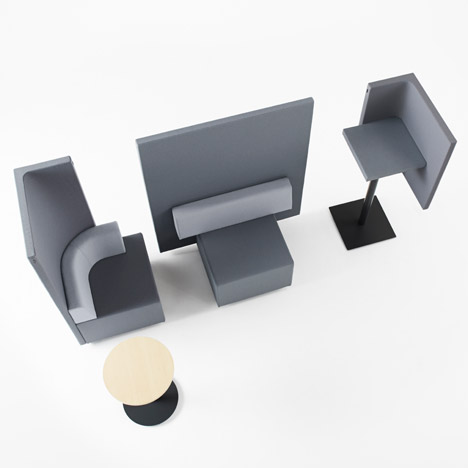
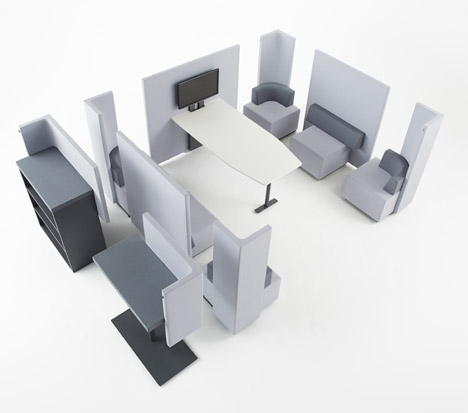
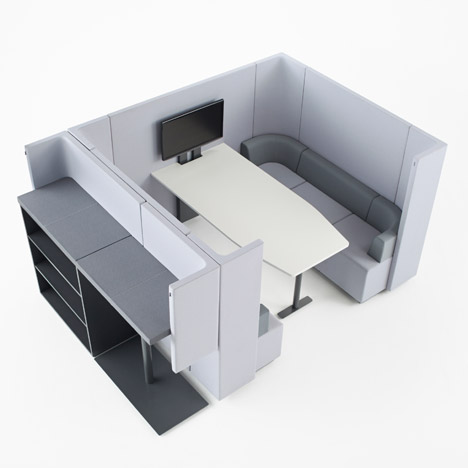
Japanese design studio Nendo has created a series of modular desk units for office furniture and supplies brand Kokuyo to complement its existing Brackets sofa .

Brackets-lite office furniture by Nendo for Kokuyo

Nendo originally designed the Brackets sofa for Japanese company Kokuyo last year, with each module featuring a tall backrest to provide privacy and dampen surrounding noise.


Related story: Nendo reconfigures office furniture elements into hybrid designs for Kokuyo


Brackets-lite office furniture by Nendo for Kokuyo

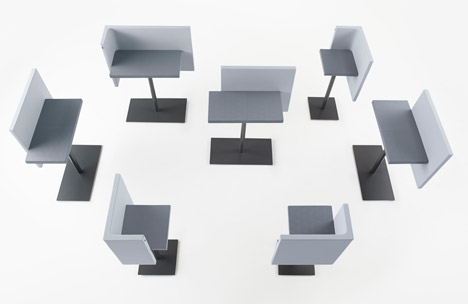
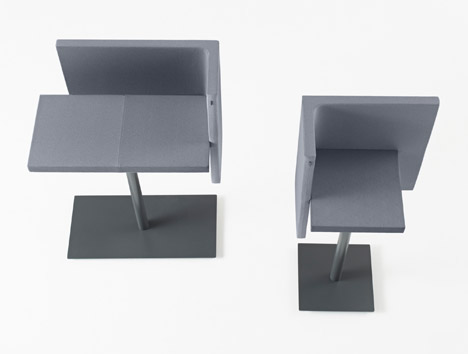
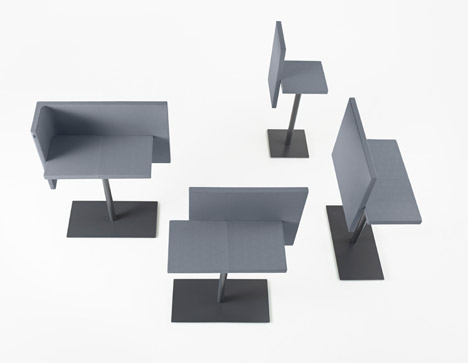
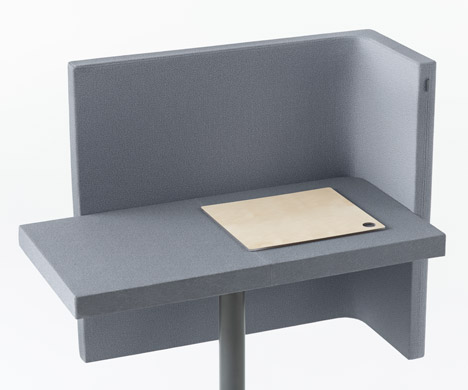
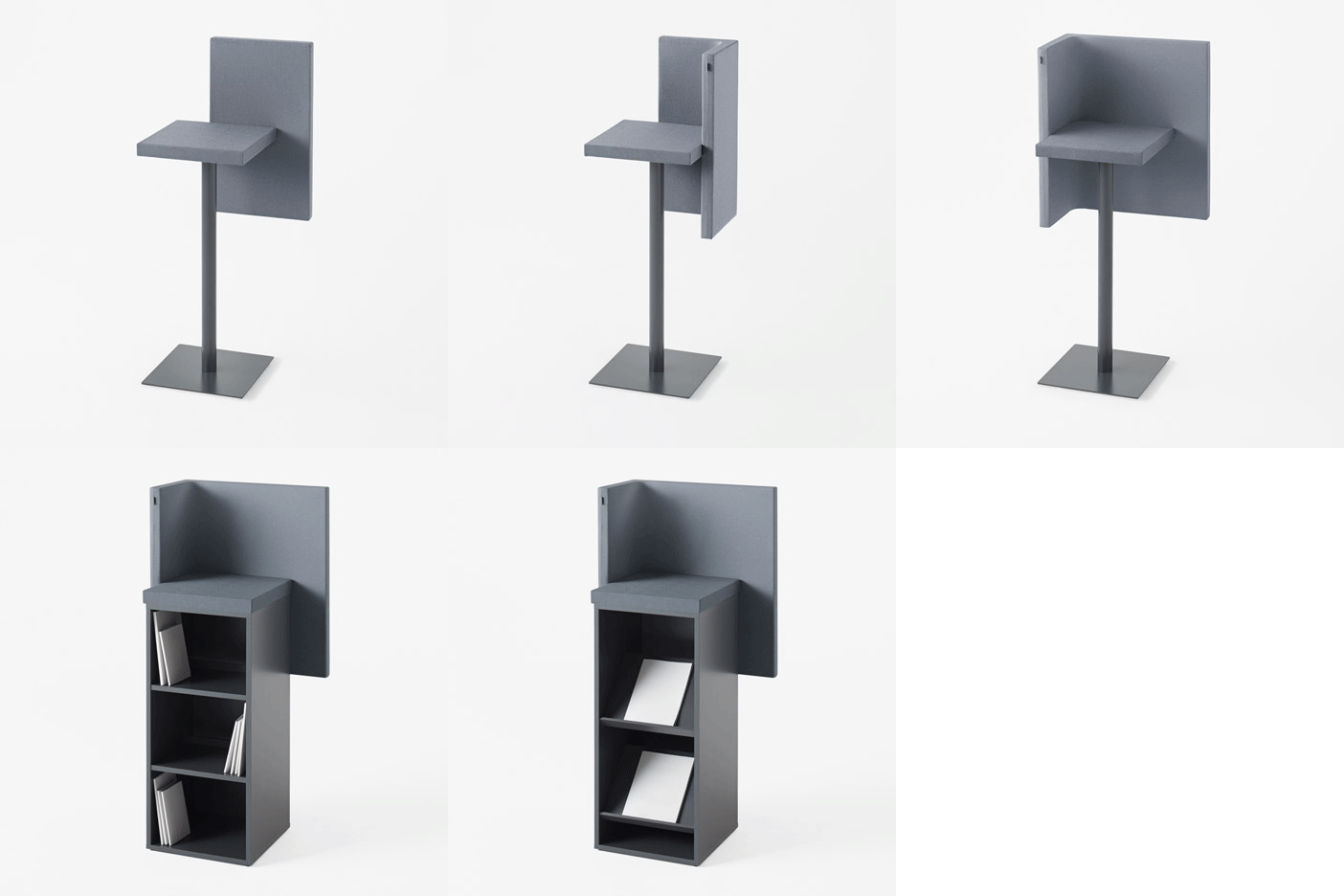
It has now launched Brackets-lite, a collection of seven small tables all with a uniform table height of 100 centimetres. Each piece also has a slightly offset 140-centimetre-tall back panel, which is extended around two sides on some tables to create corner modules.

Brackets-lite office furniture by Nendo for Kokuyo

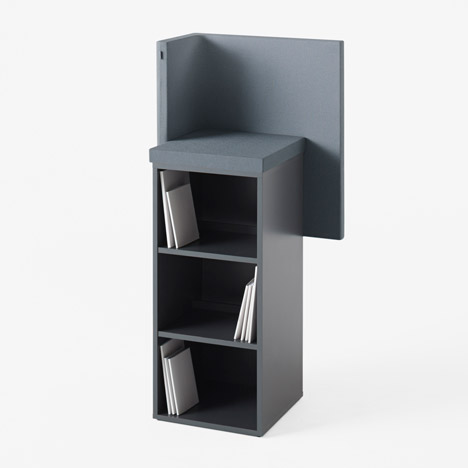
The tables fit together to make various different arrangements, and the functionality of each piece can be modified using interchangeable bases. A bookshelf-style base can also be flipped to act as a magazine rack.

Brackets-lite office furniture by Nendo for Kokuyo

The pieces can be combined with the original Brackets sofa elements, which have the same total height.

Brackets-lite office furniture by Nendo for Kokuyo

“The Brackets unit sofa provides a variety of office communication spaces through different combinations of its bracket-shaped units,” said Nendo. “Brackets-lite develops the concept further by creating casual spaces for standing conversation.”


Dezeen Book of Interviews: Nendo founder Oki Sato features in our new book, which is on sale now


Brackets-lite office furniture by Nendo for Kokuyo

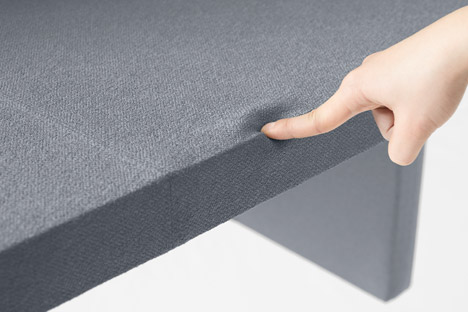
The tops of the tables are cushioned and covered in a grey upholstery material that is also used to cover the back. Each is supported by a single metal leg that is attached to a square base for stability.

When the bookshelf base option is used, the bookshelf provides the support and the leg is removed.

Brackets-lite office furniture by Nendo for Kokuyo

“The tabletops are cushioned so that users can lean against them in casual conversation,” explained Nendo in a statement.

Brackets-lite office furniture by Nendo for Kokuyo

“We also designed an attachable tray for writing notes or resting a coffee cup, and the back of the tray serves as a whiteboard.”

Brackets-lite office furniture by Nendo for Kokuyo

The clip that supports the whiteboard can be used to hold a tablet computer, with a power outlet incorporated into the back of each unit.

Brackets-lite office furniture by Nendo for Kokuyo

Brackets-lite is the second office furniture design by Nendo for Kokuyo that has launched this month. Last week, the studio unveiled a collection of matte-black pieces created by splicing together archetypal office furniture styles.

Dezeen

London's Design Museum To Offer Free Entry From 2016

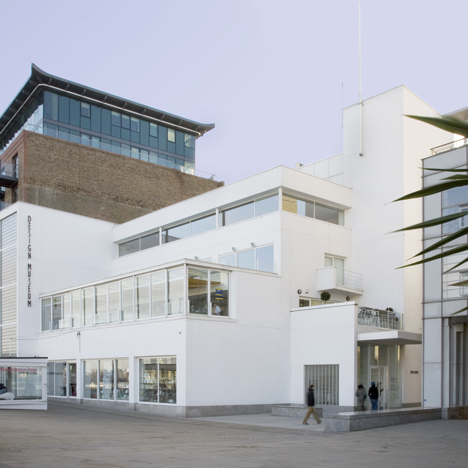
London's Design Museum building

News: London’s Design Museum has announced it will offer visitors free entry to its permanent collection from 2016 under a new UK VAT refund scheme, set up to encourage museums and galleries to scrap entrance charges.

The Design Museum will be able to offer free entry under the scheme announced by the UK government on Friday.


Related story: Zaha Hadid buys London’s Design Museum building


The changes to entry charges will coincide with the Design Museum’s move from its current Bermondsey location to a new home in Kensington in 2016, near the Science Museum, Natural History Museum and the V&A museum.

“I am delighted to be offering help through the VAT refund scheme to ensure as many families as possible can visit at no charge at all,” said chancellor George Osborne at a visit to the new site in Kensington.

“This is all part of our long term plan to make Britain and London a great place to visit with the economic benefits that come with that,” he added.

Museums and galleries offering free entry are not normally able to recover taxes on purchases, however under the newly announced scheme the Design Museum will be able to recoup VAT costs associated with offering free access to their collections, as well as the cost of storage and restoration.

The museum is also expected to be refunded £1.8 million in VAT from the construction costs of its new premises. In addition it is set to receive approximately £150,000 in returned VAT on running costs each year. The tax cut will allow the museum to drop the current entrance charge of £12.40 and offer free admittance.

Qualifying museums and galleries will be able to apply for VAT refund through monthly or quarterly VAT returns.

The Design Museum will take up residence in the Grade II* listed former Commonwealth Institute off Kensington High Street in 2016.  The listed building is being renovated by British designer John Pawson for 2016 and will triple the amount of exhibition space available for the museum’s collections.

“When we open the doors in 2016 we will reinforce Britain’s worldwide reputation for creative leadership,” said Deyan Sudjic, director of the Design Museum.

With the new admittance policy and premises, the museum expects visitor numbers to double in its first year at the new site to 650,000.

Dezeen

Lemz Wins Dutch Design Award 2014 With Avatar For Fighting Child Sex Tourism Online

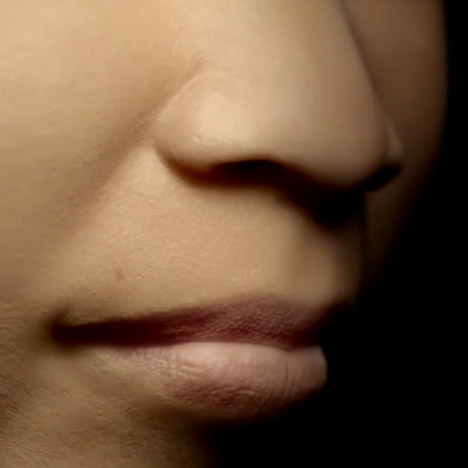
News: Amsterdam agency Lemz has taken away the top honour at this year’s Dutch Design Awards for Sweetie: a virtual 10-year-old girl created to catch perpetrators of webcam child sex tourism (+ movie).

Lemz topped the Service and Systems category then beat five other category winners to be announced as the overall winner of the Dutch Design Awards, during a ceremony in Eindhoven last night.


Related story: Microsoft’s RoomAlive transforms any room “into an augmented interactive display”


“Sweetie is not only a convincing example of what design can do for us, but it also questions the role of design,” said the jury, chaired by head of Dutch science research company DSM, Atzo Nicolai.

Lemz began the project to help international children’s aid organisation Terre des Hommes raise awareness of webcam child sex tourism (WCST) and catch the offenders.

Sweetie Lemz development Dutch Design Award 2014 Sweetie in development

“Men from rich countries pay children in poor countries to perform sexual acts in front of webcams,” said Lemz. “Police don’t enforce the national and international laws prohibiting WCST because they wait for victims to report the crime before investigating. But child victims of WCST do not report this abuse.”

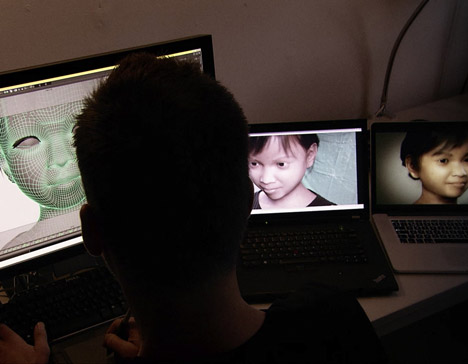
Lemz designed Sweetie as a 3D computer model that looks like a 10-year-old girl from the Philippines, a country they identified as having many children at risk from exploitation.

They replicated the facial features and actions of a real child to create the digital avatar.

Sweetie Lemz Dutch Design Award 2014 Sweetie

Taking on an investigative role, members of the team entered online chat rooms posing as Sweetie to identify and track down those asking children for explicit visual material.

They controlled the realistic avatar’s movements and facial expressions while trying to find out as much about who was on the other side of the conversation as possible.

Over 10 weeks from May 2013, they located 1,000 individuals from 71 countries, and handed their identities and the evidence to Interpol. Arrests were made and victims were rescued, resulting in global media coverage for the project.

The Lemz team was hesitant to reveal they were the ones behind the project, but decided to go public after the UN encouraged them to share what they had learnt.

“We believe that businesses, and creative agencies in particular, should use their talents and resources to make this world a better place,” said Lemz co-founder Mark Woerde in a statement issued earlier this year.

Sweetie Lemz Dutch Design Award 2014

“The Sweetie campaign proves that creative agencies can have significant impacts on global problems that may seem to have no relevance to our industry or to our daily lives.”

The project received the top accolade and the Future Award at the Dutch Design Awards, which are handed out to the best design projects in the Netherlands to coincide with Dutch Design Week.

Winners of the other categories included Viktor & Rolf’s Fall 2013 Haute Couture collection in Fashion, the Rotterdam Centraal station redevelopment by Benthem Crouwel, MVSA Architects and West 8 in Habitat, the In Vitro Cookbook with recipes for synthetic meat by Next Nature Network in Design Research, Kummer & Herrman’s Sochi Project in Communication and the Rescue Tip Board by Spark Design & Innovation in Product.

Sweetie Lemz media coverage Dutch Design Award 2014 Global media coverage of the Sweetie project
Dave Hakkens, creator of the Phonebloks modular phone concept and the Precious Plastic recycling machine, scooped the Young Designer prize, while urban park Natura Artis Magistra was named Best Client.

All the shortlisted projects are on display at an exhibition in the Strijp area of Eindhoven during Dutch Design Week, which continues across the city until 26 October – follow Dezeen’s coverage of the event.

Dezeen

Assorted Windows And Diagonal Cladding Feature On Renovated Home By NU Architectuuratelier

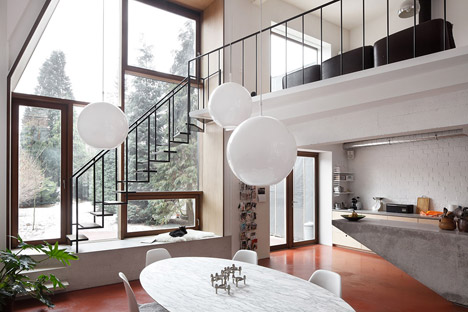
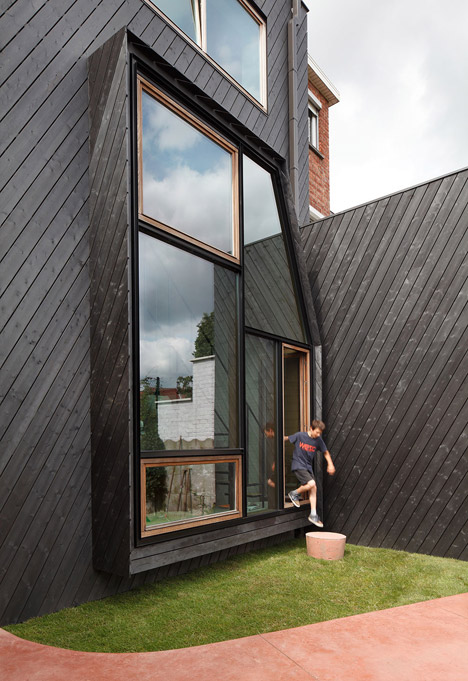
A mixture of simple windows and double-height glazing bring light and views into the back of this Belgian house, which NU Architectuuratelier has converted from flats into a family home .

Kessel-Lo House by NU architectuuratelier

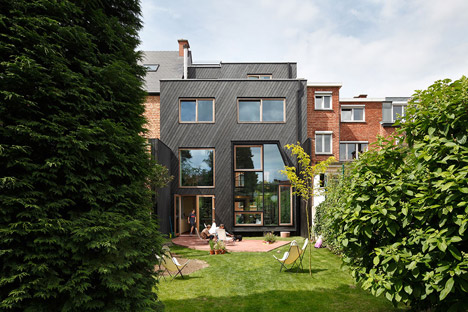
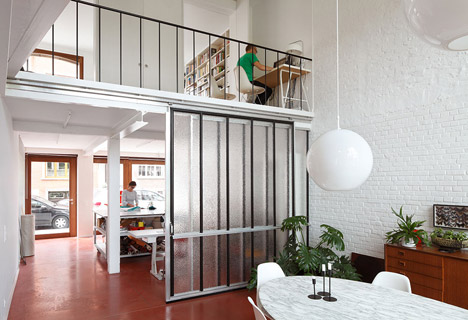
Kessel-Lo House in Leuven, Belgium, was designed by NU architectuuratelier for a family with two children who originally wanted to extend the former apartment building, but eventually settled on opening up the existing space.


Related story: Fibre-cement tiles create a latticed facade for Leeuw House by NU Architectuuratelier


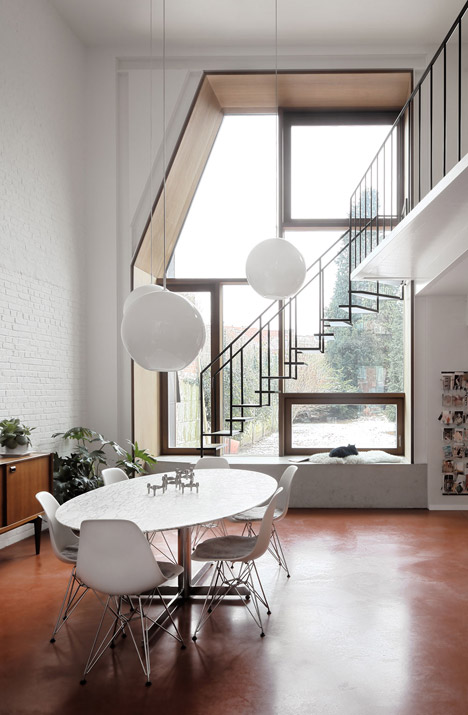
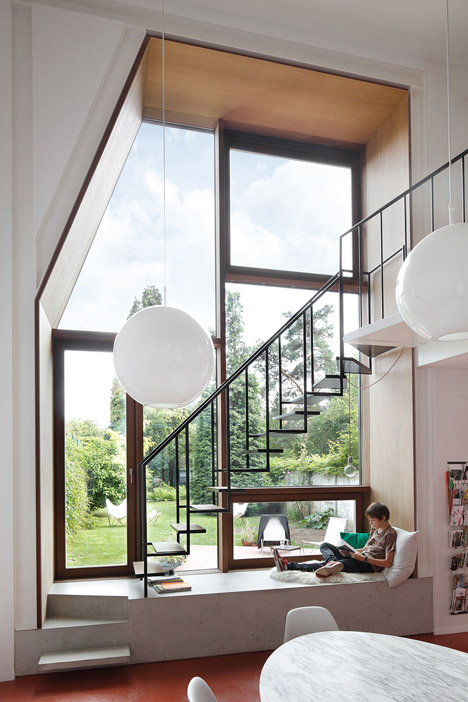
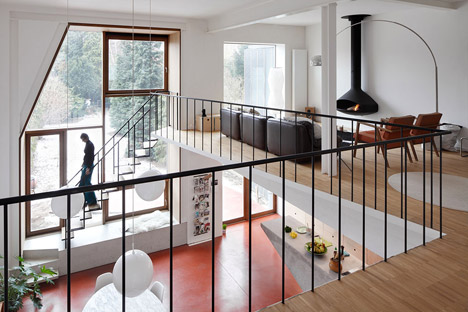
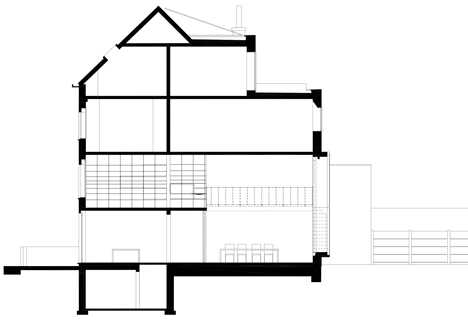
“We decided to work with the qualities of the building and found no need to extend it,” said architect Armand Eeckels, who knocked an opening between the ground floor and first floor to create a double-height living space at the back.

Kessel-Lo House by NU architectuuratelier

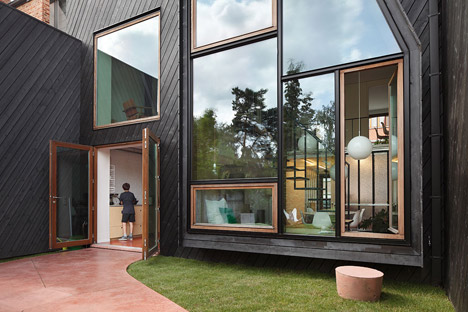
Floor-to-ceiling glazing was added to offer both levels of the living area a full view of mature trees in the garden, and smaller open-able windows were incorporated within this to provide ventilation.

Kessel-Lo House by NU architectuuratelier

Multiple exits on the ground floor give the house a more dynamic relationship with the garden.

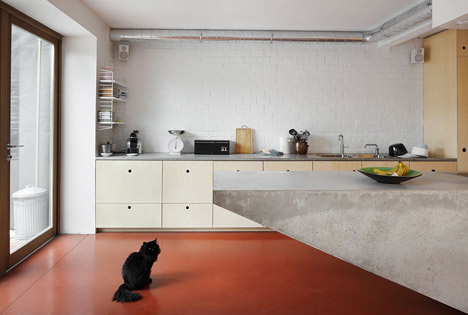
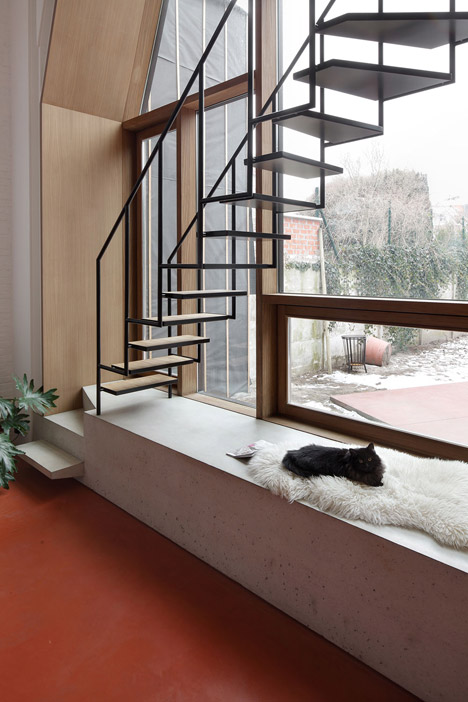
Two glass doors in the kitchen provide the main access outside, and a single door at the bottom of the tall glazing offers a quicker route between the garden and the stairs from the first floor.

Kessel-Lo House by NU architectuuratelier

“The single door at the foot of the stairs plays an important role, because it creates a more direct connection between the living room on the first floor and the garden,” Eeckels told Dezeen.

Kessel-Lo House by NU architectuuratelier

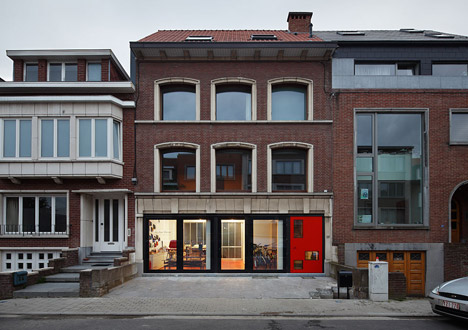
Diagonal strips of black-painted timber were added to enliven the exterior of the four-storey home.

Kessel-Lo House by NU architectuuratelier

The front of the ground floor, which previously housed garages, was turned into a studio and display space for the owner’s upholstery business, and is designed to act as a buffer between the house and the street.

Kessel-Lo House by NU architectuuratelier

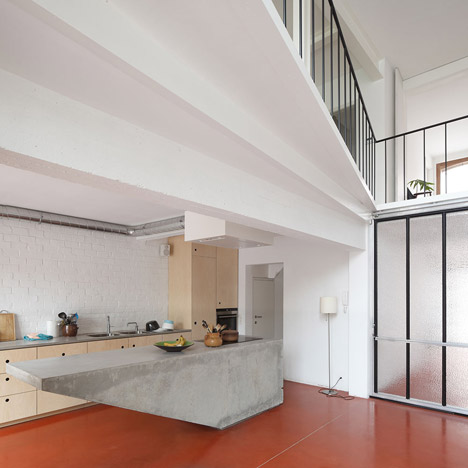
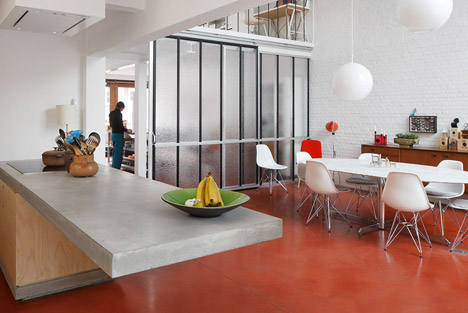
A frosted glass screen separates the studio from the double-height living area, which features concrete flooring with an earthy red pigment.

Kessel-Lo House by NU architectuuratelier

“It was a way to introduce colour to the interior, but not in a decorative way,” said Eeckels, whose firm’s past projects include a house with a latticed fibre-cement facade.

Kessel-Lo House by NU architectuuratelier

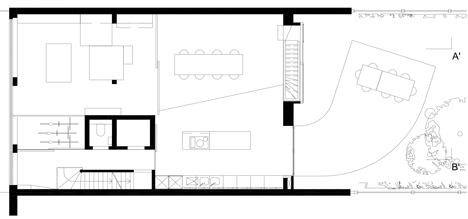
The kitchen on the ground floor features a tapered concrete island in the centre, which was poured on-site.

Kessel-Lo House by NU architectuuratelier

“We liked the idea of having this solid object defining the openness of the space,” said Eeckels. “The tapered shape also gives it a certain lightness. It becomes less of an obstacle between kitchen and dining area.”

Kessel-Lo House by NU architectuuratelier

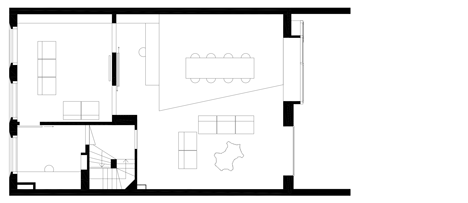
The kitchen and dining space is overlooked by the first floor, which has an office and two living rooms – one facing the street, and the other facing the garden.

“One is designed as a quiet retreat, while the other is a place where the children can watch TV and play,” explained Eeckels.

Kessel-Lo House by NU architectuuratelier

The second floor has two children’s bedrooms, a guest bedroom and a bathroom, and the top floor has a master bedroom and bathroom, a dressing room and storage.

Kessel-Lo House by NU architectuuratelier

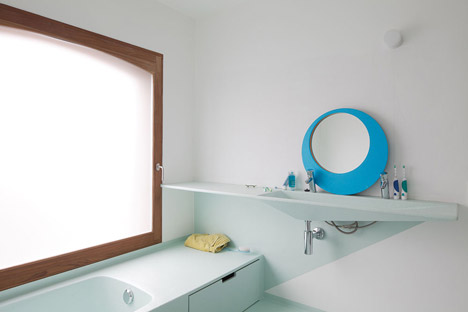
One of the baths extends to the wall to provide a seating ledge at one end with storage beneath.

“It’s not that there was a huge lack of space in this bathroom – we just prefer doing only one gesture in a smaller room,” said Eeckels.

Kessel-Lo House by NU architectuuratelier

Photography is by Stijn Bollaert.

Kessel-Lo_House_by_NU_Architectuuratelier_dezeen_0Ground floor plan – Kessel-Lo House by NU architectuuratelierFirst floor plan – Kessel-Lo House by NU architectuuratelierSection –
Dezeen

Latest Ideas!