13 Unusual Mobile Homes And Hideaways

dezeen_Casa-Transportable-APH80-by-Abaton_1sq

Movable egg-shaped huts on a beach in South Korea were popular with readers this week, so we’ve collected together 13 strange and beautiful examples of mobile residences, refuges and retreats from the pages of Dezeen – including a tiny house delivered via helicopter.


Casa Transportable ÁPH80 by Ábaton
dezeen_Casa-Transportable-APH80-by-Abaton_10

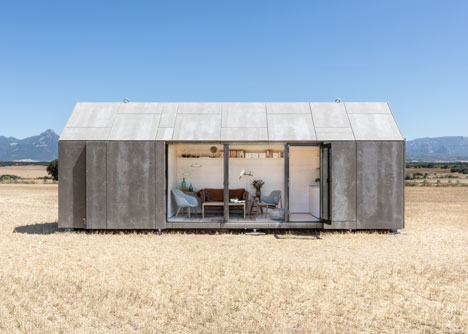
This micro house in the Spanish countryside might look permanent, but is actually designed to be hoisted onto the back of a truck. With elements prefabricated over a six week period, the structure can be assembled in just one day.

dezeen_Casa-Transportable-APH80-by-Abaton_3

Grey cement board panels cover the two-person home, but some have hinges allowing the wall to open and reveal sliding glass doors and windows. Inside, the three living spaces – including a bathroom at one end and a bedroom at the other – are lined in Spanish fir wood. Find out more about this project »


Micro House in Tsinghua by Studio Liu Lubin
dezeen_Micro-House-in-Tsinghua-by-Studio-Liu-Lubin_18

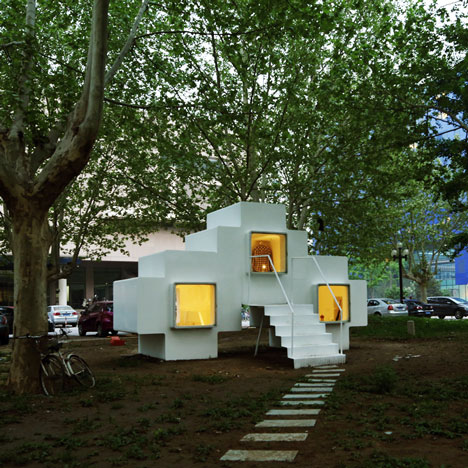
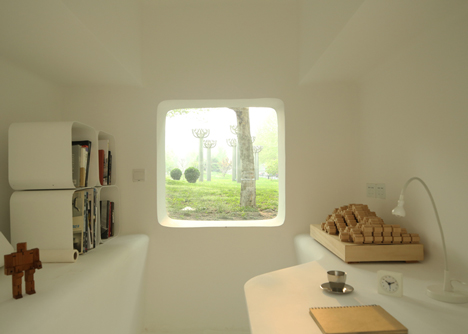
Made from fibre-reinforced foam, the three cross-shaped modules that form this tiny house in Beijing are light enough to be lifted and rotated by their inhabitants, changing the function of the spaces inside.
dezeen_Micro-House-in-Tsinghua-by-Studio-Liu-Lubin_10

Chinese architect Liu Lubin created the modules to fit neatly into shipping containers so they can be transported to different locations, as well as being small enough to bypass current restrictions governing private homes in China. Find out more about this project »


Bao House by dot Architects
dezeen_Bao-House-by-dot-Architects_1sq

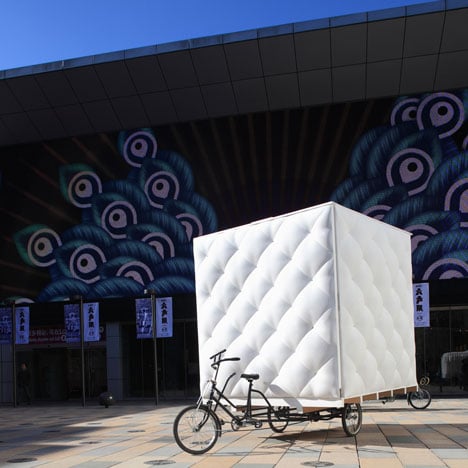
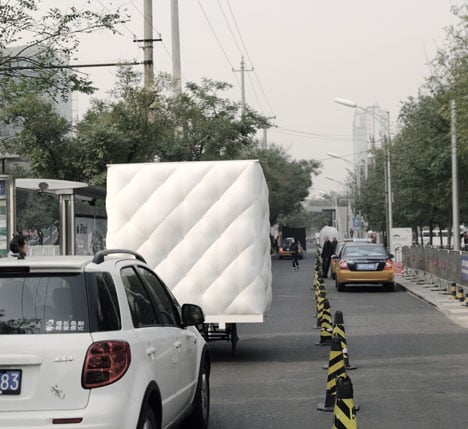
Chinese studio dot Architects designed this tiny quilted cube house to sleep three people, after being asked to design a mobile living space that is human-powered for an exhibition in 2012.
dezeen_Bao-House-by-dot-Architects_4

The facade may look like it is made from padded fabric, but the two-metre-wide structure is actually formed from spray polyurethane foam (SPF) making it light enough to be pulled along on the back of a tricycle. Find out more about this project »


Hut on Sleds by Crosson Clarke Carnachan Architects
Dezeen_Crosson-Clarke-Carnachan-Architects_0_hi

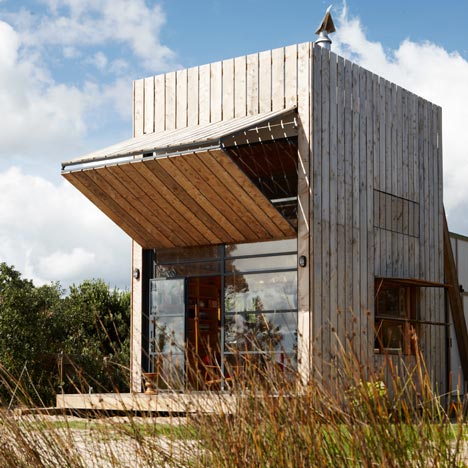
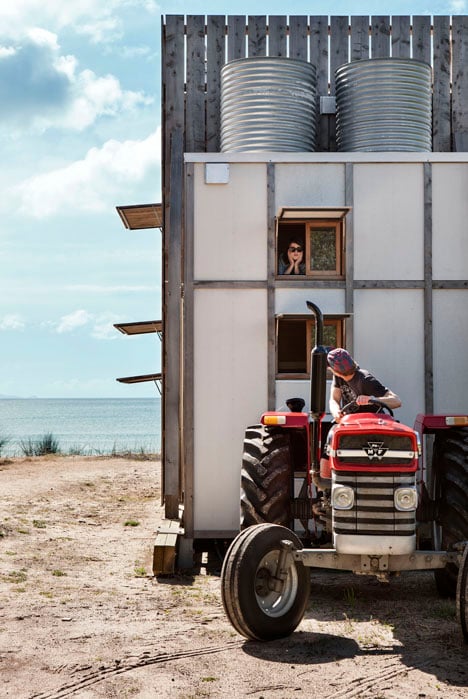
How do you design a holiday home on a coastline that is constantly changing due to erosion? Crosson Clarke Carnachan Architects’ solution for this house on the northern coast of New Zealand was to put the entire structure on a sled that allows it to be towed out of harm’s way.
Dezeen_Crosson-Clarke-Carnachan-Architects_50

Shutters in the timber slat walls of the hut, which is used by a family of five, lift up to reveal and shade a two-storey glazed facade as well as windows at the sides. The children sleep in a three-tiered bunk bed at the back, while the parents occupy a mezzanine bedroom over the main living space. Find out more about this project »


Famiglia Grande by Kacey Wong
dzn_Famiglia-Grande-by-Kacey-Wong-12

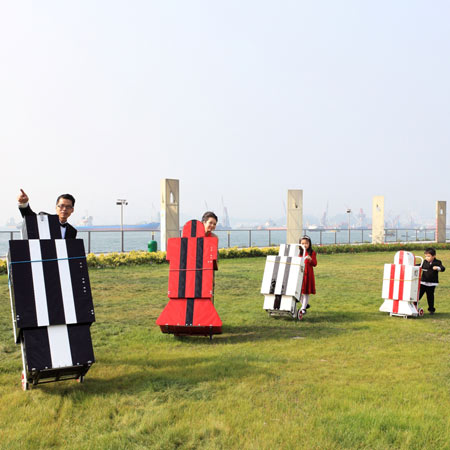
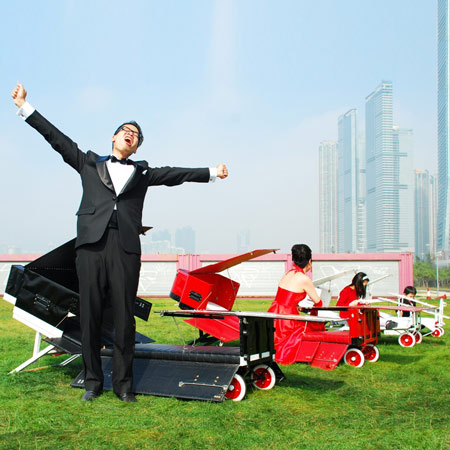
Based on an earlier project that envisioned creating homeless shelters that looked like robots, but fold out to provide a bed and desk, Hong Kong artist and designer Kacey Wong developed these mobile sleeping cases for rich people who lost their homes in the economic crisis.
dzn_Famiglia-Grande-by-Kacey-Wong-6

Each case can be wheeled around on a trolley. “My question is how can one live on the street but still maintain a facade of looking good and high style?” said the designer. Find out more about this project »


Micro Compact Home 016 by Richard Horden
dezeen_Micro_Compact_Home_by_Richard_Horden_2

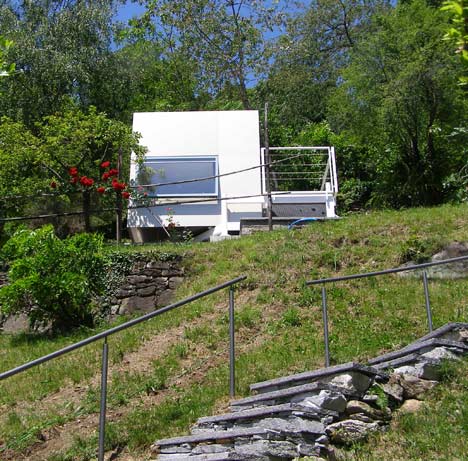
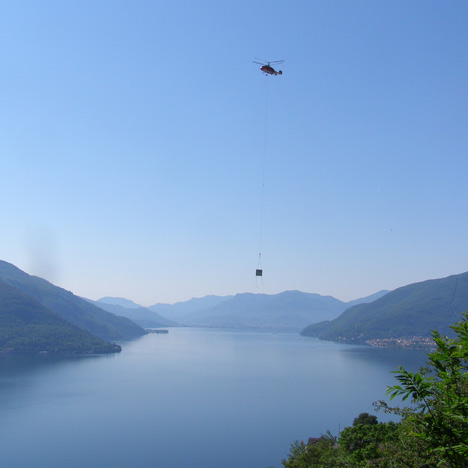
One of a series of tiny homes designed by British architect Richard Horden, this prefabricated guest house on a site overlooking Lake Maggiore in Switzerland was delivered to its site via helicopter.
dezeen_Micro_Compact_Home_by_Richard_Horden_sq

Installed in four minutes and nine seconds, the house is made using a lightweight aluminium frame and accommodates both a double bed and a dining table for eight people. Find out more about this project »


Denizen Sauna by Denizen Works + Friends
dezeen_Denizen-Sauna-by-Denizen-Works-and-Friends_1c

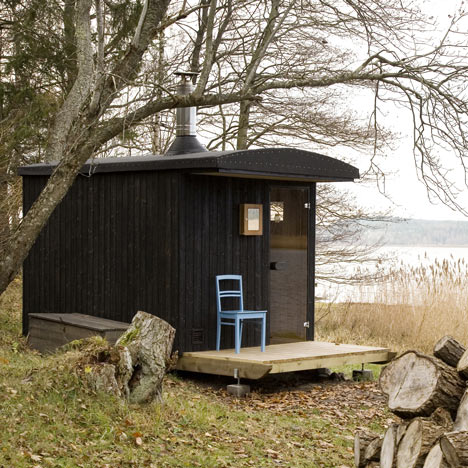
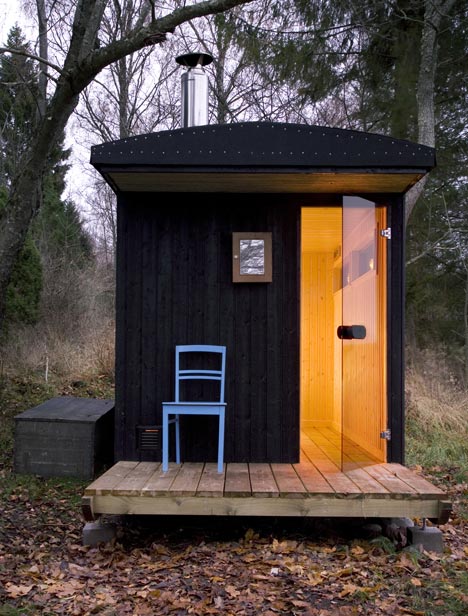
After 12 years of trying to get permission to turn a disused boat shed into a sauna, the owner of this small wooden building on a Finnish island was finally given permission to build – provided the structure was mobile.
dezeen_Denizen-Sauna-by-Denizen-Works-and-Friends_2

London architects Denizen Works + Friends designed the timber sauna to sit on runners, so when the waters it sits by freeze in the winter it can be towed across like a sledge to find the right spot for a plunge pool. Find out more about this project »


Sleepbox 01 by Arch Group
dezeen_Sleepbox-by-Arch-Group_20

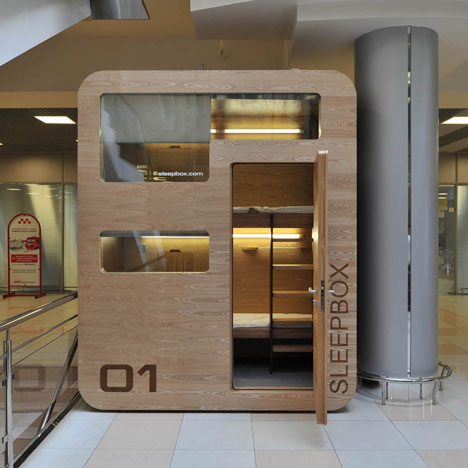
Russian architects Arch Group developed the Sleepbox concept to provide tiny movable hotel rooms that could be used for napping at airports, train stations and shopping centres.
dezeen_Sleepbox-by-Arch-Group_17

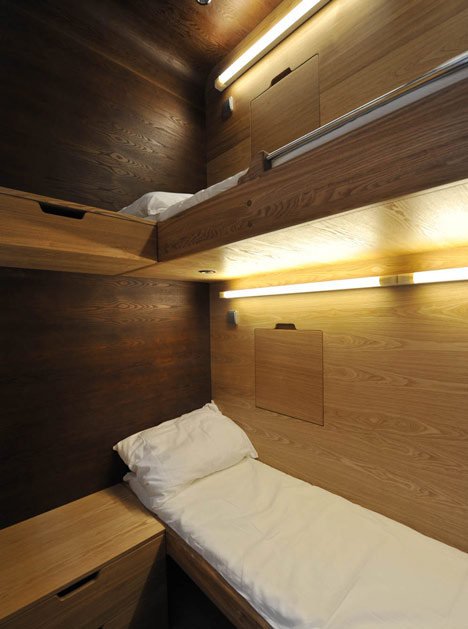
This ash-veneered MDF Sleepbox at Moscow’s Sheremetyevo airport was their first built example, and could be rented for between 30 minutes and several hours. It contained a double bed as well as LED reading lamps and sockets for charging laptops and mobile phones. Its success led to a series of further projects – including an entire hotel of the units. Find out more about
this project »


Vostok Cabin by Atelier Van Lieshout

dzn_Vostok-Cabin-by-Atelier-Van-Lieshout-11

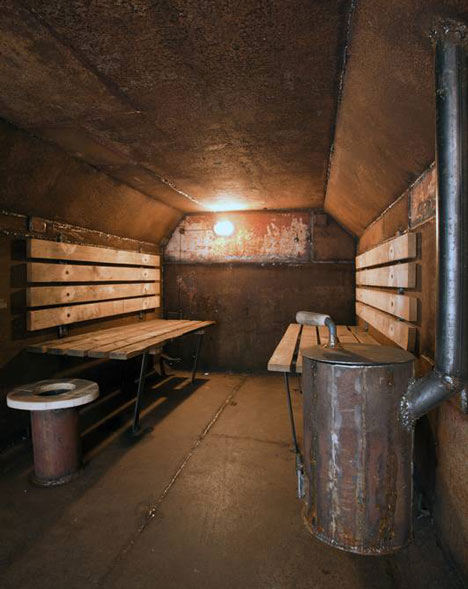
For home-buyers worried that the end of civilisation really is nigh, Dutch studio Atelier Van Lieshout has created a mobile, indestructible dwelling with an armoured shell made of steel plates reclaimed from boats.
dzn_Vostok-Cabin-by-Atelier-Van-Lieshout-8

Inside, the cabin is fitted with two benches, a stove and a toilet. “The Cabin looks like an improvised defense/attack apparatus made by a local blacksmith in order to have a better chance of survival in times of revolution and civil war,” said the designers. Find out more about this project »


Fincube by Studio Aisslingera
dzn_Fincube-by-Studio-Aisslinger-3

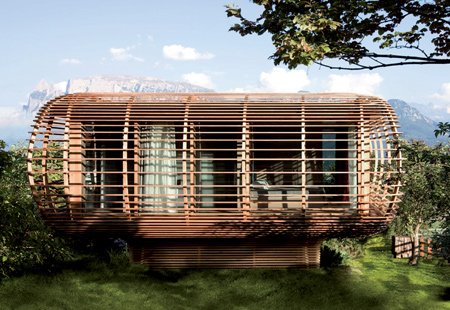
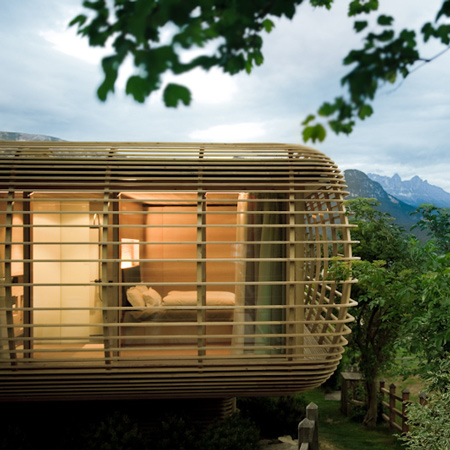
Rather than move in one piece, this small fully-glazed mountain living unit in the Dolomites is designed to be taken apart and rebuilt.
dzn_Fincube-by-Studio-Aisslinger-1

Berlin designer Werner Aisslinger created this mobile house for a spot on the side of a mountain in Ritten, Italy. It’s name refers to the wooden louvres that surround the structure, which are made of local timber, as well as its two-square-metre footprint. Find out more about this project »


New Refuge Gervasutti by LEAPfactory

dezeen_New-Refuge-Gervasutti-by-LEAPfactory_1top

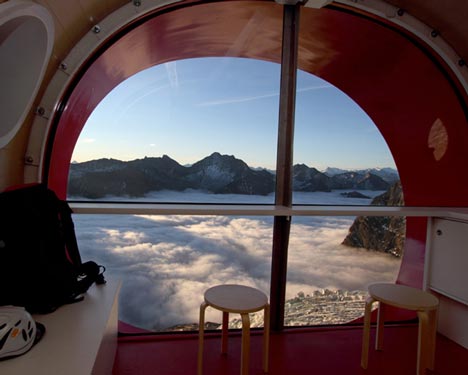
While most mobile living spaces are for private residents, this one in the Alps provides shelter and a warm place to sleep for climbers that spot it cantilevering over the edge of a mountain.
dezeen_New-Refuge-Gervasutti-by-LEAPfactory_7a

The survival unit was designed by Italian architects LEAPfactory, who specialise in modular accommodation for extreme environment, and was lifted into place using helicopters. Find out more about this project »


Hypercubus by WG3
dezeen_Hypercubus-by-WG3_2

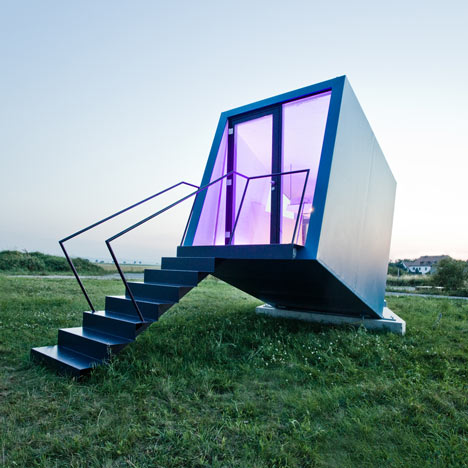
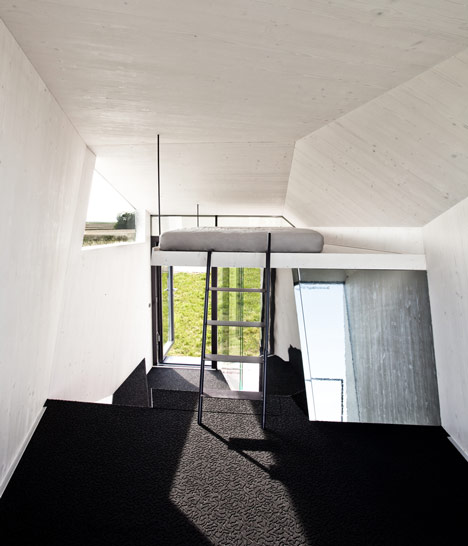
These modular hotel rooms designed by Austrian architects WG3 house two guests comfortably, and tip up at the front to lift the entrance off the ground.
dezeen_Hypercubus-by-WG3_4

The prototype is intended to be used as a pre-paid apartment-style residence at all kinds of outdoor events and locations, as long as these provide some kind of additional infrastructure – each module only has a toilet and sink for guests. Find out more about this project »


Opera by Axel Enthoven
dzn_Opera-by-Axel-Enthoven-3

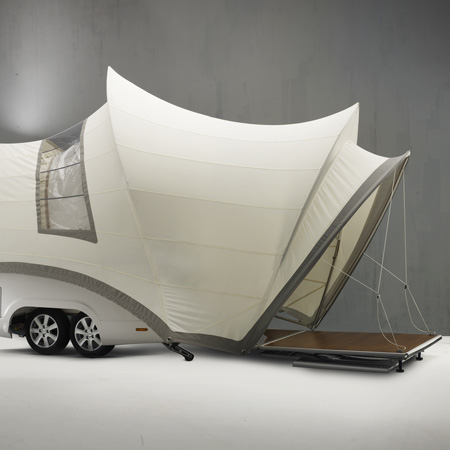
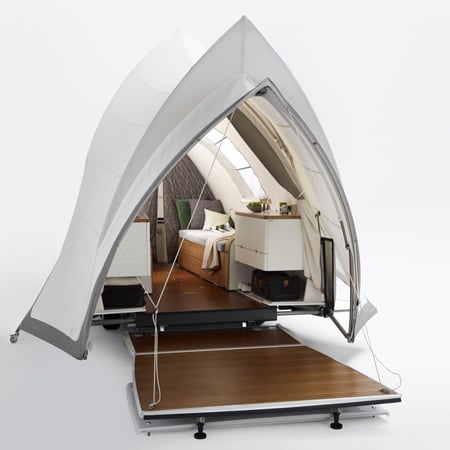
This mobile holiday home was designed by Belgian architect Axel Enthoven to resemble the iconic roof of the Sydney Opera House.
dzn_Opera-by-Axel-Enthoven-5

Made completely by hand in Geldrop in the Netherlands, the canvas holiday home unfolds from a trailer and includes two beds, a toilet, hot and cold water, LED lighting and a mobile hob. “It is not a tent, not a caravan and not a motor home,” said the designer. Find out more about this project »


Dezeen

Hello Wood Builds Budapest Christmas Tree From 5000 Pieces Of Firewood

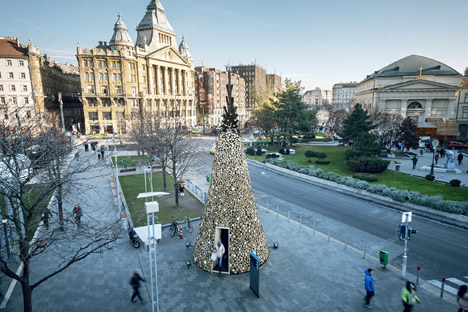
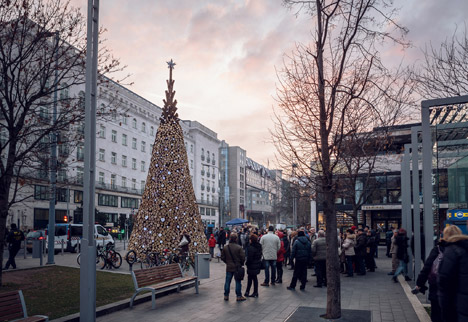
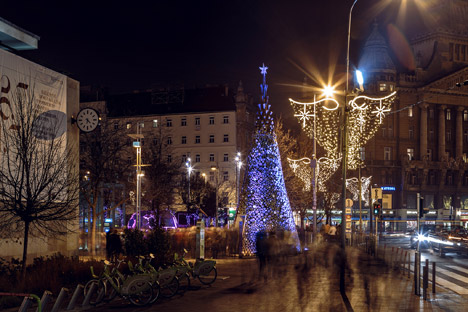
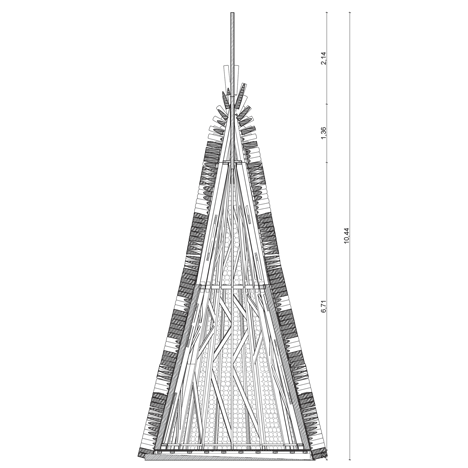
Hungarian architecture studio Hello Wood has developed an 11-metre-higher Christmas tree for a square in central Budapest from 15,000 kilograms of wooden logs (+ film).

Charity Christmas tree by Hello-Wood

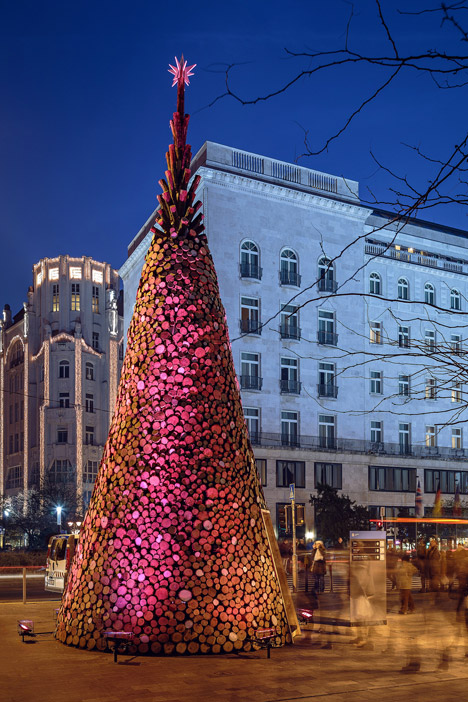
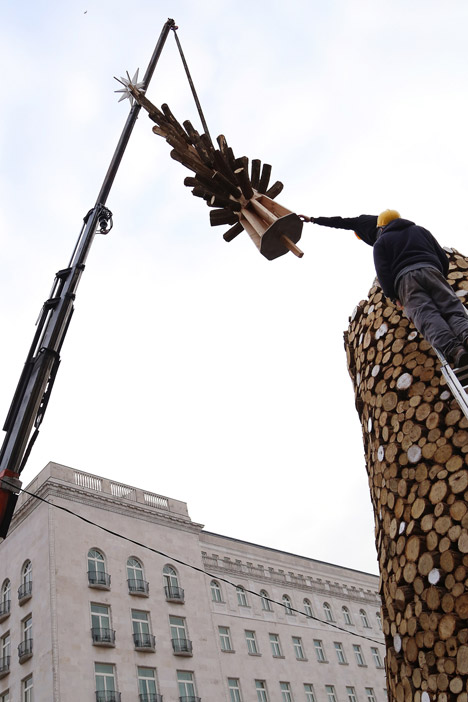
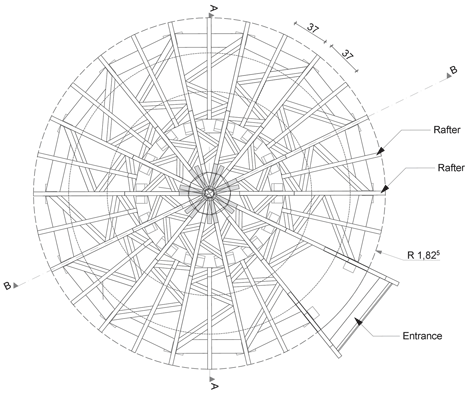
Hello Wood’s brief was to develop a Christmas tree for the Budapest neighborhood. Their response, the Charity Tree, has a conical timber frame with sawn logs stacked perpendicular to its surface.


Related story: Glowing stars by Pernilla Ohrstedt decorate Christmas tree in London hotel


At the leading, the wood lengths get longer and protrude out further to form a pinnacle crowned with a metal star.

Charity Christmas tree by Hello Wood

A scattering of the circular sections are painted white to reference the ornaments that generally hang from the branches of traditional fir Christmas trees.

Charity Christmas tree by Hello-Wood

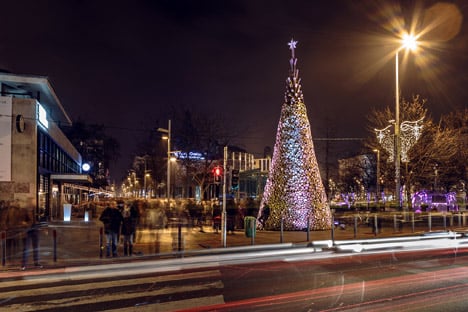
The structure was built and filled in more than five 24-hour operating days. Right after dark, it is illuminated using special lighting effects designed by Philips Hungary.

Charity Christmas tree by Hello-Wood

A doorway in the back makes it possible for members of the public to climb inside the tree and make use of seats formed from more logs, which are positioned around the edge.

Charity Christmas tree by Hello-Wood

“Inside the tree there is a chapel-like sacred inner space, where everybody can locate some silence to contemplate in the middle of the buzzing city,” stated the designers.

Charity Christmas tree by Hello-Wood

“The Charity Tree belongs to the people of Budapest till Epiphany. It can be visited in the course of day and evening.”

Charity Christmas tree by Hello-Wood

When the tree is dismantled on the Twelfth Night right after Christmas – the date decorations are traditionally taken down – the firewood will be given to families in want.

Charity Christmas tree by Hello Wood

“The installation represents the value of the neighborhood and social awareness: not only due to the fact men and women traditionally collect about Christmas trees to celebrate with each other, but also simply because at Christmas, it is specifically essential to feel of the thousands of Hungarian families who have every day issues with heating during wintertime,” stated the designers.

Charity Christmas tree by Hello Wood

Hello Wood worked in collaboration with Design and style Terminal – the Hungarian state agency responsible for the stimulation of the inventive industries – and the Hungarian Interchurch Aid.

Charity Christmas tree by Hello Wood

The installation follows a equivalent project in 2013, when the architects built a Christmas tree made from 365 wooden sledges that had been provided to a neighborhood children’s charity following the festive period.

Charity Christmas tree by Hello Wood

“The part of architecture has changed a lot in the final handful of years. After the [economic] crisis it has turn into much more important to develop operates which are for everybody, not only the exclusive one per cent of the population,” stated a spokesperson for the studio, which runs an international art camp every single summer.

Charity Christmas tree by Hello WoodStrategy – Section – Section –
Dezeen

Night Lamp For Nursery – Great Suggestions!

December 21, 2014   Children Space Ideaas, Space decor  

The lighting is an essential element for every single room in the residence. This applies especially to the nursery. The lighting in the nursery should be versatile on Grung of all diverse activities of that occur there. As the youngsters grow and change, to adjust the functionality of the lighting. Fortunately right now we have a assortment of possibilities for a appropriate nursery lighting – huge fascinating Crown lights up modest indirect lights and delicate to lamps in various colors and designs. A evening light for children’s room is also a must. At our very best, look at cool tips for a post lamp for nursery inspiration!

wonderful kids lamp design idea

Cloud lamp for the nursery

Cool lamp for children

cool night light for kids

cool night lights for children's rooms globe

Feeder night light for kids

Hedgehogs Nursery Lamps Nachlampen

interesting lamp for the nursery

Jungle theme for the nursery lamp

Lamp for children's zoo topics

Lamp for the kids Elephant

Lamp for the nursery giraffes

Lamp for the nursery Mushrooms

Lamp for the nursery

Lamps for children's home

Lamps for child's room as bird feeders

Nachlampe globe nursery lamps

Nachlampen pine nursery lamps

Night light for kids Giraffe

Night lights for kids Fish

Nursery Lamps great design ideas

original lamp for the nursery

original lamps for kids rooms

original night light for kids

Owl lamp for the nursery

Panda Nursery Lamps Ideas

Rakette night light for kids

Spherical bulb lamp for the nursery

super beautiful lamps for kids rooms

Cloud lamp for the nursery ideas

Area Decorating Ideas

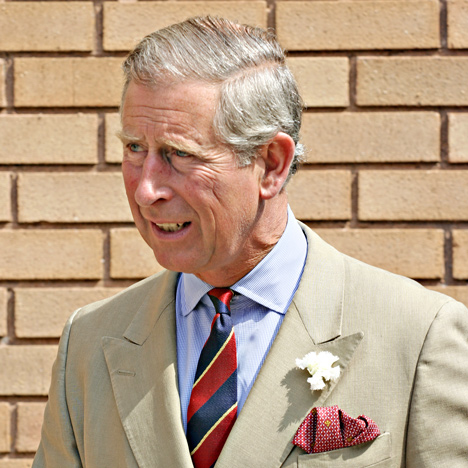
Prince Charles Reveals 10 Principles For "more Mature View" Of Urban Design

Prince Charles

News: the Prince of Wales has called for urbanists to “reconnect with traditional approaches” in an essay that lays out his vision for the future of architecture and planning.

“I have lost count of the times I have been accused of wanting to turn the clock back to some Golden Age. Nothing could be further from my mind. My concern is the future,” begins Prince Charles’ 2,000-word essay in the latest issue of The Architectural Review.

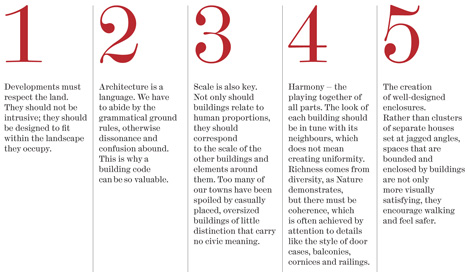
The prince goes on to set out 10 “important geometric principles” for urban masterplanning that he says aim “to mix the best of the old with the best of the new” and provide a template for designing places “according to the human scale and with nature at the heart of the process”.

098_AR_0115-6_dezeen_1Click for larger version

“It is time to take a more mature view” and “reconnect with traditional approaches and techniques”, says the British royal.

“This approach does not deny the benefits and convenience that our modern technology brings,” he writes.


Related story: Prince Charles spurns demolition job in bid to build bridges with architects


“All I am suggesting is that the new alone is not enough. We have to be mindful of the long-term consequences of what we construct in the public realm and, in its design, reclaim our humanity and our connection with nature, both of which, because of the corporate rather than human way in which our urban spaces have been designed, have come under increasing threat.”

“To counter this, I believe we have to revisit the learning that for so long has been embedded in traditional approaches to design, simply because they are so rooted in our own connection with nature’s patterns and processes. As we face so many critical challenges in the years ahead, these approaches are crying out to be brought back to the forefront of contemporary practice.”

098_AR_0115-6_dezeen_2Click for larger version

Charles, who is first in line for the British throne, has previously found himself at loggerheads with large swathes of the architecture industry after sharing his opinions on architecture in public.

During a now infamous speech marking the 150th anniversary of the Royal Institute of British Architects in 1984, the prince launched an unprecedented attack on contemporary architects.

A proposal for the extension of London’s National Gallery by British firm Ahrends, Burton and Koralek bore the brunt of his criticism. “What is proposed is like a monstrous carbuncle on the face of a much-loved and elegant friend,” said Charles.

His comments caused outrage among architects and resulted in the scrapping of the scheme, which was eventually replaced with a building by Robert Venturi and Denise Scott Brown. The fall out did not prevent him from involving himself further in architecture and planning, contributing to his reputation as a “meddling” prince, which he acknowledged in a speech in 2011.

As well as building his Poundbury model town in Dorset, populated with Classical-style buildings, and launching a short-lived architecture magazine, he has founded an art school dedicated to traditional styles and techniques in east London. He also created the Prince’s Foundation for the Built Environment charity to promote traditional architecture and planning – these activities are now carried out by the Prince’s Foundation for Building Communities.

At a dinner to make the 175th anniversary of the RIBA in May 2009, Charles said he had not intended to “kick-start some kind of ‘style war’ between Classicists and Modernists”.

But a battle over the £3 billion Chelsea Barracks development revealed that he had used his influence with the Qatari royal family’s property company, scuppering a scheme by Rogers Stirk Harbour & Partners in June 2009.

“We had hoped that Prince Charles had retreated from his position on modern architecture, but he single-handedly destroyed this project,” Richard Rogers told the Guardian.

With this latest essay, Charles says he is focusing on creating a sustainable future for the planet, and not architectural style.

“We face the terrifying prospect by 2050 of another three billion people on this planet needing to be housed, and architects and urban designers have an enormous role to play in responding to this challenge,” he writes.

“We have to work out now how we will create resilient, truly sustainable and human-scale urban environments that are land-efficient, use low-carbon materials and do not depend so completely upon the car. However, for these places to enhance the quality of people’s lives and strengthen the bonds of community, we have to reconnect with those traditional approaches and techniques honed over thousands of years which, only in the 20th century, were seen as ‘old-fashioned’ and of no use in a progressive modern age. It is time to take a more mature view.”

The full essay will be published in the January edition of the Architectural Review and on the magazine’s website.

Image of Prince Charles is courtesy of Shutterstock.

Prince Charles’ 10 principles for masterplanning1. Developments must respect the land. They should not be intrusive; they should be designed to fit within the landscape they occupy.2. Architecture is a language. We have to abide by the grammatical ground rules, otherwise dissonance and confusion abound. This is why a building code can be so valuable.3. Scale is also key. Not only should buildings relate to human proportions, they should correspond to the scale of the other buildings and elements around them. Too many of our towns have been spoiled by casually placed, oversized buildings of little distinction that carry no civic meaning.4. Harmony – the playing together of all parts. The look of each building should be in tune with its neighbours, which does not mean creating uniformity. Richness comes from diversity, as Nature demonstrates, but there must be coherence, which is often achieved by attention to details like the style of door cases, balconies, cornices and railings.5. The creation of well-designed enclosures.Rather than clusters of separate houses set at jagged angles, spaces that are bounded and enclosed by buildings are not only more visually satisfying, they encourage walking and feel safer.6. Materials also matter. In the UK, as elsewhere, we have become dependent upon bland, standardised building materials. There is much too much concrete, plastic cladding, aluminium, glass and steel employed, which lends a place no distinctive character. For buildings to look as if they belong, we need to draw on local building materials and regional traditional styles.

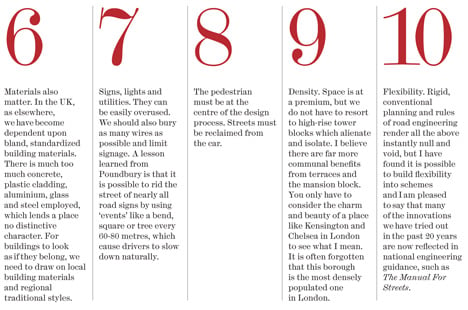
7. Signs, lights and utilities. They can be easily overused. We should also bury as many wires as possible and limit signage. A lesson learned from Poundbury is that it is possible to rid the street of nearly all road signs by using ‘events’ like a bend, square or tree every 60-80 metres, which cause drivers to slow down naturally.

8. The pedestrian must be at the centre of the design process. Streets must be reclaimed from the car.

9. Density. Space is at a premium, but we do not have to resort to high-rise tower blo
cks which alienate and isolate. I believe there are far more communal benefits from terraces and the mansion block. You only have to consider the charm and beauty of a place like Kensington and Chelsea in London to see what I mean. It is often forgotten that this borough is the most densely populated one in London.

10. Flexibility. Rigid, conventional planning and rules of road engineering render all the above instantly null and void, but I have found it is possible to build flexibility into schemes and I am pleased to say that many of the innovations we have tried out in the past 20 years are now reflected in national engineering guidance, such as The Manual For Streets.

Dezeen

Paint Colors For Bedroom With Their Effects

: Paint Colors Bedroom Cozy Feeling Purple

The colour possibilities that you decide on might determine the mood that you have in your bedroom. There are some colors that can produce particular excitement as you use it for your bedroom. The theme that you set in your bedroom making use of the colour theme will give you less difficult way of application. The great style of contemporary bedroom will greatly supported by the use of appropriate color. There is no real boundary that prevents you from making use of specific colors on your bedroom interior style. Nevertheless, there are some colors with certain impression of mood creating. The paint colors for bedroom with straightforward color will produce the impression of modest lifestyle.

There are some neutral paint colors for bedroom that you can choose to preserve the higher level of compatibility with any color of your furniture style. The simplest neutral color is white paint colour. The white paint color of your bedroom will give suitable color for the minimalist style contemporary bedroom interior style. The benefit of white color application of wall paint is the very good daylight illumination level. Other neutral color is light brown colour. The light brown colour will give equivalent effect with white color but you will certainly have reduce intensity of reflected sunlight.

Light blue color of paint colors for bedroom will give you serenity in your area. The robust retro colors, such as orange and yellow, will create much more excitement in your room. The use of black colour in your bedroom with creative application will give the impression of style.

: Colors Bedroom For Cozy Feeling Decor Awesome

: Grey White Paint Colors For A Bedroom Decoration Ideas

: Home_Sweet_Home_Paint Colors For Bedroom

Gallery of Paint Colors For Bedroom With Their Effects

Tagged: paint colors for bedroom, Bedroom

Howlerband.com

Latest Ideas!